
Duke Street stopbank a step closer
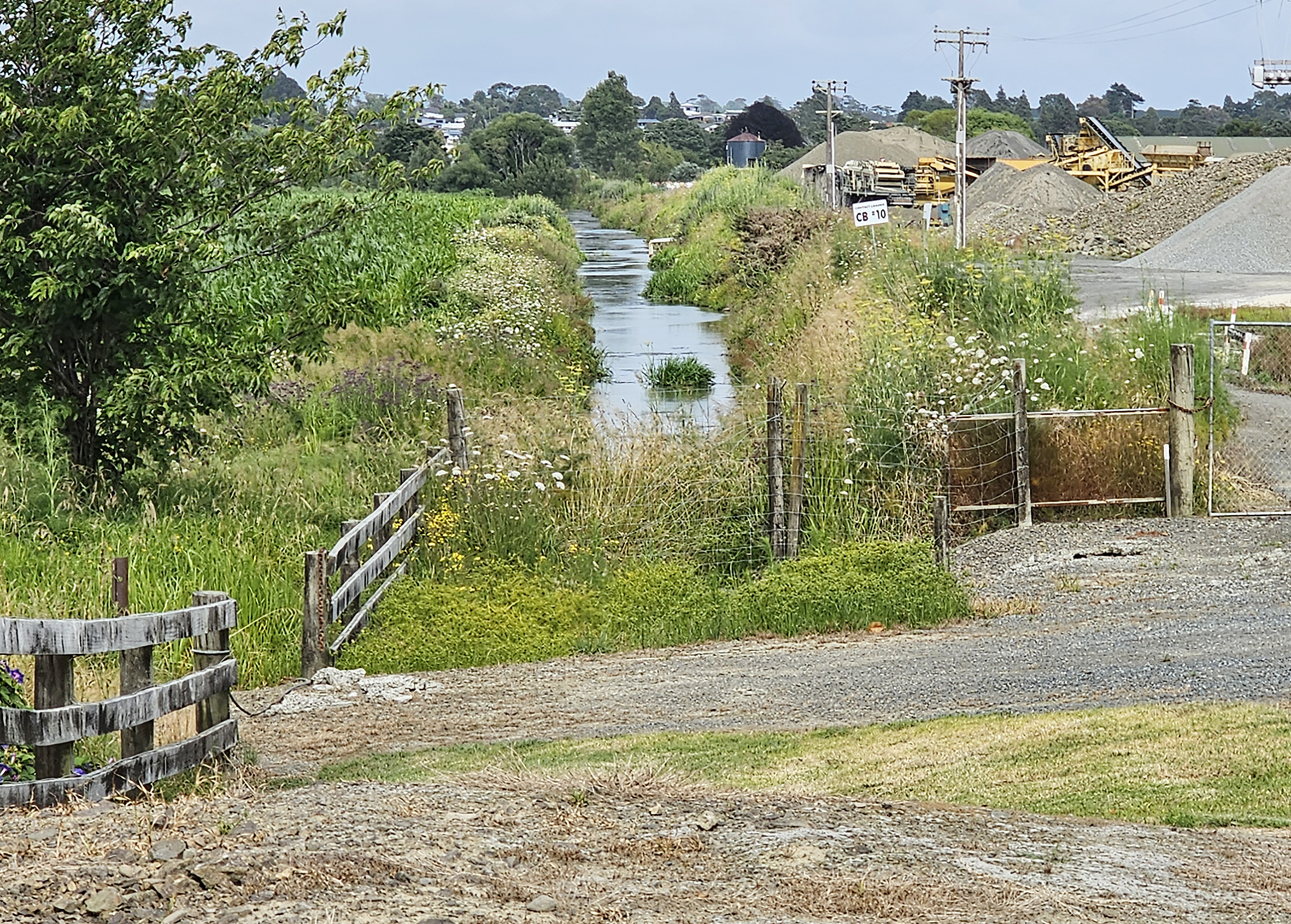
RURAL MEETS URBAN: A stopbank is to be built by mid-2027 along the Bay of Plenty Regional Council Duke Street drain at the southern end of Ōpōtiki township. Photo Diane McCarthy E5784-02
Diane McCarthy
Plans to prevent flooding of Ōpōtiki’s urban areas by creating a stopbank across the southern end of township have come $1.3 million closer to fruition this week.
Ōpōtiki District Council agreed to enter into a sub-loan agreement with Bay of Plenty Regional Council to help build the stopbank at a meeting on Tuesday.
The Duke Street stopbank project is intended to mitigate flooding from rural land at the southern end of town in the case of a 1 percent Annual Exceedance Probability rainfall event – or one-in-100-year flood.
The stopbank will be built alongside the regional council drain, which runs along the paper road between the western and eastern sections of Duke Street.
The sub-loan brings the total budget for the project up to $2.3 million, including $740,000 in Better Off Funding, and $510,000 in loan funding included in the Long-term Plan 2021-2031.
The $1.3 million makes up part of $9.12 million of tranche 2 funding the regional council received from central government’s Regional Infrastructure Fund recently for flood resilience work throughout the Bay of Plenty.
It comes in the form of a suspensory loan, meaning that if the project is not completed by June 2028 it may need to be paid back. The district council plans to have the project completed mid-2027.
Alongside the project is a basin to be installed in Wellington Street with a budget of $300,000. The intention is to use the material to help build the stopbank.
While this stopbank is expected to create a slight increase in flooding on the fields on the southern side, which are currently planted in maize, district council service delivery group manager Nathan Hughes said staff were working closely with the regional council around upgrading its Duke Street pump station.
“That upgrade could offset any impacts on the landowner,” Mr Hughes said.
If the regional council did not increase its pumping capacity, the additional flood impacts on properties south of the stopbank would need to be fully evaluated through the consent process and weighed against the broader benefits for the Ōpōtiki community.