
Using our power to turn trash into cash
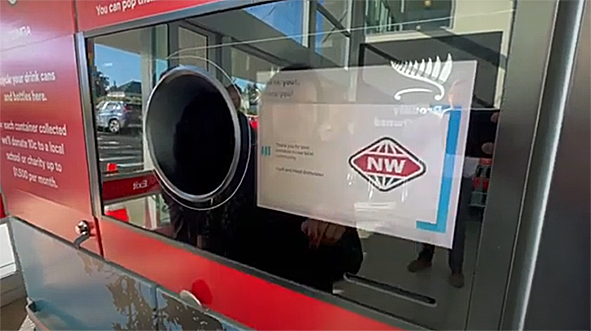
SUCCESSFUL SCHEME: Auckland’s New World Birkenhead is trialling New Zealand’s first supermarket-based reverse vending machine (RVM), giving locals the chance to recycle single-use drink containers while raising funds for their local schools and charities.
.
■ Back in the 1970s, returning empty soft drink bottles and cans for money was a normal part of Kiwi kids’ lives, writes Katherine Langford.
There was great incentive to do this, because picking up and returning this type of litter generated enough money to buy lollies at the same dairy.
Back then, glass bottles that were returned were washed and reused by companies.
Gradually large beverage corporations, led by Coca Cola, managed to shift responsibility for their product waste onto consumers by turning it into a litter issue, for which, consumers were to blame.
Today, even with so-called recycling schemes, only 9 percent of plastic waste is recycled, worldwide.
In New Zealand, at least a billion containers end up in landfill or in our waterways and environment every year.
There is, however, a push globally to revive cash incentives for returning containers to divert them away from our environment and out of landfill. And it works.
Thirty-two countries are doing it, including most of Australia.
South Australia has achieved an 80 percent diversion rate (meaning 80 percent of container waste including soft drink and alcohol bottles, cans and cartons are now returned for cash).
New Zealand is lagging, but in response to overwhelming support from communities, councils, retail and industry alike, the National Government has a Container Return Scheme (CRS) in the work plan with a proposed bill to amend to the Waste Minimisation Act.
There is already a successful pilot scheme under way at Birkenhead supermarket in Auckland by Foodstuffs NZ.
The process is simple, where people return containers to a Reverse Vending Machine.
At this stage of the experiment, rather than being issued money, returnees can nominate for the return proceeds to be channelled to one of four local schools.
Companies would add the cost of the CRS scheme to their products, but the fact is, that being able to return containers and be refunded with the recommended 20 cents is proven to greatly reduce waste.
Any unclaimed deposits sit in the bank earning interest for companies, and containers put out in kerbside recycling will benefit councils.
And there are many benefits for our tamariki and rangatahi.
They learn about waste, cleaning up litter and helping our environment, and they can earn a bit of money as well. Job creation will be yet, another win.
But a CRS scheme will only be enacted for the benefit of communities, and not companies, if everyone, communities and councils, are on board to make sure the new legislation is pushed through Parliament this year with the right framework in place.
Governance should not be led by the beverage industry for example, and “return to retail”, meaning consumers can return the containers to the places they purchased them from, should be included.
The Waste Minimisation Act Amendment Bill will go to its first reading later this year, and when it does, it is up to us to voice support and make submissions.
Making submissions in response to new bills is one of the most impactful things we can do with our democratic power.
Let’s use it when the time comes.