
The astonishing life beneath our boots
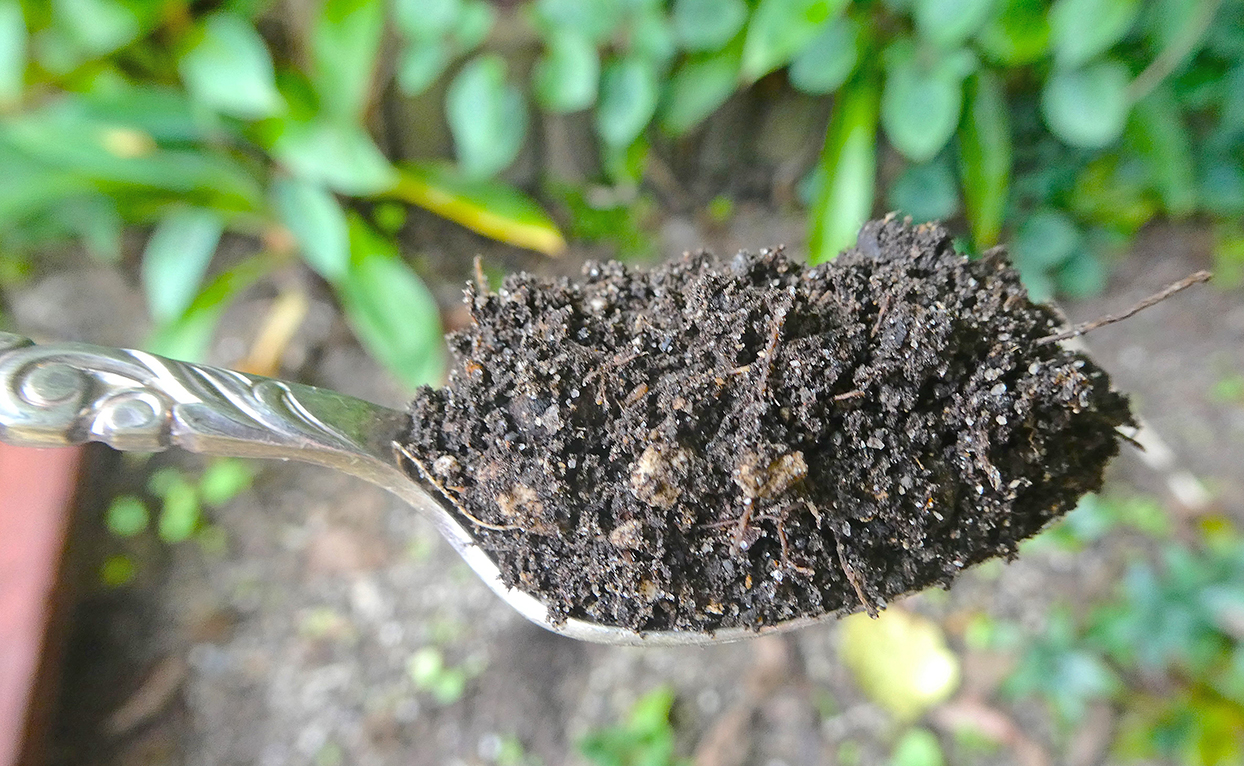
underground business: A teaspoon of soil containing millions of organisms. Photos Duncan Smith MSc, ARPS
.
When Whakatāne’s Duncan and Judy Smith bought nine hectares in the Waimata Valley, Gisborne, back in 1989, the soil was compacted and weary.
Like most new landowners, they knew almost everything, until reality intervened.
“Some crops flourished, others sulked, and a few vanished without leaving forwarding addresses,” he said.
“As we stopped digging so enthusiastically, added compost and mulch, and let nature get on with her underground business, the soil softened, worms appeared and plants grew stronger,” Mr Smith said.
“Even the vineyard eventually rewarded us with award-winning grapes.”
“We never met the bacteria and fungi responsible personally, but they did all the heavy lifting while we congratulated ourselves unnecessarily.”
Standing in the vineyard on a warm evening, Mr Smith said it was comforting to realise that the real miracle wasn’t the vines or the wine, but the astonishing invisible city beneath their boots, quietly keeping everything alive and asking only that they stopped stomping on it quite so enthusiastically.
“Most of us give soil about as much thought as we give the bottoms of our shoes, which is to say, almost none, unless something has gone badly wrong.
“Yet beneath our feet lies one of the busiest, most crowded ecosystems on Earth.”
“A 2023 Swiss study estimated that around 59 percent of all life on the planet lives in soil, making it the most biologically diverse habitat we know.
“A teaspoon of healthy soil can contain more living organisms than there are people on Earth, a statistic that should make you tread a little more carefully,” he said.
“Without this hidden world, there would be no forests, crops, gardens – or wine.
“Which would make civilisation collapse surprisingly quickly.”
Scientists have identified vast communities of bacteria, fungi, archaea, nematodes, insects and assorted microscopic freeloaders in soil.
Most are helpful, some are harmless, and a few cause trouble, much like any small town, but the good vastly outweigh the bad.
Together, they form a living engine that quietly powers plant health, nutrient recycling and soil structure while we remain blissfully unaware above ground.
Mr Smith introduces us to a few of the more industrious citizens:
■ Bacteria – the invisible workforce
Bacteria are microscopic single-celled organisms found everywhere, including inside you at this very moment, whether you invited them or not.
A single gram of healthy soil (about the weight of a paperclip) can contain billions of them, all busily recycling nutrients, breaking down organic matter and suppressing plant diseases with admirable dedication and absolutely no coffee breaks.
Some bacteria convert nitrate into nitrogen gas; others produce substances toxic to insect pests, proving that even microbes occasionally enjoy a spot of pest control.
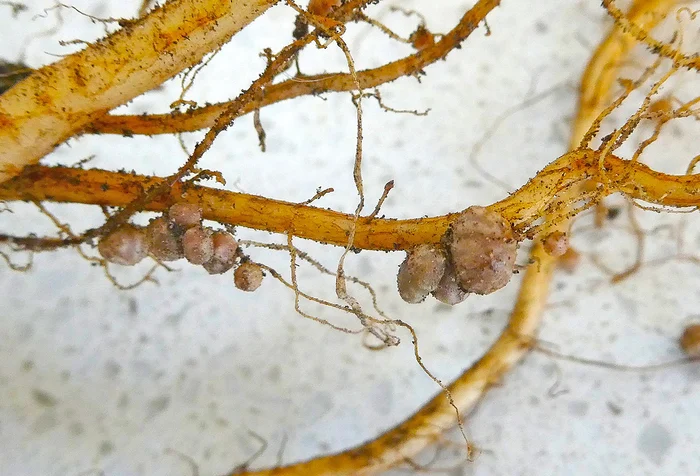
One particularly clever group, Rhizobium, forms a partnership with legumes such as peas and beans. These bacteria live in nodules on plant roots and convert nitrogen from the air into fertiliser the plant can use.
In return, the plant supplies sugars, a neat underground business arrangement with no paperwork and remarkably few meetings.
■ Archaea – the tough survivors
Once mistaken for bacteria, archaea turned out to be a completely separate group, the biological equivalent of discovering your neighbour is actually from another planet.
Some thrive in extreme environments such as boiling heat, high salinity or heavy metals. In soils they help recycle nutrients and may strengthen plant immune responses.
They are the quiet survivalists of the microbial world, cheerfully getting on with life where most organisms would immediately faint.
■ Fungi – nature’s underground internet
Soil fungi form vast networks of fine threads that bind soil particles together, improving structure, aeration and water retention.
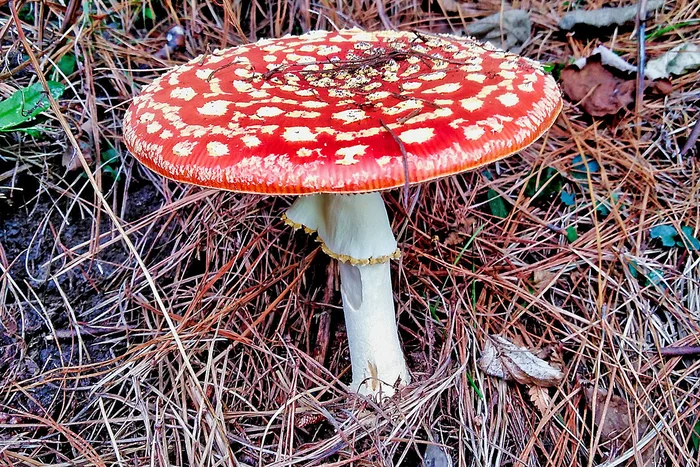
When conditions are right, some pop up as mushrooms or toadstools, a kind of biological pop-up shop announcing that something interesting is happening below.
Fungi decompose organic matter and recycle nutrients, but the real celebrities are the mycorrhizal fungi. Around 80-90 percent of land plants depend on them.
These fungi extend the plant’s effective root system, helping it absorb nutrients such as phosphorus and magnesium.
In exchange, the plant supplies sugars. It’s a mutually beneficial relationship so successful that nature has been running it for hundreds of millions of years without once issuing a press release.
n Nematodes – tiny but slightly menacing
Nematodes are microscopic roundworms and among the most abundant animals on Earth.
Many feed harmlessly on bacteria and fungi, quietly recycling nutrients. Some species, however, hunt insect pests using lethal bacteria as accomplices, a microscopic crime drama unfolding beneath your lawn.
Others attack plant roots and should probably not be invited back.
■ Arthropods and earthworms – the soil engineers
Tiny arthropods such as mites and springtails shred organic matter and recycle nutrients. Larger insects tunnel through soil, improving drainage and aeration. Ants rearrange everything according to plans known only to ants.
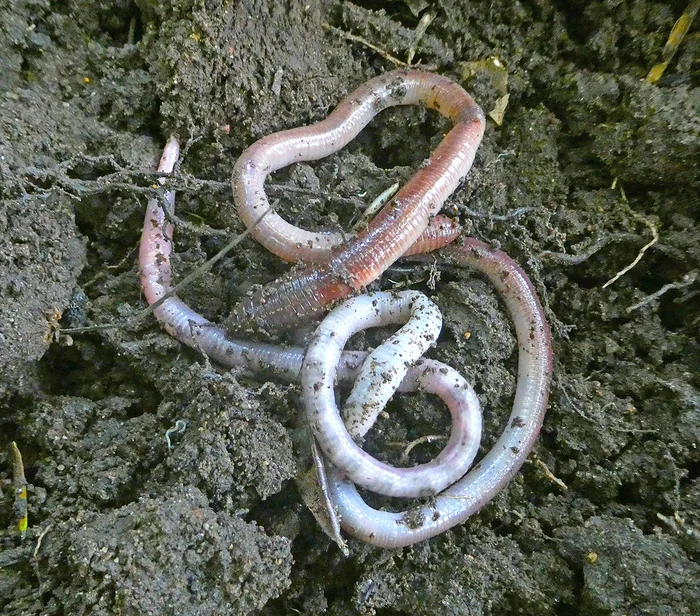
Earthworms deserve particular praise. They burrow, mix organic matter, improve structure and produce nutrient-rich castings that plants and microbes adore.
Darwin himself was fascinated by worms, which tells you something, because the man was not easily impressed. Healthy worm populations usually indicate healthy soils, and a garden that will reward you rather than quietly plotting against you.
■ Protozoa and viruses – the mysterious majority
Protozoa graze on bacteria and fungi, releasing nutrients back into the soil and keeping microbial populations in check. They are tiny regulators quietly maintaining balance while nobody notices.
Soil viruses can number in the billions per gram and remain poorly understood.
Studying them is difficult and expensive, so for now they remain the shadowy characters of the underground world, probably up to something but hopefully nothing alarming.