
Farmers explore carbon credits
.
Can carbon credits be part of the farm system?
Waiotahe/Nukuhou Water Care Group is hosting a carbon planning exercise next week that focuses on how to identify existing on-farm opportunities, what qualifies, where carbon credits work and where they don’t, and what the numbers look like in practice.
Using a local host farm as an example, Chris Brenna from Moxi Forestry will lead participants through a real plan designed for the property and explain the “carbon bank” concept, using carbon income to fund future planting, stabilise erosion-prone land and protect waterways over time.
Water care group members are on a continuous journey to keep abreast of opportunities to transition steep and most erosion-prone slopes into retirement or a more sustainable land use.
They invite all interested landowners to join them at the Osborne Farm at 341 Gabriels Gully Road at 10am on Tuesday, February 24, to look at one farm’s journey to make use of carbon credits to finance land use changes.
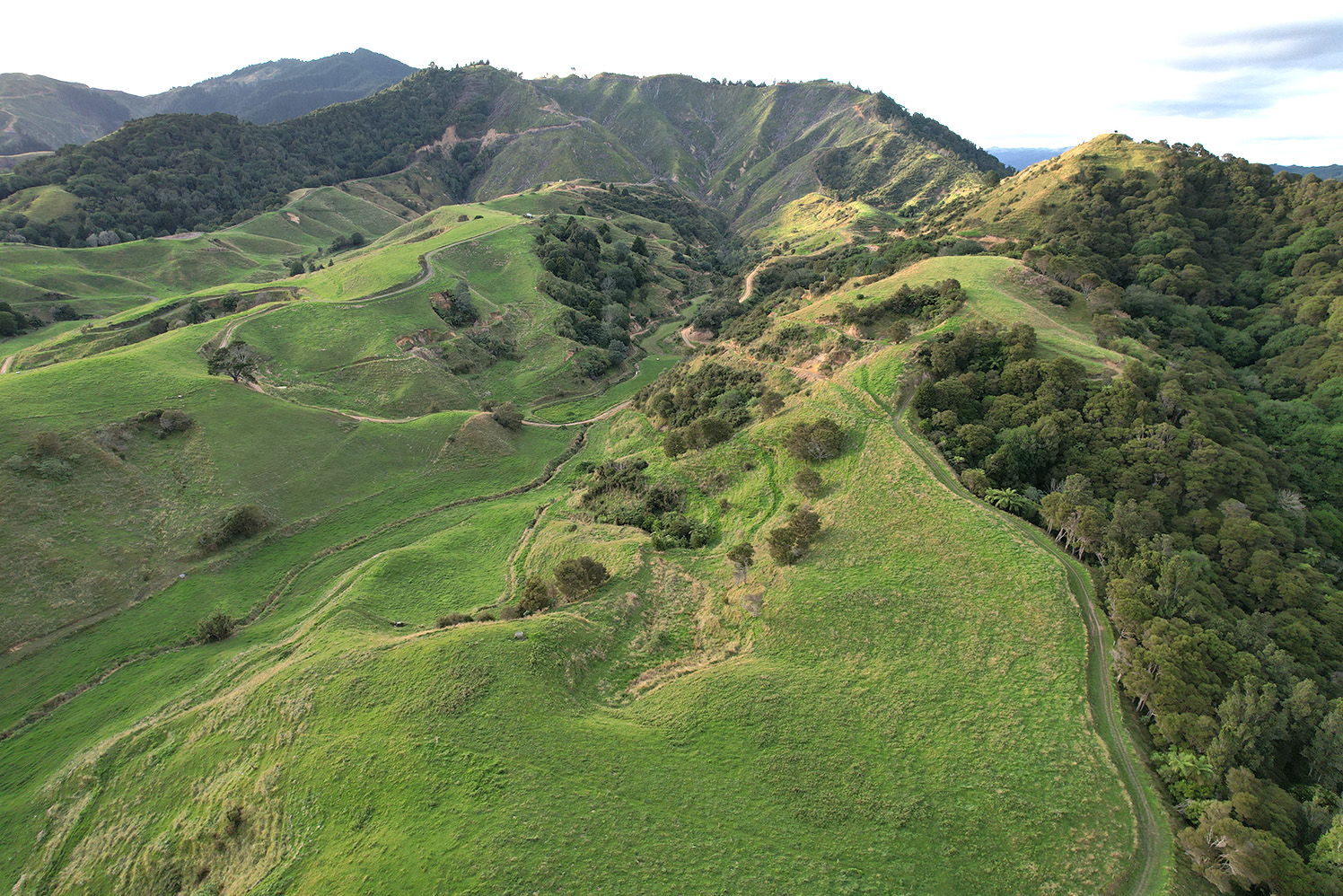
In 2023, the Government proposed draft regulation changes to meet the new National Policy Statement for Freshwater. These suggested a blanket rule of little or no stock to be grazed on land over 25 degrees, which, for many in the Waiotahe and Nukuhou area, rules out most of their land from grazing production.
For catchment group member Kevin Osborne, that represents 52 percent of his farm.
“We are effectively farming second-rate land in our area,” Mr Osborne said after listening to the advice from a Western Bay of Plenty farmer whose land provided more opportunities for funding land retirement (in terms of subdivision) and had large gullies that were easy to retire.
This contrasts with the many small gullies that are a feature of the Waiotahe landscape).
With this in mind, the water care group decided to take a deeper delve into the practical reality of what opportunities carbon credits could offer the average Eastern Bay farm.
Frances Van Alphen, catchment group support, said a talk by Te Uru Rakau last year raised a lot of interest in the topic but also left a lot of blanks as their hands were tied when it came to explaining the practical and financial nitty-gritties.
The water care group enlisted the expertise of Mr Brennan, a contract planter who became fed up with the mixed advice he was receiving from Emissions Trading Scheme experts and consultants and decided to learn the ins and outs of the scheme himself.
His grassroots perspective inspired the catchment group to task him with a practical exercise to investigate ETS opportunities on an Eastern Bay farm, showcasing the decisions and choices made with the landowner.
One of Mr Brennan’s key messages, which appealed to catchment group members, was the need to future-proof their choices – “use ETS to achieve goals that will benefit your farm aspirations even if the ETS scheme were to evaporate in the long term”.
Where do you start?
“The first question is what you have got to work with in existing opportunities and what you could afford to invest into plantings that can earn carbon credits,” Mr Brennan said.
Some farms can earn $40,000 in the first year if the opportunities are there, so Mr Brennan’s first focus is identifying opportunities to create funds to undertake planting projects that are sitting on farmers’ wish lists.
At the Osborne farm, he started by doing an eligibility assessment, taking a snapshot in the form of a mapping system to roughly identify what potential the property had based on a conservative estimate of $30/ton carbon credit return.
Ms Van Alphen said this was a very low-cost step in the process and farmers attending next week’s event would see how much information this provided.
The next step was to complete a Carbon Feasibility and Planning assessment, which included a farm visit and discussions with the landowner to understand their aspirations for the farm.
For Mr Osborne, these included using what he already had and focusing on steep slopes. It had to be economical, so needed to start with the “easy wins”.
The slopes where managing fescue grass and gorse were a challenge were also high priorities for him.
Lastly, Mr Brennan crunched the numbers of costs versus return.
He identified a range of suggestions of what qualified to be registered into the ETS, including existing radiata, pasture to exotic options and pasture to native.
Further details will be provided at the event. Registration is via the Waiotahe Water Care Facebook page or the Landcare trusts event calendar.