
Removing barriers, rangatahi thrive on basketball court
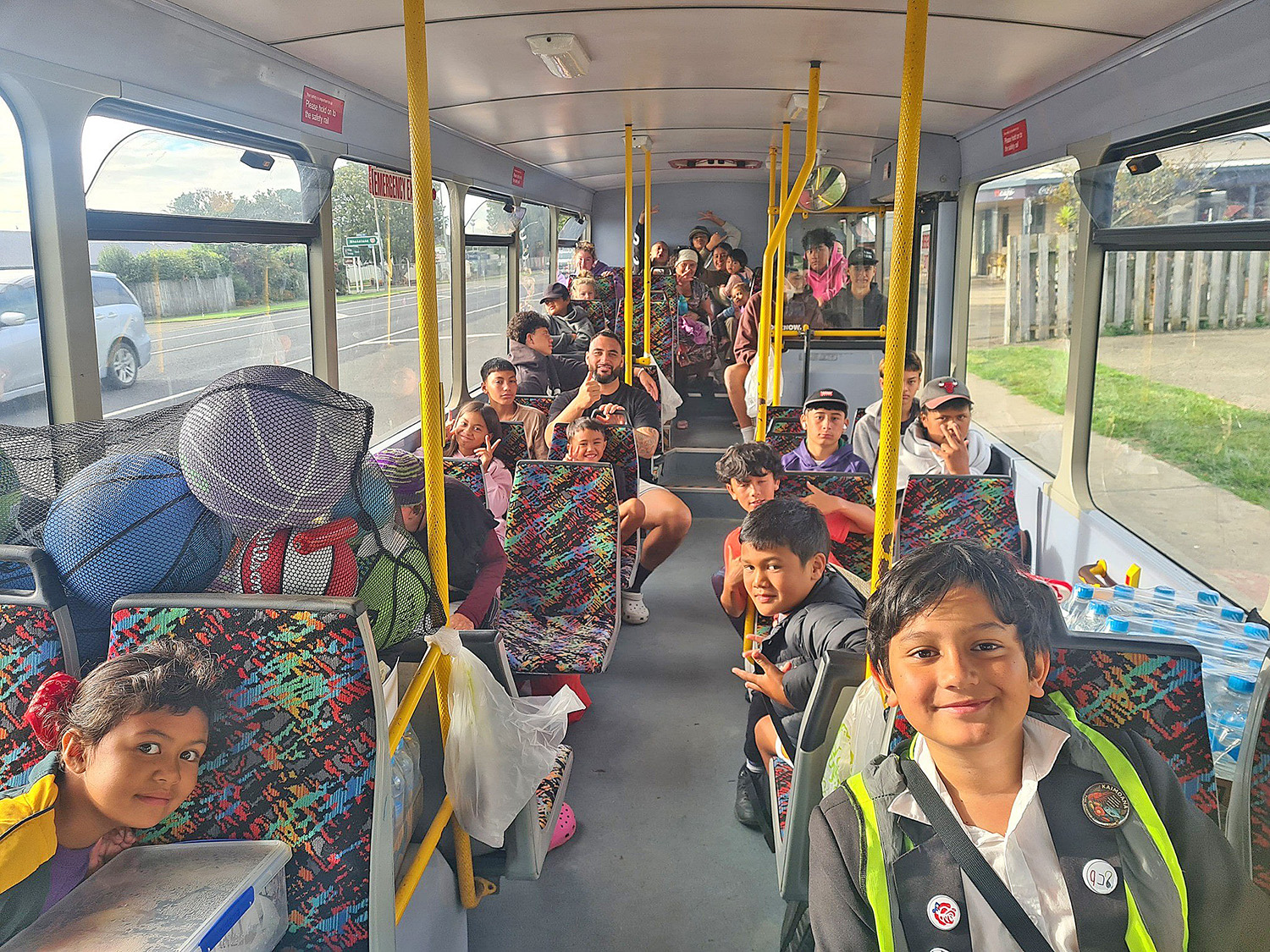
OFF WE GO: Rangatahi from Ōpōtiki Rangatahi Pā with Jahliya, 6, and Warren Paeara Tumatauenga Adams, 10, on the bus ready to play basketball in Kawerau. Photo supplied
Contributed
Alex Le Long
Ōpōtiki Rangatahi Pā’s first step into competitive basketball has proven successful and eye-opening, showing what’s possible when barriers are removed – and what still needs to be addressed.
Over summer, Ōpōtiki Rangatahi Pā supported rangatahi to take part in regional 3x3 basketball competitions, following the strong turnout and buzz at the Ōpōtiki 3x3 event held at the Memorial Park courts.
Seeing so many young people keen to play made one thing clear: the talent, motivation, and appetite were already here, access was the missing piece.
With support from Sport Bay of Plenty through the Tū Manawa Active Fund, and support for registrations from whānau and Tauranga City Basketball, Ōpōtiki Rangatahi Pā was able to take a full bus of rangatahi, coaches, and whānau to two competitions – one in Kawerau and another in Whakatāne.
Foodstuffs NZ supported the kaupapa with kai, while St John’s Church and Ōpōtiki Baptist Church provided venue space for food preparation.
Whānau involvement was a cornerstone of the experience. In the days leading up to competition, whānau came together with the Taitama and Kōhine Redeemers team members to prepare kai, making sure everyone was well-fed, hydrated, and ready for long days on the court.
That wraparound support created a strong sense of manaakitanga and collective ownership, with rangatahi, coaches, and supporters all backing one another. On January 27 in Kawerau, 18 players travelled alongside coaches and whānau, making a total group of 33.
Just days later, on 1 February in Whakatāne, that number grew to 27 players and 38 people in total.
Across both events, teams performed strongly, showed clear growth in confidence and sportsmanship, and made the most of opportunities to develop skills in live competition settings. Additional training sessions were held throughout the days to help teams gel and adapt.
Transport proved to be the biggest barrier – and the biggest enabler once removed. Having a bus available meant rangatahi could attend without placing pressure on whānau, and it allowed young people to travel, compete, and return home together.
The impact was immediate, with whānau already asking when the next trip would be – and whether two buses might be needed next time.
The experience also highlighted other challenges. Access to appropriate footwear remains an issue for many rangatahi, with some arriving ready to play but without safe or suitable shoes.
In response, Ōpōtiki Rangatahi Pā has begun a shoe donation initiative, with eight pairs currently available to be borrowed and returned after games, and plans to grow the collection.
Playing in different environments was another learning curve. Rangatahi had to adjust to heat on uncovered asphalt courts, wooden indoor floors in Whakatāne, and busy venues with multiple games happening at once. While challenging, these experiences also helped build resilience, adaptability, and game awareness.
Looking ahead, both coaches and whānau have identified the need for more consistent court access in Ōpōtiki, including reliable indoor space and a dedicated basketball court – ideally a covered court near the skatepark. Such a space would allow rangatahi to train safely and regularly, siblings to play nearby, and whānau to watch and support more easily.
Overall, the kaupapa showed that when transport, kai, and culturally safe environments are in place, rangatahi turn up – not just once, but again and again.
With the right support, they are keen to learn, compete, and belong, and this first foray into competitive basketball has laid a strong foundation for what could come next.
Ōpōtiki Rangatahi Pā acknowledged and thanked the coaches and whānau who gave their time, energy, and aroha to support tamariki and rangatahi throughout the summer competitions.
From coaching on and off the court, to preparing kai, transporting gear, and backing young people every step of the way, this kaupapa would not have been possible without that collective effort.
We also acknowledge the co-ordination and behind-the-scenes mahi that made it all happen, ensuring our young people could access opportunities that might otherwise have been out of reach. This was truly a shared achievement, grounded in whānau, teamwork, and belief in our future leaders.