Kelsey’s powerful book launch celebration
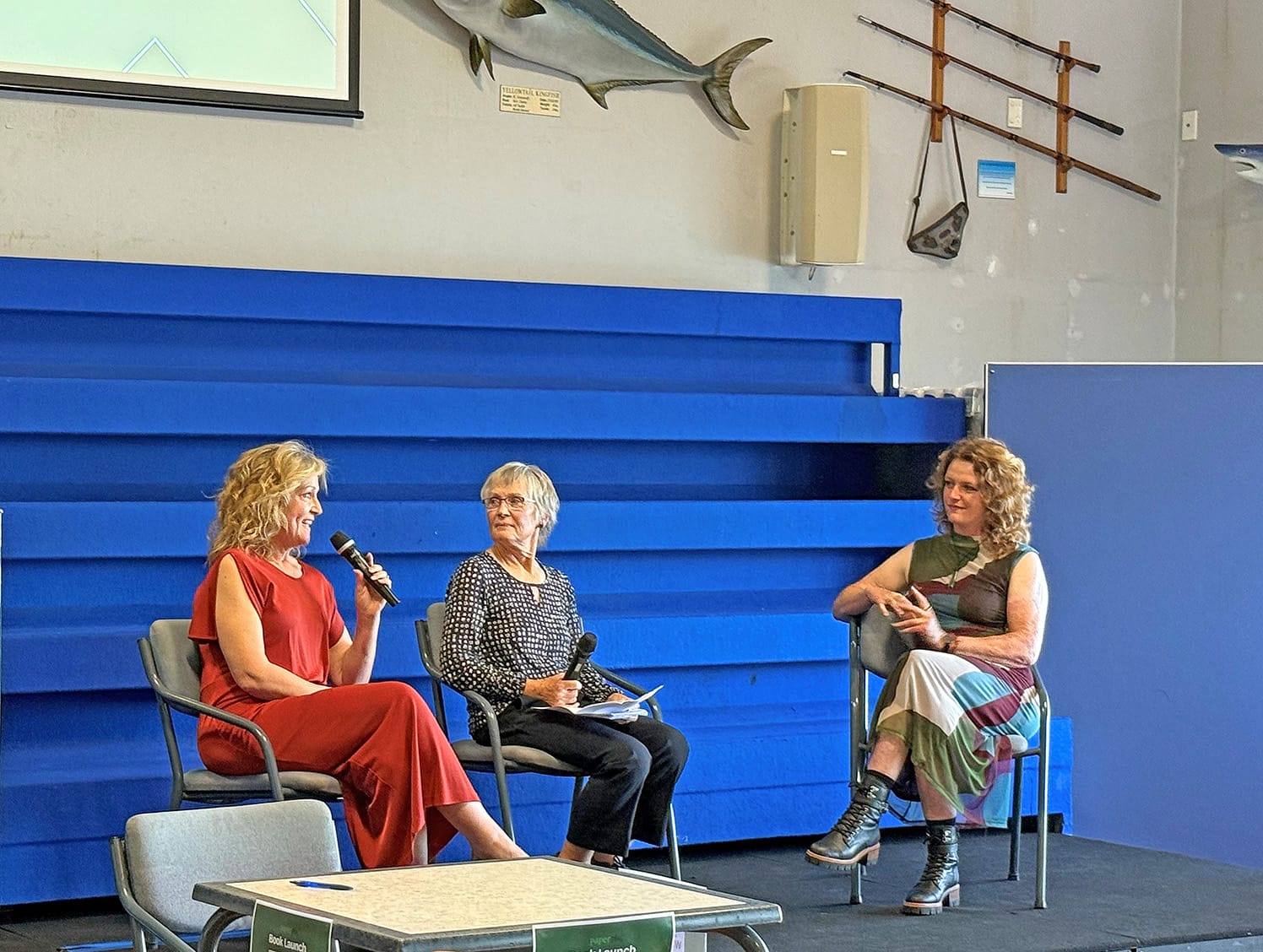
<span style="white-space: pre-wrap;">book launch: Kelsey Waghorn, right, and mum Shelley, left, answer questions from HarperCollins representative Margaret Sinclair at the launch of Kelsey’s book Surviving White Island and Everything That Came After. Photos Neryda McNabb E5890-02</span>
News Editor
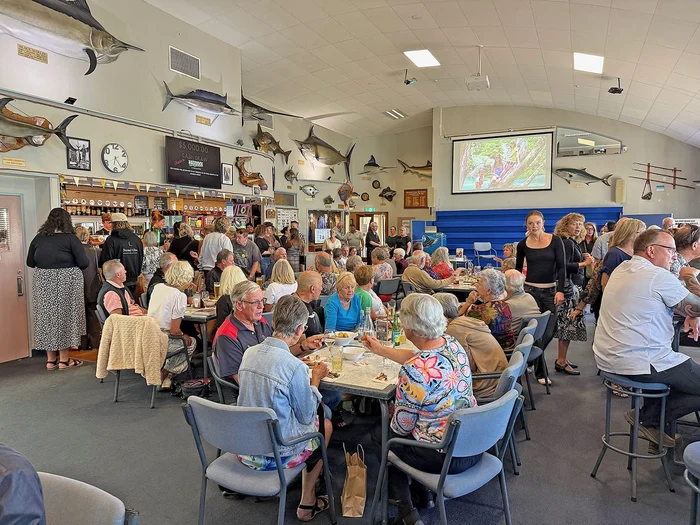
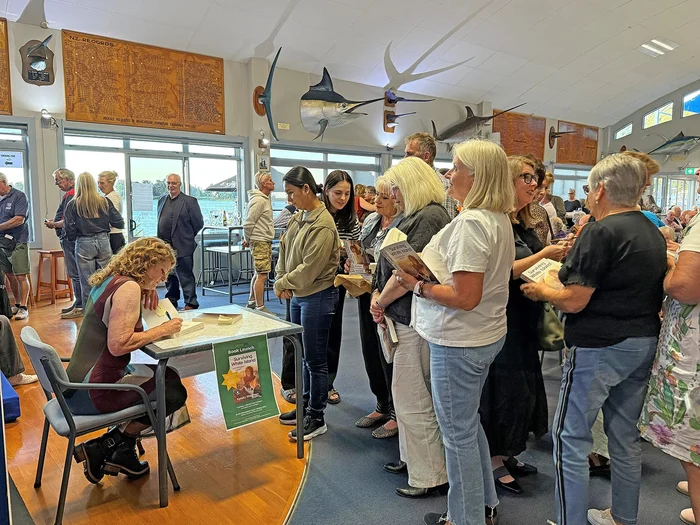
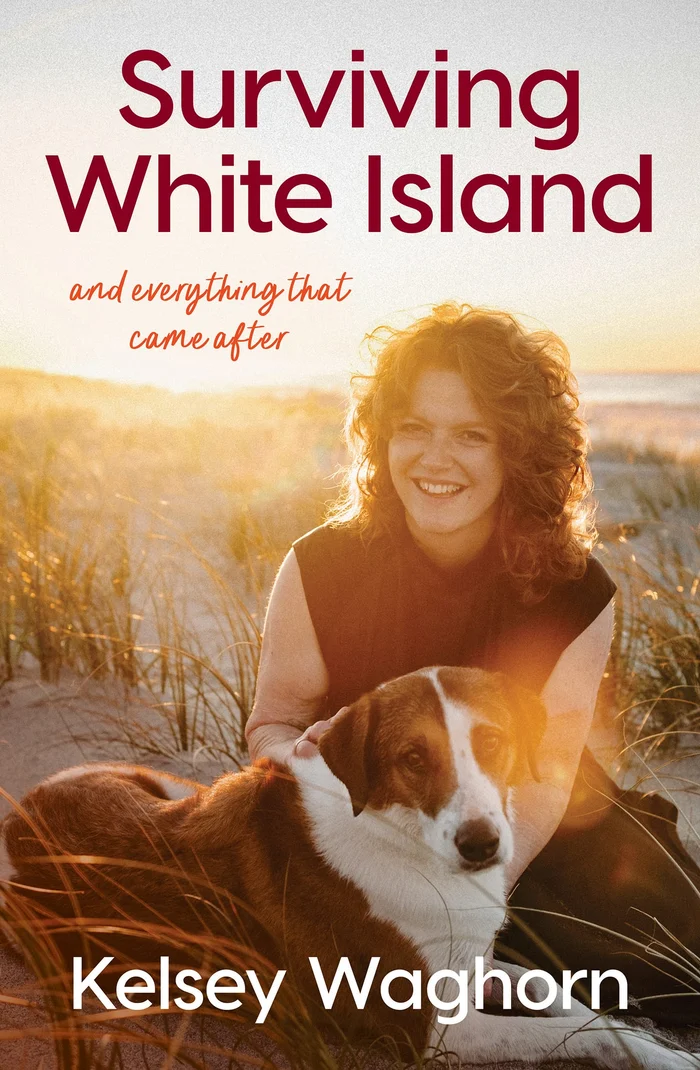
It was standing room only at the Whakatāne Sport Fishing Club on Tuesday evening as the public turned out in force to help Kelsey Waghorn celebrate the launch of her book, Surviving White Island and Everything That Came After.
Six years after the eruption of Whakaari that claimed 22 lives and injured 25 others, Kelsey has felt ready to tell her story – in her own words – and that story is attracting buyers in the hundreds.
Surviving White Island and Everything That Came After was the top-selling book in the Paper Plus group nationally last week and at the Whakatāne store alone, more than 300 copies have been sold in have past 10 days.
This week’s launch party, put on by publisher HarperCollins in conjunction with Paper Plus, followed a question-and-answer format with Kelsey supported on stage by one of her biggest cheerleaders and supporter, her mother, Shelley Waghorn.
Together they answered a range of questions put to them by Margaret Sinclair from HarperCollins.
One of the most emotional times of the night came when Shelley recalled the aftermath of the eruption, when the severity of Kelsey’s injuries was unknown.
She said she “didn’t have a clue” how bad it was initially because when she first saw Kelsey, she was animated – “smiling, laughing, swearing; just normal, basically”.
She was triaged and, with her mother at her side, helicoptered to Hutt Hospital in the early hours of the morning, where the trauma team “whisked her away”.
“I didn't see her until I think about 9.30am … she was on a ventilator, in an induced coma … the bandages were big and every inch of her body that you could see was incredibly swollen.
“Being taken into ICU and sitting there, when you thought she had this and she was going to be fine, it was freaking harsh.
“It literally felt as if the oxygen just got sucked out of my body.”
Shelley said the rest of the family had been planning to go down in a couple of days, but she had to tell them to hurry.
“It was like, this is a little bit more serious. She’s in this induced coma; you need to come now because they can't tell me that she’s actually going to survive this.”
In Wellington, hospital staff, friends from home and even strangers rallied around them, organising accommodation, food and clothing.
Wade Brown, the Whakatāne New World owner at the time, got in touch with Hutt New World, which rang every week to ask what they needed – and delivered.
“A friend’s daughter was down there, and she mobilised all of the Wellington area, who started baking for us, to the point where we had every fridge and freezer in the motel full of food, and I had to say, please stop.
“The love; everything was amazing. The accommodation, the food, we were really taken care of.”
For Kelsey, relationships with hospital staff evolved over time.
While in a coma, she said she thought they had kidnapped her and, at one stage, they were trying to feed her to a small pig.
Ketamine-induced delusions turned them into “the enemy” initially, but her feelings quickly turned to ones of appreciation, friendship, and love
“They all became essentially family. We pretty much lived with them day in day out for 66 days,” she said.
“We got to know everyone, and it was really hard leaving Hutt hospital. We didn't want to go; it felt safe there.
“The move to Waikato Hospital was probably the most brutal but the staff there were amazing as well.”
The eruption is described clearly in the book, but Kelsey was not asked to relive that day at the book launch.
Instead, she was asked if there was anything about the event that might surprise people.
“I guess that it was silent, which I sort of talk about in the book,” she said. “And that there was no lava – which people were disappointed about on the tours … but in that moment (the eruption), I was grateful for.”
She credits the book Surviving Galeras by Stanley Williams with saving her life.
Mr Williams is an eminent volcanologist who was standing on top of the Colombian volcano Galeras when it erupted in 1993, killing six of his colleagues instantly.
“I read this book by this volcanologist who had survived a pyroclastic flow; the science behind it and what happened and what to do … I read it in 2016 and didn't really take any notice of it because that was in my sea-loving era and I wasn’t taking a lot of notice of geology – or so I thought.
“But when we actually had the pyroclastic surge come over us, I just had his words echoing in my head: what to do and what was happening, and how to get through it.
“Thankfully, everything that he said in that book rang true and I’m here to tell the tale.
“I'm very grateful that I was able to hunt him down, thanks to Google, and send him an email and tell him that it saved my life.”
In writing the book, Kelsey said she relied on the running diary which ICU staff at Hutt Hospital encouraged her family to keep. It timestamped everything that, being in a coma and sedated, she was unaware of.
“I relied heavily on that book. I relied heavily on text message chains, Facebook message chains from family. There were letters, there were cards, medical notes, volumes and volumes of beautiful notes.”
Kelsey enjoys a footnote, so in the book where there are threads of family members talking to each other, or things that nursing staff have said to her, she will put a dry footnote at the bottom about what she thought of what was going on.
The hardest part about writing the book was the logistics of pulling together all the information from multiple sources.
Another difficulty was putting into words the eruption.
“I didn't know how to put it into words; I still don't actually,” she said.
“What it was like – I think the only people that will even know will be the people that were there.”
She told how a couple of years after the eruption was a “pretty dire” time for her as post-traumatic stress disorder cast a long shadow.
Her saving grace was a wellbeing coach, Sam, who taught her healing techniques including meditation and grounding exercises – and her orange and white dog River who features on the cover of the book.
She said she ended up in a Facebook chat group with other survivors, mostly from Australia, that was helpful in the early days but there were cons to being in both camps – survivor and crew member.
“We had different viewpoints on what happened, so it was quite hard to have a conversation with them about what had happened … it was a hard position to be in because it felt like I couldn't speak openly with all the court cases and it was quite isolating.
“So, I had these people who understood, but I didn't feel like they understood.”
How has their family changed? Shelley said although it sounded cheesy, the experience taught them what was really important.
“You can say on any given day that my family is the most important thing to me. But until it's almost taken away … you don't really realise the impact and how it actually just basically hits; how precious life is, and how it can be snuffed out in an instant, or changed.
“The horrors of life don't just happen to other people, they happen to you, too.
“For our family in particular, we were always close, but we are very close now, and we look out for each other.”
She said Kelsey had lost all rights to privacy since the eruption.
“I track her every minute,” she said.
“We just love each other with our whole souls, and we love whenever we can, and we take the moments to go and have fun and enjoy.”
Entry to the book launch was by gold coin donation with proceeds going to the Wellington Regional Burn Unit. The Whakatāne Sport Fishing Club topped up door donations to $1000 and additional donations from club members and the auction of a signed copy of the book for $200, boosted the total to $1500.