
Global issues will affect council costs
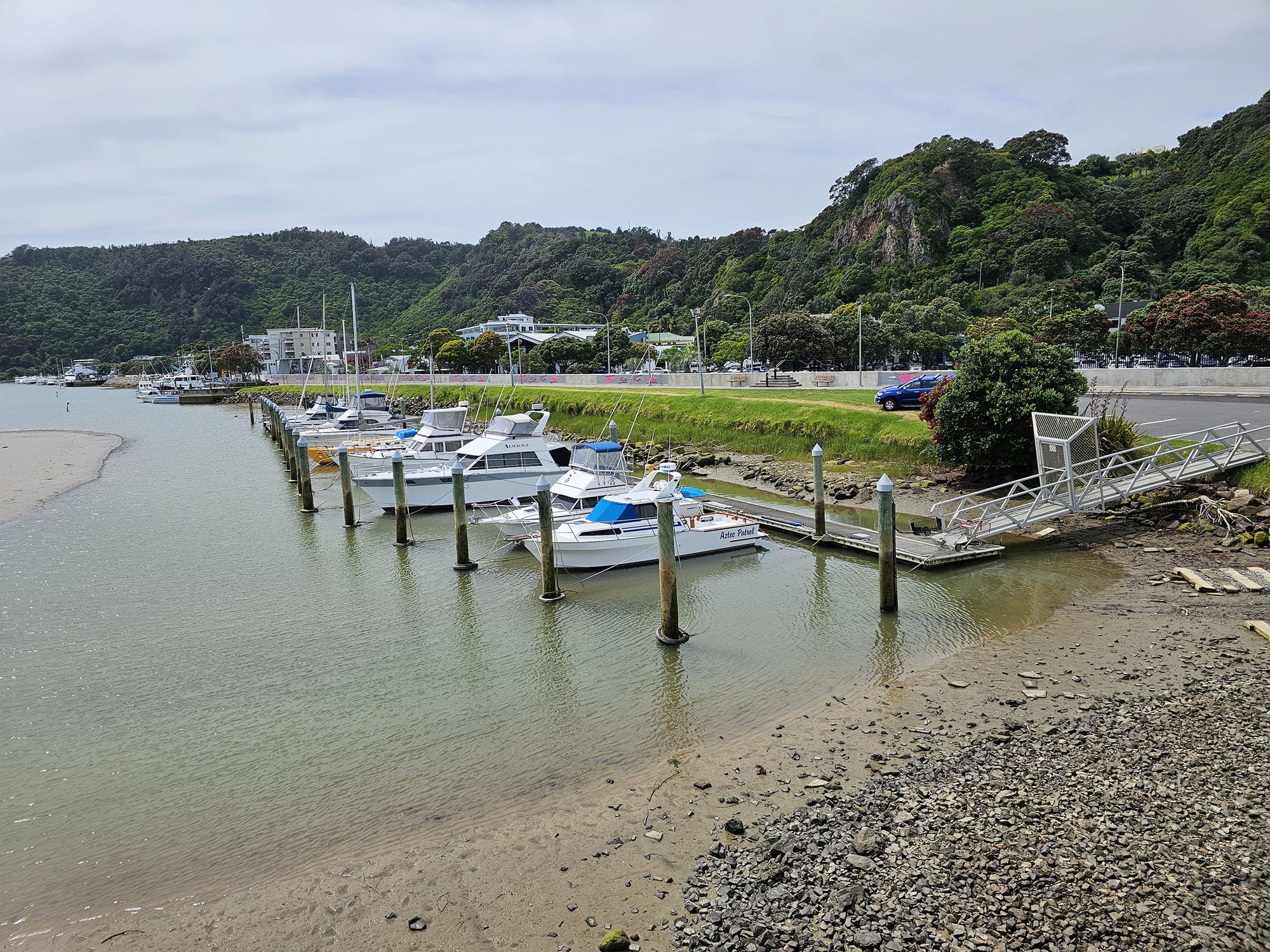
<span style="white-space: pre-wrap;">Disappearing harbour: The future of Whakatāne Yacht Club could hinge on whether Whakatāne District Council will include dredging of the navigation channel in the coming year’s budget. File photo</span>
Diane McCarthy
Practical impacts of the attack on Iran and destabilisation in the Middle East were acknowledged by Mayor Nandor Tanczos as Whakatāne District Council met to approve its draft annual plan budget for the coming year.
“The immediate impact of that is likely to be a massive spike in oil prices and that will affect us.
“There’s not much we can do about that but reiterate our concern to keep costs down and try to make things as affordable for our communities as possible,” Mr Tanczos said.
The budget approval formalised the majority of council members’ indications to staff at a meeting on February 4.
These were to use a reduction in costs identified for the upcoming year’s budget toward reducing the council’s operating deficit rather than reducing this year’s rates rise by 1.7 percent.
This meant the council would borrow about $1.35 million less in the coming year than forecast in the Long-term Plan 2024-2034 and the projected rates rise, as it currently stands, will remain at 9.4 percent rather than be reduced to 7.7 percent.
Finance general manager Paul Davidson said the council had made inroads into reducing its operating deficit.
“The council made a decision last year to take $1.5 million into [balancing the budget] and this year there’s an additional $1.35 million.”
This would see the council possibly returning to a balanced budget by 2029.
The decision included a contingency fund representing 0.7 percent of overall rates take, to allow for unforeseen interest rate rises,
Though the decision passed with a majority, two councillors voted against the decision.
Councillor Andrew Iles was alone in voting for the 1.7 percent savings to be offset against rates.
“We’re still living in this cost-of-living crisis. We’ve got a war going on now, which is going to impact fuel prices, yet at the same time, we’re asking our ratepayers to absorb those costs while we are applying more costs.
“What restraint are we showing as councillors to bring those costs down, so we can pass on some savings to our ratepayers?”
Councillor Gavin Dennis also voted against the decision, wanting to use the entire savings for reducing the deficit without any contingency fund being set aside.
“The big elephant in the room is that deficit. If we don’t get that down soon we’re just punishing the following generation.”
Councillor Caroline Hamill said the council was showing concern about afforability by putting the funds toward paying off the deficit.
“We’re concerned about it for the future ... The only way we’re going to get on top of it is to get our ship in order and getting our operating deficit down.”
Members directed staff to obtain cost estimates and develop a plan for the dredging of the Whakatāne River navigation channel as requested by the Whakatane Yacht Club, so that could be taken into account when putting together the annual plan.
Councillor Wilson James queried whether this should be covered by the Harbour Fund rather than rates funding.
“I think it needs clarifying, because, to me, the harbour fund is for the harbour, and we’re starting to lose our harbour, which is a bit of a concern,” Mr James said.
Chief executive Steven Perdia said there was further work to be done around whether dredging, which was an operational expense, should be done using a reserve fund and further decisions around that would be coming back to council.
Councillor Lesley Immink said there was a historical agreement between the council and the yacht club to keep the channel clear.
“I still think that’s part of our obligation.”
Deputy mayor Julie Jukes was alone in voting against obtaining cost estimates for the dredging.
Staff also identified six further subjects that could affect the rates increase, which elected members would need to make decisions on before the Annual Plan 2026-2027 is adopted at the end of June and rates struck. Further reports on these issues would be provided at upcoming meetings.
Topics included advancing funding for the Rex Morpeth Recreation Hub project, how to use increased funding from the Ministry of the Environment’s Waste Levy, options for the isite location, purchasing of a licence plate recognition system for parking wardens, the potential need for a volunteer liaison role for Toi’s track and transitioning three waters services to a new internal business unit.