
Early start for young recruits at intermediate boot camp
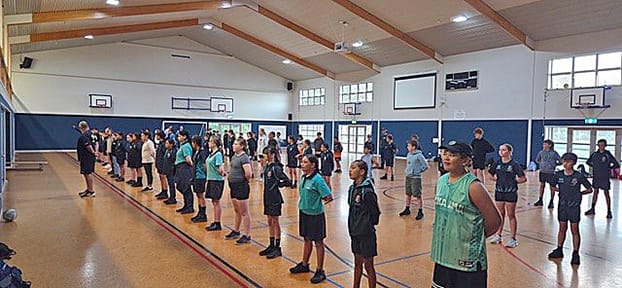
<span style="white-space: pre-wrap;">MORNING PARADE: Whakatāne Intermediate students line up for drills as part of the early morning police-led boot camp programme. Photos Tracy Rhodes</span>
Tamara Herdman
Around 70 Whakatāne Intermediate students are trading sleep-ins for discipline, teamwork and a hearty breakfast at the school’s popular police-led boot camp, a six-week programme organised by Blue Light Whakatāne and local police.
The boot camp, run by Youth Aid Senior Constables Kevin Raynes and Adam Keno, is designed to encourage school attendance while teaching young people discipline, teamwork and life skills.
Mr Raynes said the programme had been running at the school for several years, though it paused briefly before returning this year with strong interest from students.
“When we first started, we had about 20 kids. Now we’ve got around 65 to 70 turning up each morning, so there’s obviously a need or a want for it with our young people,” he said.
The mornings begin with a parade and drills, giving students a taste of structure and discipline before moving into a range of activities.
“We take a holistic view with the activities,” Mr Raynes said.
“They’re about teamwork and problem-solving, so you don’t have to be the fittest or the fastest to succeed.
“It's all about working together. A lot of them don't know each other, and as they've found out, they get put into teams, not with their mates. They learn to achieve goals with the different kids in their groups.”
Activities include sports, group challenges and BLAST exercises – Blue Light Alternative Strategies for Teenagers – designed to build co-operation and communication.
One activity involves navigating a “minefield” marked out on the field, where teams must work together to find the safe path through a grid of squares. Another challenge, known as “acid river”, requires students to solve problems as a group to reach the other side safely.
The programme also provides an opportunity for positive interaction between intermediate school students and police officers.
“We have police officers arriving at six in the morning, including local senior sergeants Ant Hay, who is the local prevention manager, and Cam MacKinnon, who is the local manager in charge,” Mr Raynes said.
“It helps break down barriers between police and our young people.”
Parents often attend to help, creating a strong sense of community around the programme.
At the end of each session, students sit down together for breakfast – an important part of the morning that allows police and volunteers to talk with students about making good choices, consequences and life skills.
The meals are provided with the support of Woolworths, which has backed the programme since it first began.
Participation comes with clear expectations. Students must attend school regularly and follow behaviour rules, in class and at the boot camp.
A “three strikes” system means repeated issues can result in students being removed from the programme.
The six-week course will finish with a “longest day”, where participants take part in a full day of activities from 6.30am until 3pm, including challenges such as a fire truck pull and obstacle-style events. The programme concludes with a graduation ceremony at the school.
Together, the early starts, challenges and shared breakfasts are helping students build discipline, confidence and stronger connections with police and their community.
