Construction begins on Tihori Solar near Edgecumbe
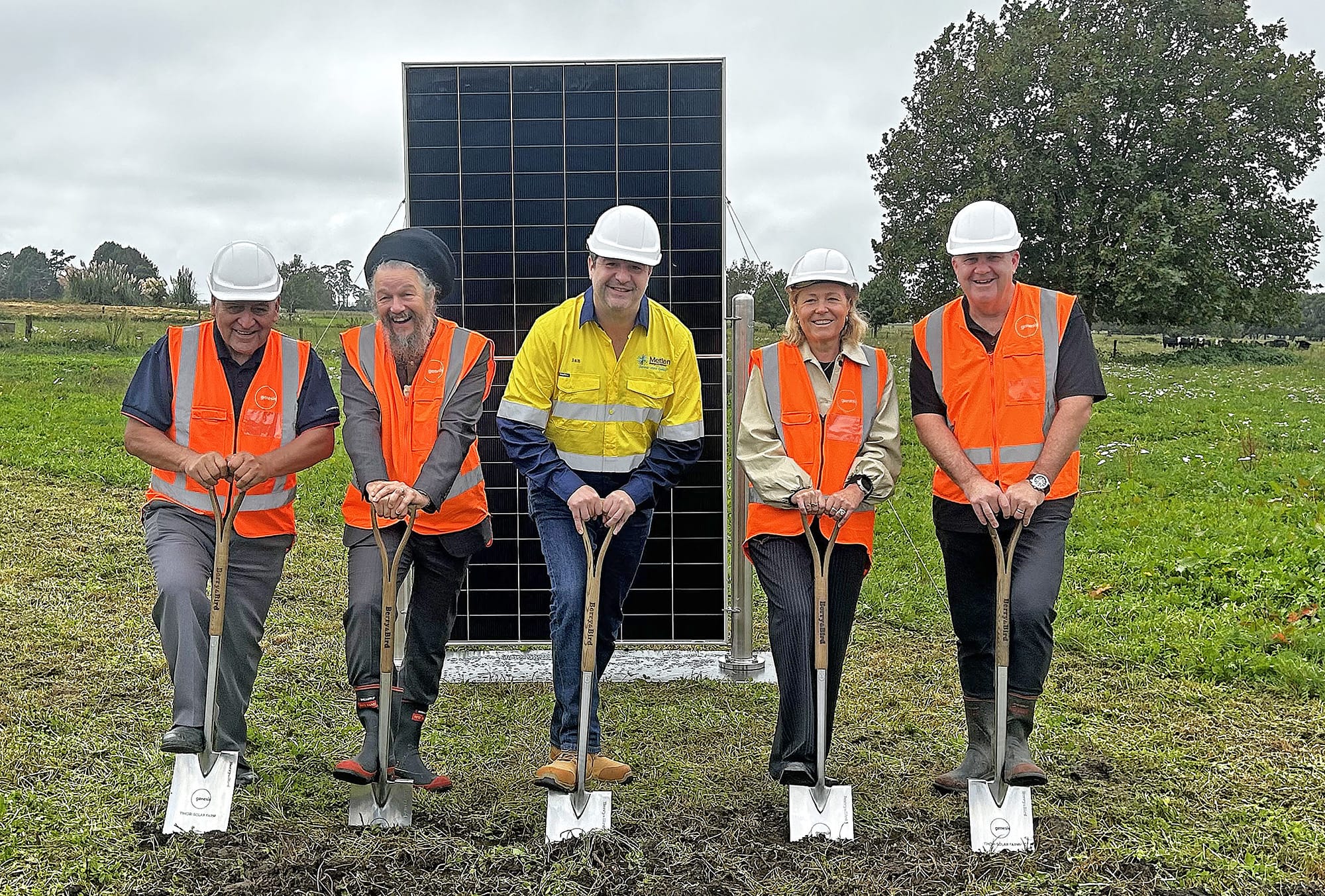
SOLAR START: Left to right: Ngāti Awa kaumatua Hemana Eruera, Whakatāne Mayor Nándor Tánczos, Ian Kirkham of Metlen Construction, Genesis chief operating officer Tracey Hickman, and Genesis chief executive Malcolm Johns mark the start of construction at Tihori Solar Farm. Photos supplied
Tamara Herdman
Genesis has begun construction of a major solar farm near Edgecumbe, a project expected to generate enough electricity to power around 30,000 homes and create more than 100 jobs.
A sod-turning ceremony on Friday marked the start of work on the 209-hectare site, and was attended by Genesis chief executive Malcolm Johns, Whakatāne Mayor Nándor Tánczos, representatives from Transpower, construction partner Metlen, networks partner Horizon, iwi representatives, and members of the landowner families.
The project has been gifted the name Tihori by the Rangitāiki Hapū Coalition, in honour of a Ngāti Awa chief who lived near Pūtauaki (Mt Edgecumbe).
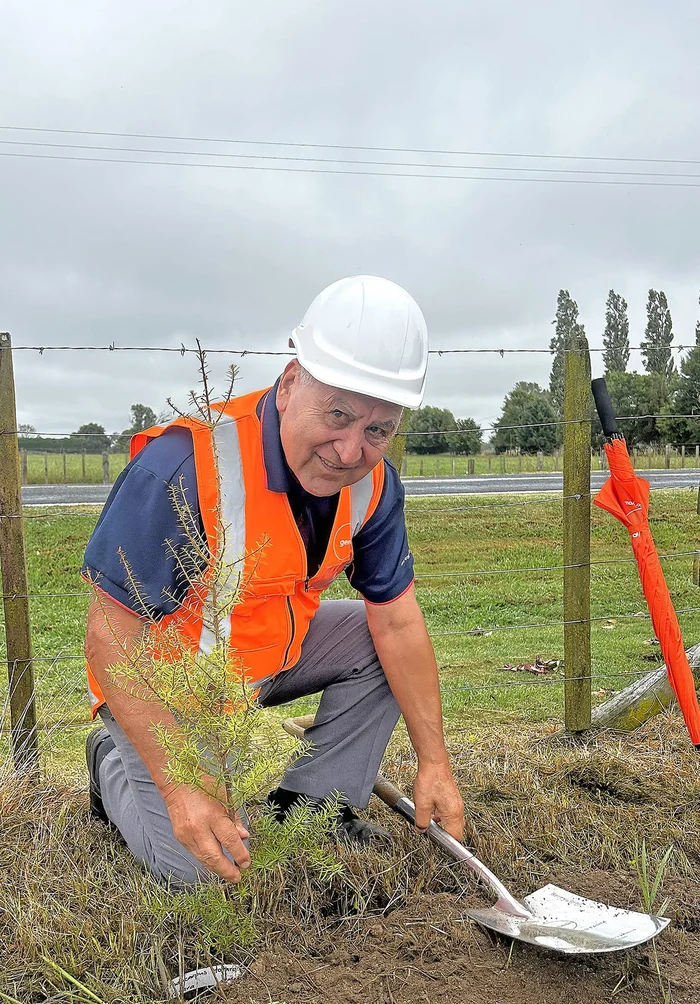
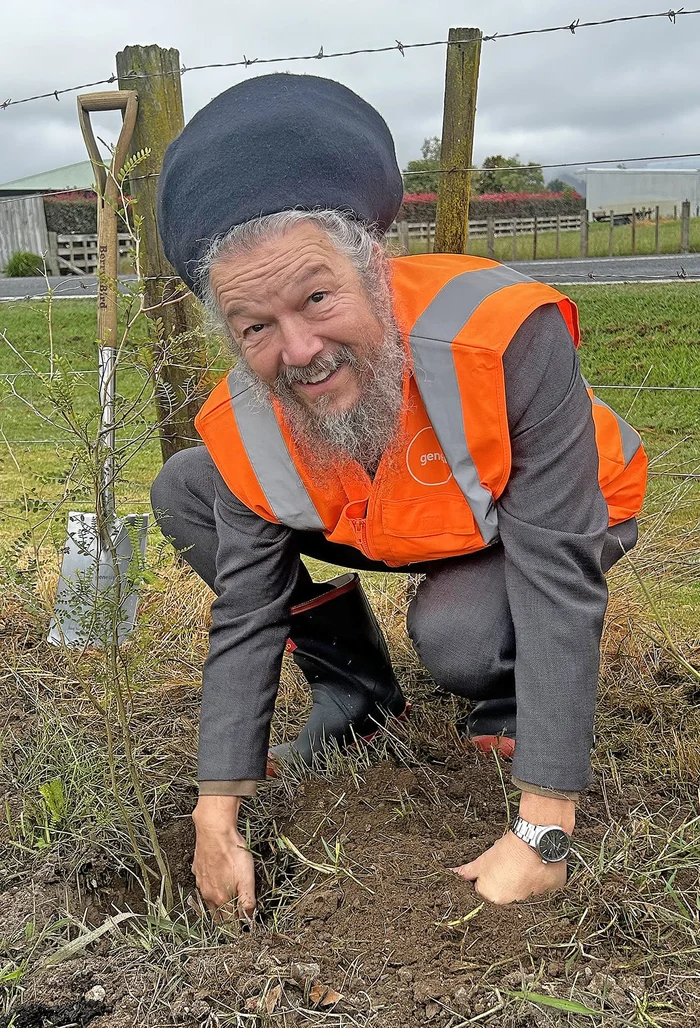
Karakia led by Ngāti Awa kauma-tua Hemana Eruera blessed the site before the ceremonial sod-turning. Representatives and landowners planted native trees and harakeke (flax) along the fenceline as part of the ceremony.
Once complete, the 136-megawatt solar farm is expected to generate up to 238 gigawatt hours of electricity each year. First generation is anticipated in mid-2027.
Mr Johns said the project was part of a broader push to increase New Zealand’s use of elec-tricity and renewable energy as the country works towards its net-zero emissions target by 2050.
“For New Zealand to reach net zero by 2050, the country’s energy use must become 60% electric, 95 percent renewable and available 100 percent of the time.
“Solar has an important role to play in this transition, and the Tihori Solar Farm is another step in our com-mitment to build 500MW of solar capacity throughout New Zealand,” he said.
Currently electricity accounts for only about 30 percent of New Zealand’s total energy use, with the rest largely coming from imported fuels such as petrol and diesel.
Projects such as the Tihori Solar Farm help reduce the need for coal and gas generation by allowing hydro schemes to store water during the day when solar generation is highest.
Mr Tánczos said the development represented both economic opportunity and a step to-ward a more resilient energy system.
“Days like this mark the moment when an idea turns into something real,” he said.
“We’re lucky here to live in a part of the country that gets a lot of sunshine, and with this solar farm that sunshine will be turned into clean, renewable power generated right here in our back-yard.”
He noted that solar developments on productive land had been carefully considered during the consenting process, with the panel concluding that the land could still be used productively.
Sheep grazing may be possible under the solar panels once the farm is operational, with current landowners given first option to manage it.
Land under solar farms can also return to agricultural use at the end of their life, as there are no soil or water contaminants left by the operation of the solar farm or the decommissioning process.
The $236 million project is being built by global solar developer Metlen and will connect to the national grid through a new transmission line to the Edgecumbe substation via Horizon Networks.
Construction will provide work for local contractors, engineers, electricians, transport operators and other trades, as well as create demand for accommodation, materials and other services.
Genesis has said it encourages contractors to prioritise local subcontrac-tors and suppliers wherever possible.
When asked about concerns from Putiki Road residents over tree removals, as reported by the Beacon on 9 December 2025, a Genesis spokesperson said:
“Genesis has been asked to minimise impact on residents and in particular give serious consideration to moving the transmission lines to the eastern side of Putiki R0ad.
“We are progressing this assessment and expect to share the outcomes with neighbours on Putiki Road towards the end of March.
“When draft detailed design plans are produced for the grid connection line, we will meet with neighbours to discuss the extent of any clashes between our draft pole locations and other encroachments along the legal road.
“We will also discuss potential mitigations to feed into the final design plans, including amending pole locations, additional planting and other screening suggestions.”
Genesis expects the solar farm to operate for about 35 years, after which it could be repowered with newer technology or removed.
“We look forward to working with the community in Edgecumbe and the wider Bay of Plenty region in bringing this solar farm to operation,” Mr Johns said.