
Doctor defends actions at tribunal hearing
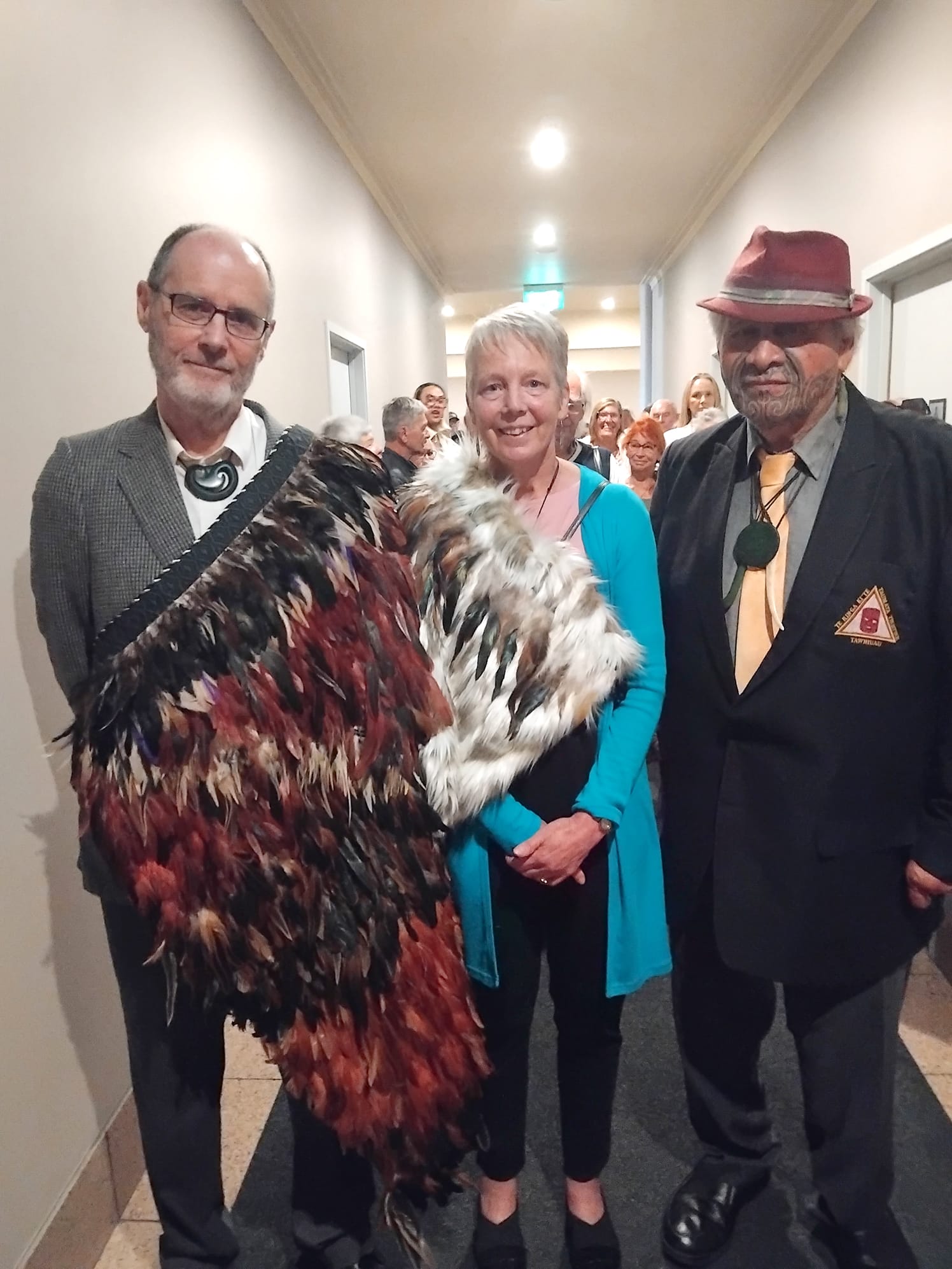
Independent thinker: Bernard Conlon, alongside his wife, Dr Britta Noske, and Murupara kaumatua Pem Bird, prepares to enter the New Zealand Health Practitioners Disciplinary Tribunal hearing this week. Photo Kathy Forsyth E5909-01
Kathy Forsyth
A disciplinary hearing into the conduct of Murupara GP Dr Bernard Conlon entered its final stages, with strong community support continuing to fill a Rotorua venue throughout the second week.
The hearing, between the Professional Conduct Committee (PCC) of the Medical Council of New Zealand and Dr Conlon has been held at the Arawa Park Hotel and concludes today.
The five-member tribunal, chaired by Truc Tran, has been examining allegations relating to Dr Conlon’s actions during a nine-month period in 2021 and early 2022, during the Covid-19 pandemic.
The PCC alleges Dr Conlon’s conduct – including public comments about the Pfizer Covid-19 vaccine, attempts to import ivermectin, advice and treatment provided to patients, and social media posts – amounts to professional misconduct. It says the actions, individually or collectively, could bring discredit to the medical profession.
Several witnesses for the PCC, all with name suppression, gave evidence during the first week of the hearing.
This week, Dr Conlon’s counsel, Adam Holloway, presented the defence case, followed by three days of evidence from Dr Conlon and his witnesses.
Mr Holloway told the tribunal Dr Conlon had been a GP in Murupara for 34 years and, until now, had never faced disciplinary action.
“Dr Conlon is an independent thinker, but he’s not a renegade. We say he practises good medicine,” Mr Holloway said.
He described his client as a long-serving rural doctor working with a high-needs community, often with limited access to healthcare services.
“All of Dr Conlon’s actions were centred on informing and caring for his patients, consistent with his values,” he said. “There are no allegations of patient harm.”
Mr Holloway argued the tribunal must consider the context of the pandemic, describing 2021 as a time of “uncertainty and fear” when information about the virus and treatments was rapidly evolving.
“It is easy, with hindsight, to look back with certainty,” he said. “But at the time, much was unknown.”
He said Dr Conlon tried to maintain the trust of his community in the face of vaccine mandates and provide them with information about a novel vaccine with a limited treatment recorded at that time.
At the centre of the defence is Dr Conlon’s emphasis on informed consent and what he described as his fiduciary duty to patients.
“I consider that, to be a trustworthy doctor, I must put patients and their right to informed consent at the centre of what I do,” Dr Conlon told the tribunal.
He said his actions were guided by his conscience and his interpretation of the Code of Health and Disability Services Consumers’ Rights, which he believed required him to present patients with a full range of information and options.
“It seemed to me that the Medical Council had decided the only vaccine available in the New Zealand at the time, an experimental mRNA-based medicine, was safe, and medical practitioners were expected to both receive and promote it.”
Dr Conlon also spoke about the challenges of practising in a rural community with high health needs, where he believed it was necessary to prepare for limited access to hospital care during a potential outbreak.
“I considered it prudent that I should plan to be capable of effective early treatment of Covid-19 patients,” he said. “In times of a pandemic driven by a novel virus, physicians have to cope with an exceptional level of uncertainty. In such circumstances, I consider individual clinicians are obligated to attempt to seek early treatment clinical experience that offers a lowering of uncertainties.”
He told the tribunal he researched international clinical experiences and emerging treatments, including the use of ivermectin and hydroxychloroquine, and had a firm belief in the benefits to the immune system of supplements such as vitamin D, vitamin C and zinc.
“I started learning all I could about both nutraceuticals and repurposed drugs so that I could give my community the best chance of getting through the coming pandemic.”
Dr Conlon said he also held concerns about the safety and efficacy of the Covid-19 vaccine at the time it was introduced, citing the speed of its development and what he saw as limited available data in 2021.
He was critical of vaccine mandates, saying they undermined the principle of informed consent.
“The choice between being vaccinated against Covid-19 or not being employed and losing one's livelihood is in fact no choice at all.”
He maintained he never withheld information from patients, including the option of vaccination, but believed patients were entitled to hear a range of perspectives beyond official guidance.
“My view was that my patients expected me to provide them with advice, and I had an obligation to do so,” he said.
“I sought to plan for, protect, and inform my patients based on my up-to-date knowledge and assessment of international clinical findings and experience relating to the nature of the Covid-19 virus and means to combat its potential adverse effects. I was striving to do this before the virus arrived in New Zealand.”
Throughout his evidence, Dr Conlon said his actions were taken in good faith and with the intention of protecting his community.
Dr Conlon was cross-examined by counsel for the PCC, Tim Bain.
The tribunal has reserved its decision.