
My first hand of bridge
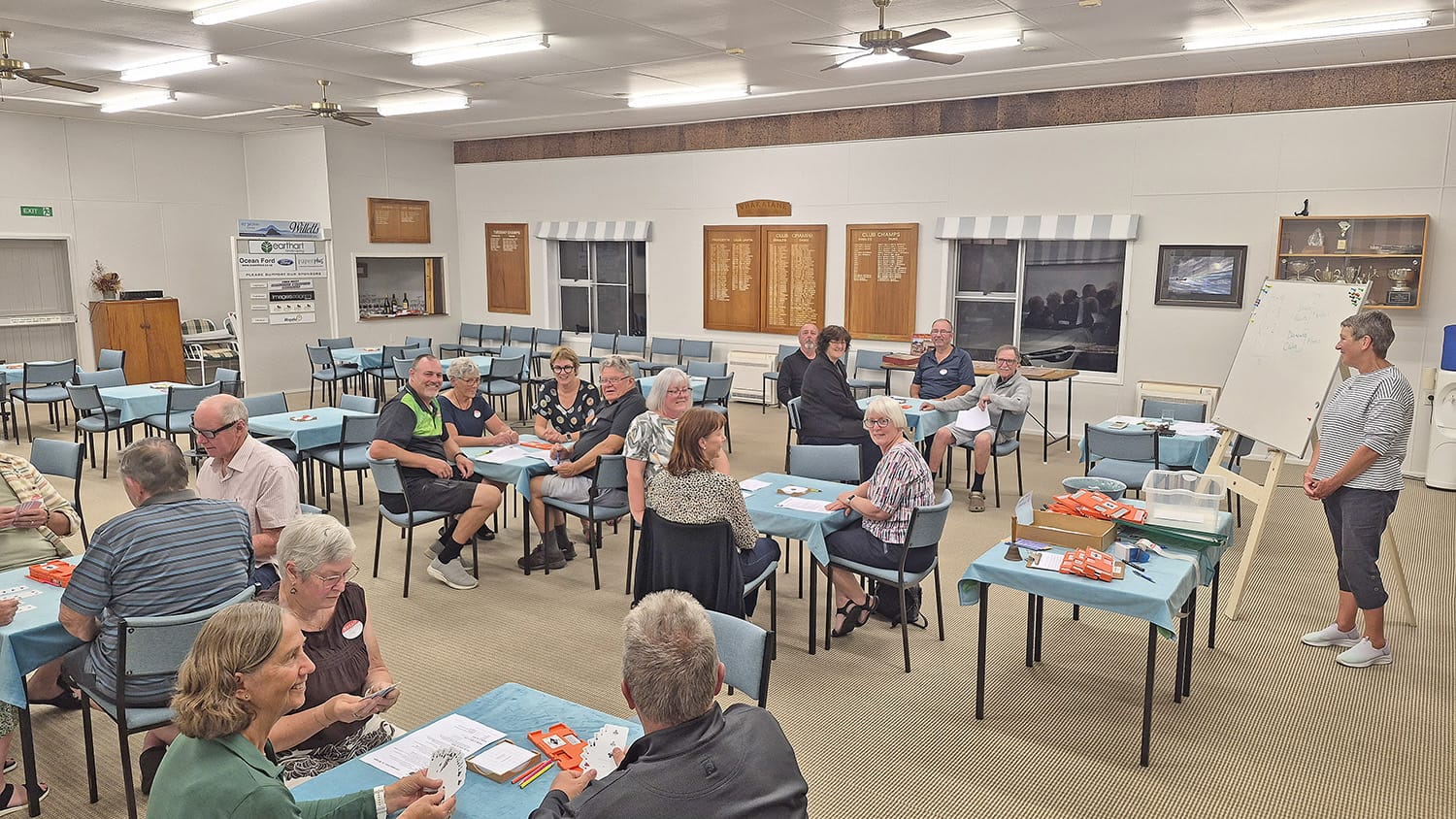
Opener: New players take part in their first mini bridge games during the lesson. Photo Aston Palmer E5913-01
Aston Palmer
Ever since I can remember, my Nanny played bridge and I’ve always been interested in learning.
So, I decided to attend one of the Whakatāne Bridge Club’s lessons for beginners and see whether it is a game for me.
At 6.55pm I arrived at the bridge club and made my way inside, where I was greeted by Sue Gordon and Bobbi Drysdale, members of the club and the teachers for the night. Both considered it a good turnout for the first bridge lesson of 2026.
At 7pm the lesson began with an introduction to the basics.
We were told that each player receives 13 cards, and the value of each card determines how the game unfolds.
Communication with your partner is key. My partner for the evening was Ngaire, a beekeeper by day and a beginner bridge player by night.
At first, both of us were a little confused about how the game worked, but before long we began to understand the rhythm of play and even managed to wipe the floor with our opponents.
But that didn’t last long; they also found a rhythm and became better than us.
As the night went on, we got the hang of things and worked our way through one board, then another. Everyone took turns being the dummy, declarer and the opening leader.
For the first three or four rounds, I was the dummy, meaning my cards were placed face-up on the table while my partner decided what to play.
At first this was easy; I simply followed instructions. But as I started to understand the rules of bridge, I had to bite my tongue and resist the urge to suggest moves.
The declarer is responsible for making decisions for themselves and their partner, including choosing the trump suit for the round.
Meanwhile, the opening leader, the player to the left of the declarer, begins the hand by placing the first card, often using it to signal the strength of their hand to their partner.
Throughout the evening, as we slowly began to understand the basic rules of bridge, we became faster and more confident at playing each hand.
Bobbi stopped by our table to offer a few tips and share some insights about how the game works.
She explained that the boards were not random. Instead, the same hands were played at clubs across the country, ,thanks to an automated computer sorting system.
The programme distributes the same set of cards to clubs nationwide, meaning players everywhere compete with identical hands.
Each table plays each board, ensuring everyone has a chance to tackle the same challenges, which helps keep the game fair.
Bridge is a complex but enjoyable card game, similar to games like 500 or pinochle.
Players must bid strategically and work closely with their partner to win tricks. Each hand typically takes between seven and 10 minutes, and a full game usually consists of 18 to 20 hands.
By 9pm the lesson was over and I headed home with new knowledge and enthusiasm for the game.
Many of my fellow beginners were already looking forward to returning the following week to build on what they had learned.