
Opinion: The future of insurance
News Editor
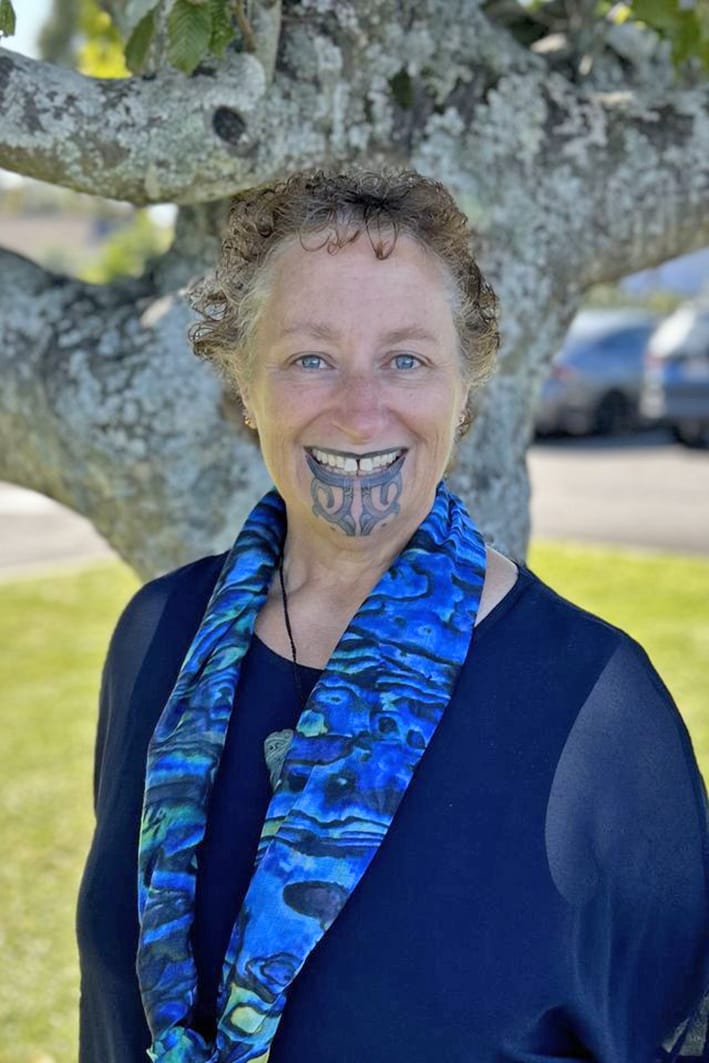
■ When we talk about climate change in the Eastern Bay, we often talk about flooding, coastal erosion, and more intense storms. But there is another consequence that receives far less attention, one that could reshape our community just as profoundly: the quiet withdrawal of private insurance, writes Bay of Plenty Regional Council Kōhi Māori councillor, Dr Mawera Karetai.
This is not a distant threat. It is already happening here.
The Bay of Plenty region and Whakatāne district are already vulnerable to natural hazards, including flooding, coastal inundation, and land subsidence.
Climate change is likely to make the consequences of these hazards worse.
Whakatāne town itself is particularly exposed: most of Whakatāne town is situated on flat terrain, which restricts drainage during heavy rainfall events, leading to rapid flooding.
The scale of risk across our region is significant.
Almost 63,000 Bay of Plenty residents live in locations exposed to flooding from “one-in-100-year” rainfall events, a figure that could increase to 72,500 with a further 3 degrees of warming.
About $18.8 billion worth of buildings across the region are exposed, potentially rising to $22.4 billion.
Just weeks ago, Whakatāne District Council launched a new tool called Adaptation Explorer, which allows residents to enter an address and explore broad areas that may be exposed to hazards such as flooding, landslides, coastal erosion, sea-level rise, and extreme heat.
This is a welcome step forward. But knowing the risk is only part of the challenge.
Insurance works on a simple principle: many people pool small, regular payments so that when disaster strikes one of them, the pool covers the loss.
But that model depends on risk being spread widely and not hitting everyone at once.
Climate change is breaking that assumption.
More frequent and intense heavy rainfall could lead to more frequent and severe catastrophic events, particularly from atmospheric rivers and ex-tropical cyclones, combined with coastal flooding and sea-level rise.
This will likely drive up reinsurance costs for insurers and increase household insurance premiums.
When private insurers face losses they cannot absorb, they have two tools at their disposal: raise premiums, or stop offering cover altogether.
Both are already happening in our region.
Residents in nearby flood-prone Edgecumbe have already struggled to find an insurance company willing to cover them.
Matatā, just along the coast, has already experienced managed retreat, becoming the first town in the country to experience such a retreat, a precedent for others.
New Zealand’s largest insurer IAG has signalled its direction: it will not issue new insurance policies on flood-prone and landslip-threatened homes, identifying around 20,000 homes across the country at risk of severe flooding.
Others are following a similar path, shifting to what the industry calls “granular underwriting,” pricing each property individually according to its specific risk rather than spreading the cost broadly across a region.
As premiums rise and coverage is withdrawn from high-risk areas, banks restrict or withdraw lending, and property values fall.
The ripple effects extend far beyond home insurance. Over 65 percent of New Zealand’s population and major infrastructure sits within five kilometres of the coast, representing significant numbers of people and property values likely to be affected.
When a home becomes uninsurable, a bank will typically not lend against it. A property that cannot be mortgaged and cannot be insured loses much of its market value.
Owners who have built their retirement savings into their homes can find themselves holding an asset they cannot sell at any reasonable price.
For whānau in our community who have lived on the same land for generations, this is not just a financial loss. It is a threat to their connection to whenua.
A WSP and Helen Clark Foundation report has called this a looming crisis, noting that without intervention, residential insurance premiums for flood-prone properties will continue to rise steeply and become unaffordable for many, with insurers eventually expected to withdraw flood coverage altogether for the most at-risk properties.
The same report warns the country is “just one major disaster away from insurance retreat becoming a much more complex problem than it already is.”
The problem is not unique to New Zealand, and other countries have developed models worth learning from. The common thread running through the most successful approaches is that they treat insurance as a public good, not just a private transaction.
In the United Kingdom, a scheme called Flood Re acts as a public backstop: private insurers turn high-risk policies to the pool at below-risk prices, financed by a uniform levy across all homeowners.
Crucially, it goes beyond simply paying out claims. The UK’s Flood Re initiative encourages rebuilding to higher standards and offers up to $10,000 per claim for approved resilience upgrades, creating a cycle where each disaster becomes an opportunity to reduce the next one.
France operates through a programme called Cat Nat, built on two pillars: solidarity and responsibility.
France moves a significant degree of responsibility for managing flood risk from individuals to the state, while maintaining individual responsibility components.
It also uses a clever incentive: municipalities that have not adopted risk-prevention plans may face higher deductibles, encouraging local governments to invest in mitigation.
In the Pacific, new forms of community-based insurance are emerging that are closer to our own context.
The Pacific Insurance and Climate Adaptation Programme, launched in 2020, is strengthening the financial preparedness and resilience of Pacific communities by developing parametric insurance, a model that releases payouts based on defined trigger events such as a cyclone reaching a certain intensity, rather than waiting for lengthy damage assessments.
This speed matters enormously. For the first time, climate-vulnerable communities, particularly women and persons with disabilities, have gained access to rapid post-disaster financial support.
At a co-operative level, mutual insurance models, where the insured are also the owners, are proving their value.
With member-owned structures and strong local presence, mutual and cooperative insurers are placing communities at the heart of their climate resilience strategies, working alongside local communities to build long-term resilience in the face of growing climate-related risks.
Our regional council has begun the hard work.
Project Future Proof is upgrading the flood defences along the Whakatāne River CBD to handle current weather events while allowing for the future impacts of climate change.
This infrastructure investment matters directly for insurance: properties protected by credible flood infrastructure are more likely to remain insurable for longer.
But flood walls alone are not enough. The WSP and Helen Clark Foundation report recommends that the New Zealand Government begin planning now to develop a public residential flood insurance scheme, as other countries such as the United Kingdom and France have done, to fill insurance protection gaps as they arise, ensuring insurance remains accessible for properties that are still safe to live in.
At a community level, we should be exploring what a locally owned, collectively governed insurance model could look like here, one rooted in our own values of collective care and mutual support.
Māori communities have long practised forms of collective resilience that predate the commercial insurance industry.
The challenge now is to translate those values into structures that can meet the scale of what is coming.
Whakatāne District Council’s new Adaptation Explorer tool gives every resident a starting point. Knowing your risk is the first step.
The next steps, deciding together how we share that risk, support one another, and plan for change where it is unavoidable, will require courage, honesty, and genuine community kōrero.
That conversation needs to start now, before the market makes the decision for us.