
French baker-entrepreneur takes a new approach to food
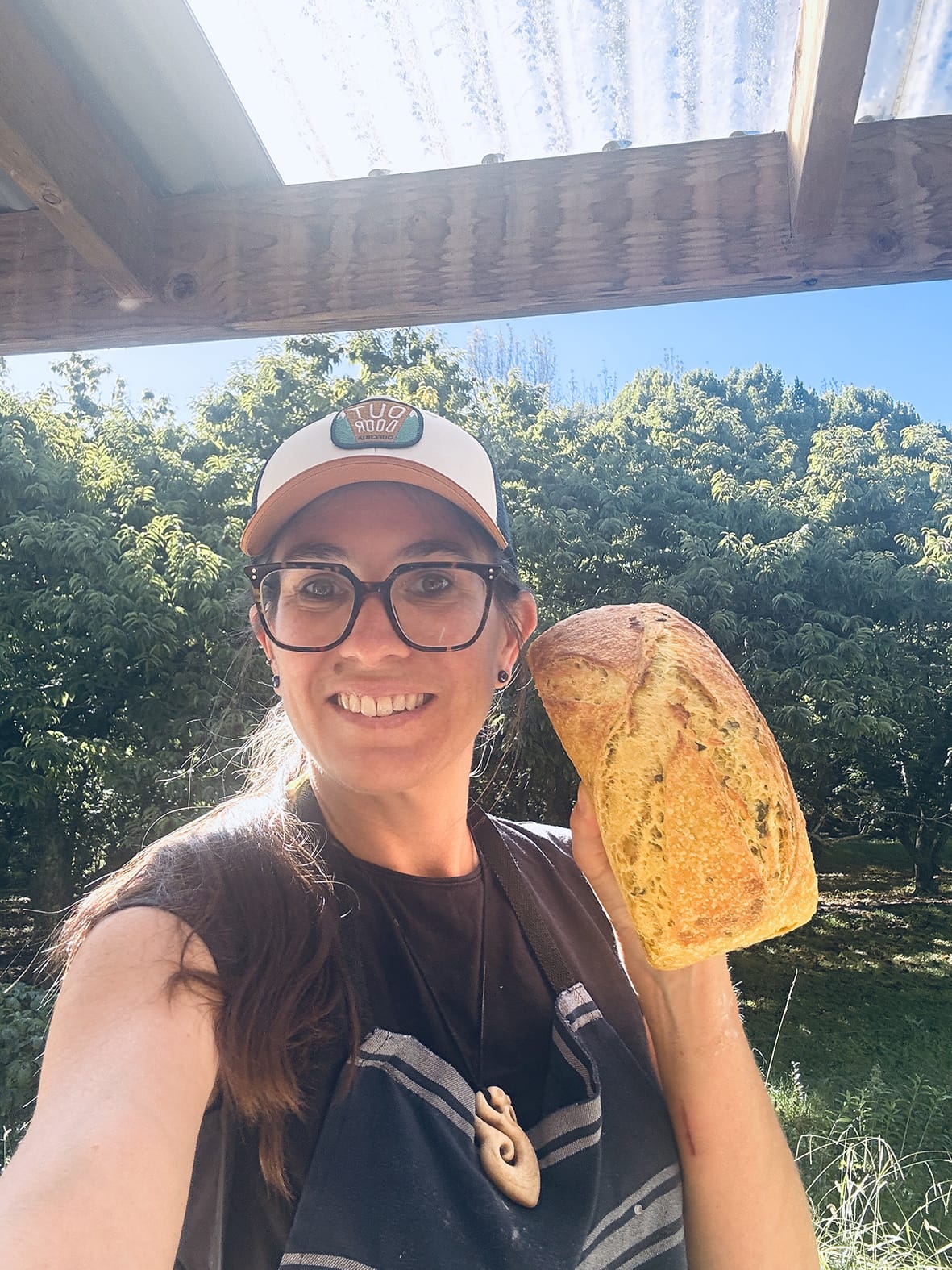
LOAF LIFE: Chloé Lagneaux showcases one of her handcrafted sourdough loaves from her Wainui-based bakery.
Tamara Herdman
After more than a decade serving pastries, coffee and French deli fare to Whakatāne locals, French entrepreneur Chloé Lagneaux is returning to the basics – and doing business a little differently.
Instead of reopening a café or bakery shopfront, she is focusing entirely on sourdough bread baking, selling online and supplying it to retailers.
“I didn’t feel like signing another lease in town and run a shop again,” she said.
“So, I thought, why not just focus on bread, and try something a bit different, build a website, start selling online and work with local retailers instead?”
Ms Lagneaux co-owned and co-operated Whakatāne’s French cafés L’Epicerie and The Larder from 2011, introducing the community to French food and culture.
Over time, both became well-known gathering places before closing in the longer-term aftermath of the Covid-19 pandemic.
After stepping away from the café environment, Ms Lagneaux took time to reset, studying health and nutrition and reconsidering the role food plays in wellbeing.
“I’ve always been passionate about good food,” she said.
“But I wanted to become even more health-conscious, and that’s what brought me back to sourdough.”
For the past five months she has been baking small batches of sourdough loaves from a purpose-built bakery in Wainui, tucked beside a chestnut orchard, supplying retailers Bin Inn Whakatāne, The Fresh Market, and Whakatane Organics while also selling directly to customers online.
Customers can also pre-order their sourdough online at www.lepicerie.co.nz and collect it conveniently from Bin Inn Whakatāne.
The loaves themselves are deliberately simple – made with flour, water and sea salt, with long fermentation doing most of the work.
“Sourdough is alive,” she said.
“There’s no industrial yeast, no improvers, nothing like that. The long fermentation helps break down some of the gluten and other compounds in the dough, making it easier to digest and less likely to cause the same blood sugar spike as industrial bread.”
Her flour is sourced from the South Island’s Canterbury Plains, while the water comes from a natural spring near her bakery in Wainui.
“When operating from town I used filtered town water, but you can’t remove everything,” she said.
“Where I bake, I know where the spring is. The water goes through filters and UV treatment but it’s basically coming straight from the land, and you definitely have a better result because there's no chemicals in it.”
At the centre of the process is a sourdough starter – affectionately named “Marcel” – revived from a small portion frozen when the café closed.
“It took about two or three weeks to bring it back to life,” she said.
Sourdough baking is far from straightforward. Each batch takes two days to ferment, and the living dough reacts to temperature, humidity and seasonal changes.
“Sourdough is a living product, so achieving perfect consistency isn’t always easy,” Ms Lagneaux said.
“It takes constant adjustment and a willingness to keep learning.”
Her range includes four loaves – a classic French-style wheat and rye “Campagne”, a wholemeal loaf, a four-seed sourdough and a more experimental turmeric and kawakawa bread. The latter uses fresh kawakawa leaves harvested on the farm around her bakery.
“I go out and pick the leaves in the morning before baking,” she said.
“Turmeric and kawakawa work beautifully together – it’s delicious with seafood or simply with avocado and egg.”
Despite frequent requests for the croissants she once made at the café, Ms Lagneaux said she planned to stick to bread for now.
“There’s still a market for pastries – people ask for almond croissants all the time,” she said. “But I really want to focus on sourdough bread.”
The response from the community so far has been encouraging, with customers sharing photos of their loaves on camping trips and breakfast tables.
“I love seeing how people enjoy it,” she said.
“People send photos of their sandwiches at the campsite or their breakfast plates. It’s really cool.”
For Ms Lagneaux, this new model – baking in small batches, selling online and partnering with local retailers –also reflects a wider goal of supporting independent food producers.
“It’s really important to keep supporting small retailers and artisans,” she said.
“If we don’t, one day we’ll only have the big chains left.”