
Community groups rally for help
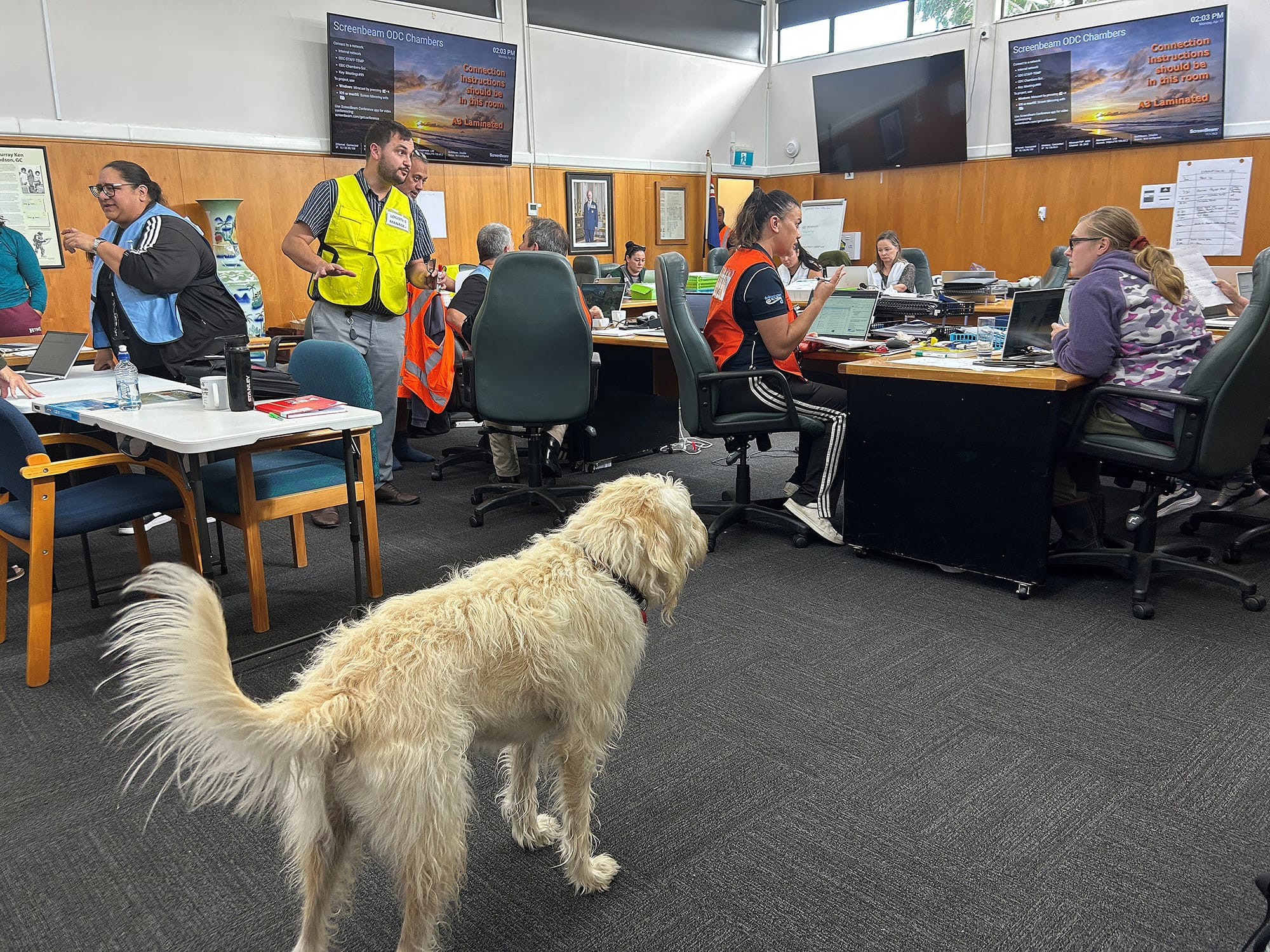
ON TASK: The comfort dog and team at Ōpōtiki District Council’s cyclone emergency centre. Photos Kim Webby
.
■ The cyclone tests resilience, but strain grows on communities and volunteers, writes Kim Webby

Another week, another weather event. Cyclone Vaianu packed quite a punch in Ōpōtiki and the wider Eastern Bay of Plenty.
Ōpōtiki saw downed trees, damaged homes and ruined gardens but, fortunately, as far as I know, no-one was hurt.
Community organisations and individuals rode it out with stoicism and rallied around to help each other when the wind and rain subsided. But with the increasing frequency of these events, I wonder when this cloak of community support will wear thin and volunteer fatigue set in.
On the flipside, do we risk becoming blasé about how damaging and life-threatening storms and cyclones can be?
Wairoa’s mayor chose not to declare an early, local state of emergency before the cyclone, citing “wokeness” around states of emergency these days.
Ōpōtiki and Whakatāne mayors declared early, with a “better safe than sorry” mindset.
I agree – hindsight is 20/20 vision. It’s easy to be a know-all after the event. I would rather know in advance that all steps are being taken to protect lives and homes and if the worst doesn’t come to pass, then great.
Cyclone Vaianu made me wonder what happens in the control rooms of our emergency teams, made up of many volunteers alongside some paid employees. Who are the unsung heros, looking after us while we are hopefully snug in our homes.
Ōpōtiki District Council was a hive of activity late Monday morning.
As Civil Defence headquarters, it had an emergency electricity supply while residents were without power. So, the council opened its doors for people to come and charge their phones and devices.
The meeting room was full of Civil Defence staff, local Civil Defence volunteers, the mayor, deputy mayor, councillors, representatives from Whakatōhea and social agencies.
For many this was their third day with little sleep, and they expected to be on site for another couple of days.
With suggestions there would be no electricity for 72 hours, Whakatōhea had people in the community doing welfare checks.
In the 20 minutes I was in the room, local MP Dana Youngman arrived to check in and Minister of Emergency Management and Recovery, and Mark Mitchell, was on the way.
With some coastal homes evacuated as a precaution, 15 marae and kura from Kutarere to Pōtaka, were listed as evacuation centres, alongside Ōpōtiki’s volunteer run Woodlands Hall.
On Sunday, Woodlands Hall alone hosted 25-30 people before they closed on Monday.
Then Terere Marae became the main place for the displaced in Ōpōtiki town.
By Monday afternoon, Terere Marae had seen 11 people over two days.
Volunteers Wayne Fermanis and Tai Kohu were on the cooking pots and tables were set for dinner at 4.30pm.
Some people came for kai only while others came for kai, comfort and a place to spend the night.
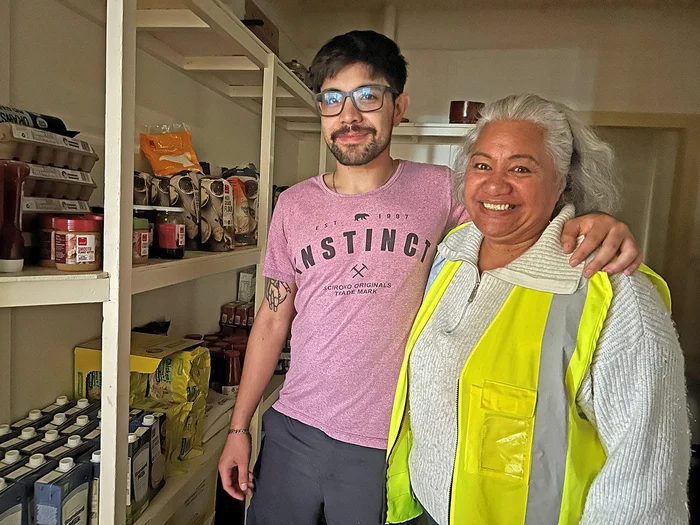
Among those staying was Argentinian Sebastian Acosta who was also roped into dishes and pantry duties, guided by volunteer Jane Fermanis, under the watchful eye of organiser Nina Leawere.
Te Ao Hou’s Susan Woods was meeting and greeting visitors and making them feel at home. Terere Marae ran two shifts of volunteers each day.
Before the cyclone, backpacker Sebastian Acosta, was free-camping in a van, wondering where to go before the cyclone hit.
A friendly knock on the door sent him to Ōmarumutu Marae where he says the people were, “very kind” .
By Monday, he was at Terere Marae, when the evacuation centres were consolidated to ensure volunteers weren’t spread too thinly.
Deputy mayor, Maude Maxwell, said in emergencies more volunteers were needed, mainly to enable others to have some respite and time to check in on their own families.
Cyclone Vaianu took out the electricity to Ōpōtiki and surrounding areas on Sunday. For some rural people who rely on water pumps, that also means no water. Sometime Sunday night many of us lost cell phone connection and internet until late Monday morning.
With a battery powered radio, my 1XX information lifeline was restored and a big mihi to Sunday’s announcer whose calm, informative broadcasts kept us in the know about the cyclone’s progress, road closures, and general warnings.
Information also came from mobile phone Civil Defence alerts, and Ōpōtiki District Council updates on the Antenno app.
These communications and warnings were an important safety net and also gave reassurance.
Facebook’s Ōpōtiki community notices provided some much needed humour as well as being a street-by-street ear to the ground.
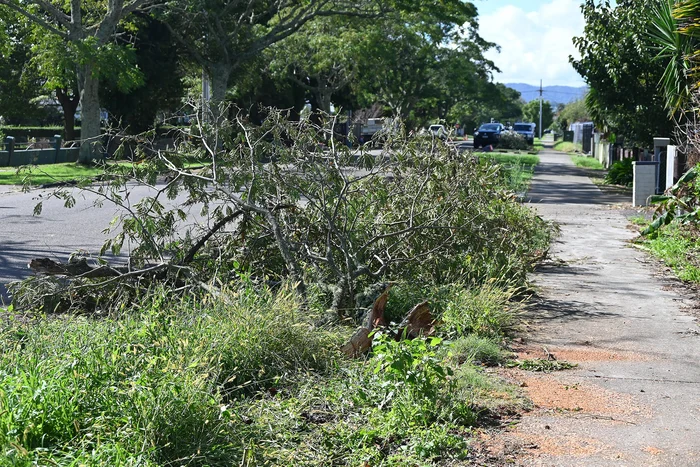
Ōpōtiki Volunteer Fire Brigade deputy chief, Barry Hennessy, said they attended 15 call-outs during the cyclone, mostly for trees down across roads or on houses.
The houses escaped damage but at one house a wall collapsed and firefighters secured the roof. They also went to a house where the roof was lifting, and water poured into the home.
Mr Hennessy said reassuring people was also a big part of their job. He described Cyclone Vaianu as not as bad as Cyclone Cook in 2017.
With their new generator providing electricity, they also fed hot meals and cups of tea to police and St John’s ambulance staff.