
Mayor's talk: Storms, tracks and coffee – good systems for the win
.
Last week we started getting warnings of a storm coming our way, to be followed immediately by a cyclone.
We have a great emergency management team in council and they provided regular briefings as the situation unfolded.
During my brief time as mayor we have already been through a couple of storms, but this looked bigger. Then I got sick.
It came on quickly. A scratchy throat one day turned overnight into cold bones and deep, painful coughing and aching muscles. It drained my energy and my motivation and rendered me useless.
With the cyclone fast approaching I delegated my mayoral authority to Deputy Mayor Julie Jukes. There was no way I could be around other people and risk infecting those working in emergency response.
Julie Jukes did an incredible job as the acting mayor. She made the declaration of a local state of emergency, on advice from the Emergency Management Controller, and handled all the media interest – local, national and even some international.
Media is the lifeblood of any politician, so it was with deep sadness that I told radio and TV reporters who rang my cellphone that they’d best speak to Julie. When you delegate, you have to allow that person to do their job and not get in their way. The best I could do was attend the local and national briefings online and put information out on social media.
The system worked as it should. Local decision-making by a responsible civic leader listening to good advice from the EM team, accessing national level support and information via the minister, and clear and regular information and communication for the community.
Highly skilled staff and contractors were on call to handle problems as they arose, co-ordinating with fire services, police and we even had some army unimogs arrive to help. Thank you to everyone involved. Emergency management is all about being able to work together.
Of course, it also relied on local communities being able to make good decisions for themselves and willing to look after each other. I saw locals reaching out to each other on social media to offer a place to evacuate to. People checked in on neighbours, friends, and family. Rangitihi Marae opened its doors as an evacuation centre, with other marae on standby if needed. Let us never forget what a great community this is. Social connections are what resilience is made of.
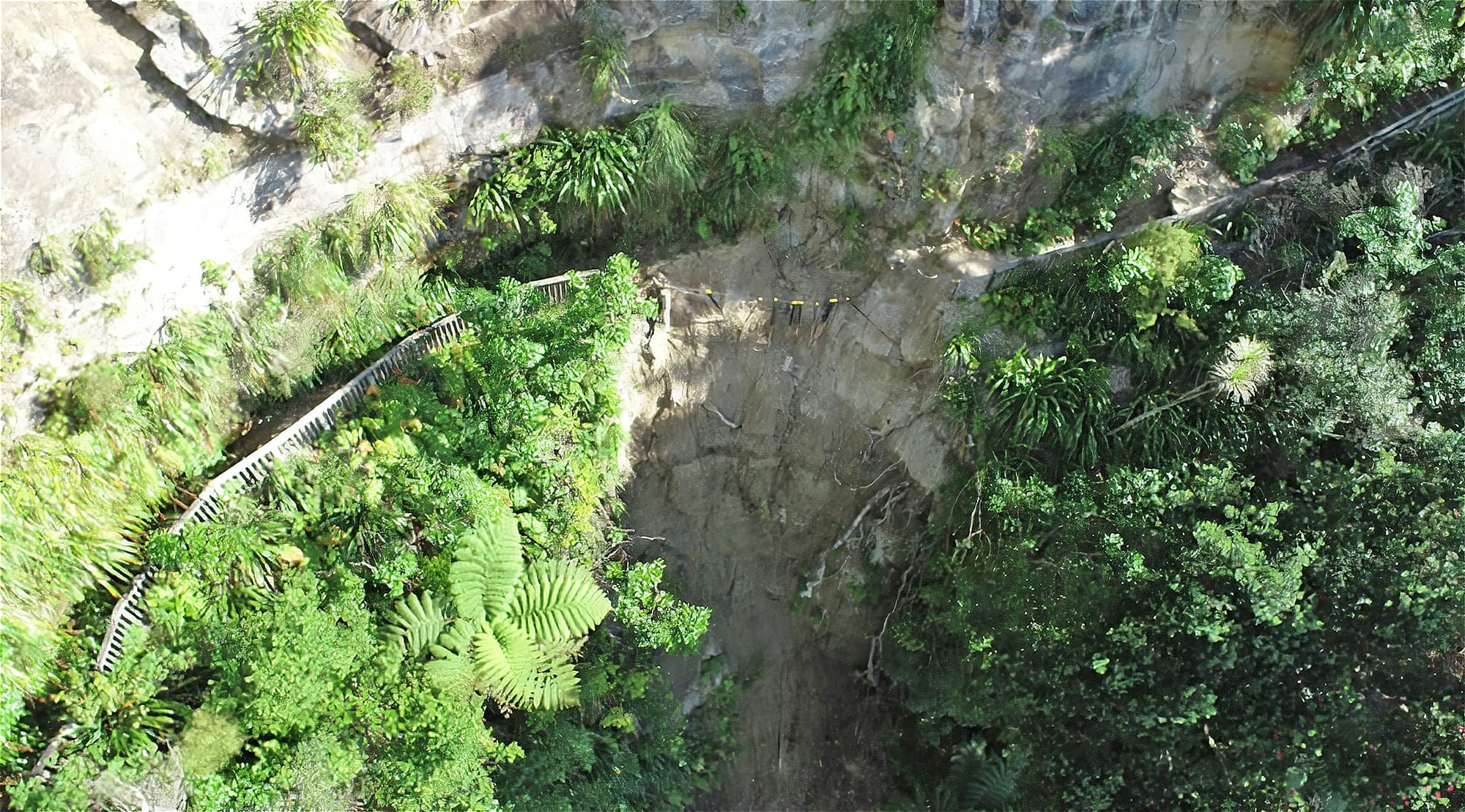
The storm, with all its landslide risk, brought to mind another issue that I have been personally involved in, with others in the community and in council. When Ngā Tapuwae o Toi/Toi’s Track was taken out by landslips in 2022, the council investigated how best to reinstate it. Just before work was due to begin in 2023 another slip took out another section, which caused work to pause. We needed to take another look at the whole thing.
Beacon readers will know that those geotechnical and engineering investigations came to council recently. The cost for council to rebuild a track that, as you can see in the photo, is now sheer cliff face in places, is prohibitive.
There is an almost certain likelihood of doing it all again in a short space of time. So, we’ve been very lucky to have a group of local people who have put their hands up to help. They have said that they can source volunteer expertise and labour, and funding from the local community to pay for engineering design and to fix the track.
This is an incredible opportunity to get a much-loved track reinstated without it costing ratepayers an arm and a leg. Councillors and council staff are eager to see this happen.
As well as the community interest in getting the track reopened, staff have been working (with others) on getting it recognised as a one-day walk of national significance. This would bring visitors into our district to help boost local tourism operators and other businesses.
The Projects and Services Committee resolved that the best way forward was to “seek proposals from the community for the repair and re-establishment of the existing track or alternative routes between West End and Ōtarawairere.”
The normal way to seek proposals for work like this is through a “Request for Proposals” (RfP), which outlines exactly what a proposal needs to meet all the cultural, legal, financial and health and safety obligations. Having good process for this kind of thing is important.
The track goes through an area of incredible historical and cultural significance, so an Archaeological Authority from Heritage NZ is needed for every piece of work, based on a very detailed work plan, and only council is able to apply. The land ownership is complex, and full engagement with tangata whenua is necessary. The proposal needs to contain financial information and it needs to come from a trust, or incorporated society or some other legal entity with its own banking accounts, that can hold the project despite the comings and goings of individual members.
Putting the RfP together takes careful consideration to get it right.
Council has a lot going on, and a cyclone is one of many things that can interrupt a normal work plan, so, it’s taking time, but we’ll get there. I am confident that with the passion and enthusiasm coming from the community, and the real desire of councillors and staff to see this happen, we will get a great outcome.
The last thing I want to mention is that I will be having my first ‘Mayor’s Coffee Morning” next week.
I’ll be at Robert Harris Cafe on The Strand with some of your local councillors on Friday, April 24, from 9.30am to 11.30am to hang out, chat about any issues you want to raise, answer questions and listen to your concerns. Please come down and introduce yourself.
I look forward to meeting you.