
Minister hails maternity return on Whakatāne visit
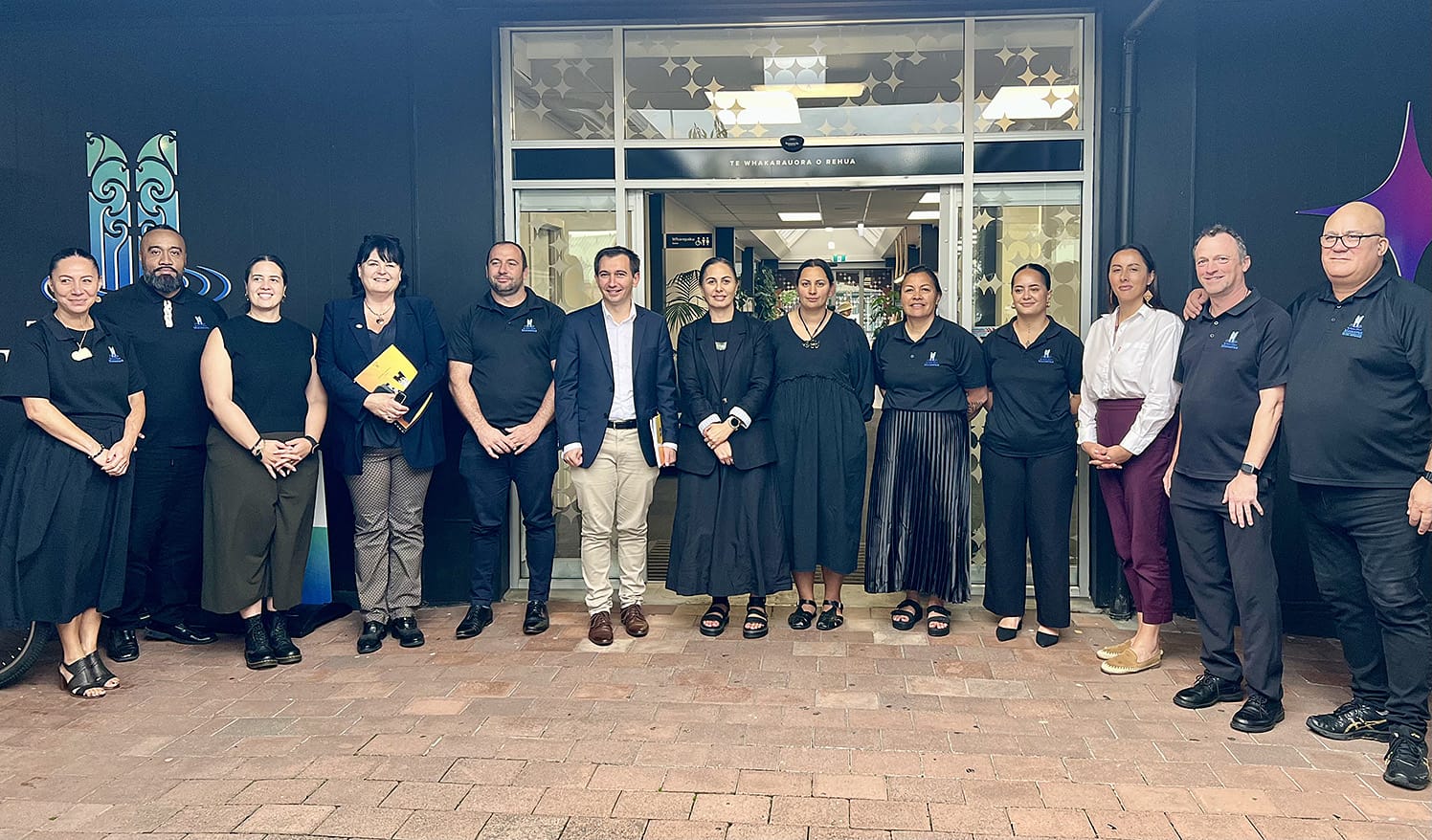
Health talk: Health Minister Simeon Brown, sixth from left, accompanied by MP Dana Kirkpatrick, fourth from left, meets staff from Rehua Medial Centre in Kopeopeo during his visit to Whakatāne this week. Photo supplied
Kathy Forsyth
Health Minister Simeon Brown has praised Whakatāne Hospital staff and health officials for restoring full maternity services, during his first official visit to the facility this week.
Accompanied by East Coast MP Dana Kirkpatrick, Mr Brown toured the hospital on Tuesday, meeting frontline staff and acknowledging the work behind the re-establishment of secondary maternity services, which resumed this week after more than a year of disruption.
“It was an opportunity to see the great work the doctors, nurses and healthcare professionals are delivering in this community,” Mr Brown said. “In particular, to thank the team who have spent the past 12 months re-establishing secondary maternity services.”
Mr Brown said restoring maternity care had been a priority and credited a successful recruitment drive.
“Those services are now back in place, which is great for mothers and their families in this community.”
Mr Brown said there was an expectation that Health New Zealand would take a more proactive approach to workforce planning, particularly in anticipating retirements and vacancies to avoid service disruptions like those experienced in Whakatāne.
Ms Kirkpatrick said the visit was an important chance to recognise staff who had worked through a difficult period, and for the minister to see the hospital “in all its glory”.
"They do a sensational job, sometimes in challenging circumstances, but they're a wonderful, dedicated team.”
During the visit, the minister also toured the emergency department and other services, describing the hospital as a vital part of the region’s healthcare network.
“My thanks go to the frontline workers who provide critical care around the clock,” he said.
Looking ahead, Mr Brown said improving recruitment and retention in regional hospitals remained a focus for the Government.
He said hundreds more doctors and around 2000 additional nurses had joined the public health workforce since the coalition took office.
“Strengthening our workforce is a big priority, particularly in smaller and rural hospitals where attracting senior doctors can be challenging.”
He said a combination of international recruitment and increased training in New Zealand would be key, including the planned Waikato Medical School, aimed at training doctors closer to the communities they serve.
The vision, he said, was for doctors being trained through that new hospital to then do their placements back in their communities that they come from.
The minister also pointed to recent changes aimed at decentralising decision-making within the health system. From July 1, more authority over staffing, budgets and service delivery will be delegated to regional and district levels.
“We believe decisions are best made closer to patients and communities,” Mr Brown said. Access to diagnostic services was also raised during the visit, including the long-awaited MRI scanner for Whakatāne Hospital. Mr Brown said the issue had been raised with Health New Zealand.
“They've assured me that it is something which they're looking into and looking to prioritise. Diagnostic services are the bread and butter of a hospital. Having access close to home is a real priority.
“We're rolling out a large number of scanners and upgrades of scanners across the country, and I've made it very clear to Health New Zealand that Whakatāne must be a priority.”
The visit also included a stop at Te Puna Ora o Mataatua, where discussions focused on the delivery of healthcare to rural and isolated communities.
Ms Kirkpatrick said the organisation’s work highlighted the importance of innovative, community-based solutions.
Mr Brown also outlined measures aimed at easing cost pressures for patients and healthcare workers, including a 30 percent increase in travel assistance funding. This includes higher mileage rates for patients travelling long distances for treatment, and for community health workers travelling between visits.
While acknowledging ongoing pressures across the health system, Mr Brown said the focus remained on both immediate improvements and long-term planning.
“We have to fix what’s in front of us today – like restoring maternity services here – while also building for the future.”