
Headstone installed for Ōpōtiki war hero
.
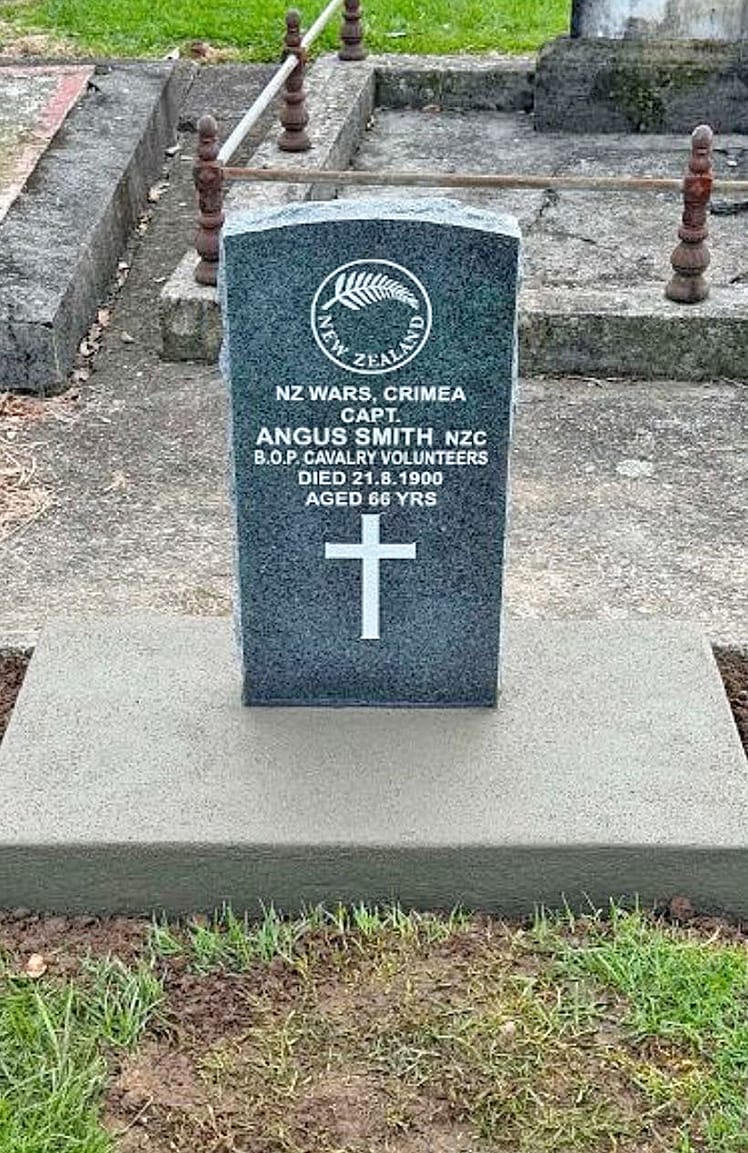
The grave of New Zealand Cross recipient Angus Smith is no longer unmarked.
Cavalry officer Captain Smith died at Ōpōtiki in 1900 aged 66 but for reasons unknown did not receive a headstone.
This has been remedied by the New Zealand Remembrance Army (NZRA) in time for Anzac Day, with a new headstone placed at the Ōpōtiki Lawn Cemetery at a cost of about $2000.
For more than 100 years, the calvary officer’s grave lay without a headstone and for the NZRA, it is deeply satisfying to see this important piece of history finally recognised and protected for future generations.
The NZRA was established by former NZ Army Major Simon Strombom in 2018 and has grown to become a nationwide volunteer network committed to remembering the people who served and to the restoration of all graves and memorials of those people.
Mr Strombom said one of the important projects they had undertaken was the restoration and protection of graves belonging to recipients of the New Zealand Cross, including Captain Smith.
The decoration is regarded as the colonial equivalent of the Victoria Cross, awarded for acts of extraordinary bravery during the New Zealand Wars period. It remains one of the rarest honours in New Zealand history, with only 23 recipients recorded.
“This latest headstone marks another major milestone in preserving these nationally significant resting places,” Mr Strombom said.
He said with the completion of Captain Smith’s grave, every New Zealand Cross recipient resting in New Zealand now had a marked grave.
Their final project is to replace a vandalised wooden marker at the Taupō grave of a New Zealand Cross recipient with a permanent headstone next year.
“These graves are not just burial sites – they are part of the story of New Zealand. They deserve to be remembered, protected, and honoured,” Mr Strombom said.
“We thank everyone who has supported this work and helped ensure these remarkable men are never forgotten.
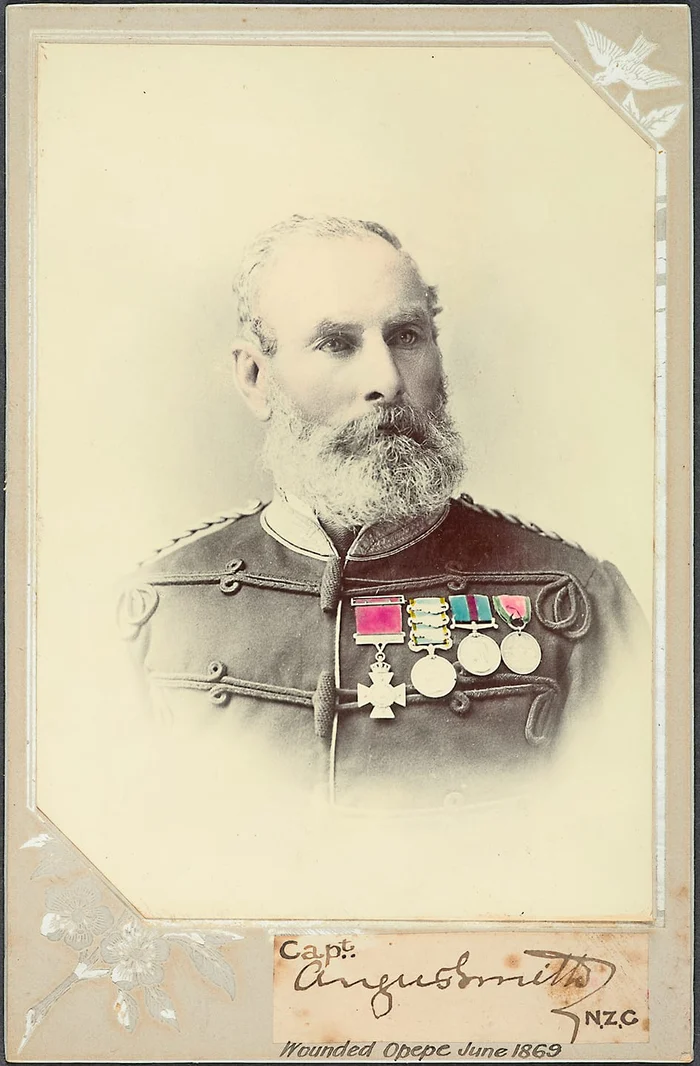
Captain Smith’s medal came for bravery shown during a bloody clash with Te Kooti’s men as a young cavalry officer. He was in command of a unit ambushed on June 7, 1869, at a deserted Māori settlement at Ōpepe, on the shores of Lake Taupō.
Colonel St John had set out with an escort of 14 men to select locations for the construction of redoubts and depots. After reaching Ōpepe, the old abandoned kainga of the chief Tahau overlooking Lake Taupō, the Colonel decided it was a good location for a fort.
St John left his men there and moved on without instructing the men to mount a guard.
Not expecting any trouble, they piled their rifles and occupied three whare.
The men shot some pigeons, killed some wandering sheep and washed their clothes.
In the afternoon they rested, with their saddles and equipment stowed in a separate hut.
Little did they know that an advance guard of Te Kooti’s warriors was close by.
Some say this group had been summoned by a spy among the colonials who had earlier lit mysterious signal fires. In any case, the 14 cavalrymen were suddenly surprised.
Three Māori entered the camp armed with rifles. Not one of the troopers was armed and when they tried to flee, the Māori opened fire.
The raiders killed nine members of the attachment outright, shooting down several who made a run for the bush.
A report in the Taranaki Herald said Captain Smith searched for the tracks of Colonel St John but the rebels caught him on the road. They stripped off his clothes and medals, tied him to a tree and abandoned him to a slow death from thirst and starvation.
Captain Smith remained there four days before managing to release himself, then headed north-southwest toward Fort Galatea.
One report says he crawled to a stream and managed to drink on the seventh day, arriving at the Fort with frost bite 10 days after the ambush.