
New healing support for mothers
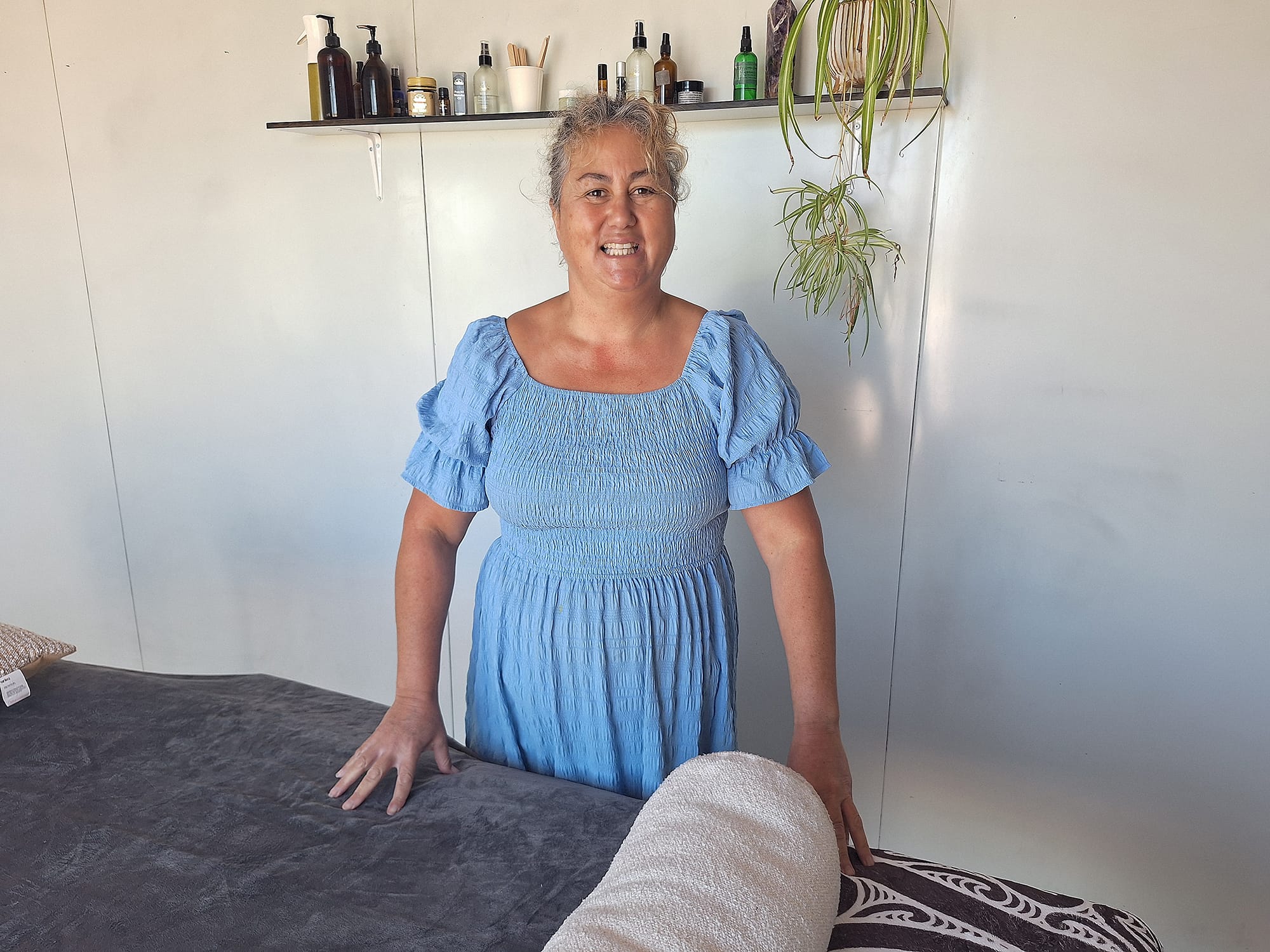
HEALING SUPPORT: Elaine Hunia, founder of Whenua Healing, is helping connect māmā with ACC support and traditional Māori healing practices. Photo Rufus Dempsey E5957-01
News Editor
A new avenue of support is opening for mothers in Ōpōtiki who may have suffered maternal birth injuries.
As research in this area is increasingly being recognised by the Accident Compensation Corporation (ACC), access to funded and approved recovery services that many women may not have realised existed is now available locally.
At the centre of this locally is Elaine Hunia, founder of Whenua Healing, who is helping connect māmā with ACC support and traditional Māori healing practices.
The service provides specialist care for women who have experienced physical injury during labour or delivery, including pelvic damage, tearing, nerve injury, and ongoing musculoskeletal pain.
For Mrs Hunia, the kaupapa is personal. “As a māmā myself, I have experienced maternal birth injuries,” she said, reflecting on a caesarean birth and prolonged labour that left lasting damage to her coccyx.
“I understand how birth-related injury can affect not only the body, but confidence, movement, comfort, intimacy, sleep and the way you feel within yourself.”
Her experience led her into the world of rongoā Māori, where healing is approached holistically through the framework of Te Whare Tapa Whā – supporting physical, mental, spiritual, and whānau wellbeing.
Through Whenua Healing, Mrs Hunia offers a space where women can recover at their own pace, free from the pressure to “move on” before their bodies are ready.
She says many maternal injuries remain unseen or minimised, with pain often lingering in the pelvis, hips, lower back, and tailbone long after birth. Scar tissue, muscle tension, and emotional strain can compound the recovery process.
Using a combination of mirimiri (massage), kōrero, and plant-based rongoā, Mrs Hunia tailors each session to the individual. Mānuka, considered a taonga species, plays a central role in her work through oils and hydrosols known for their soothing and anti-inflammatory qualities.
Treatments may also include restorative rongoā bathing or cleansing practices designed to support physical and spiritual healing.
Importantly, these services are now accessible through ACC for eligible mothers – a development Mrs Hunia believes could be life-changing for many families in the region.
Yet despite this progress, she says many women are still missing out.
“The key thing is not enough people are making these claims; they are suffering in silence.
For this reason, we had a hui with ACC and local Plunket nurses and midwives to come up with an approach to educate mums that there is help out there with treatment and symptoms,” she said.
With ACC-funded rongoā Māori services now available in Ōpōtiki, Mrs Hunia hopes more women will feel empowered to seek support – and begin a healing journey that acknowledges the full impact of childbirth, seen and unseen.