
International herb garden community says thanks
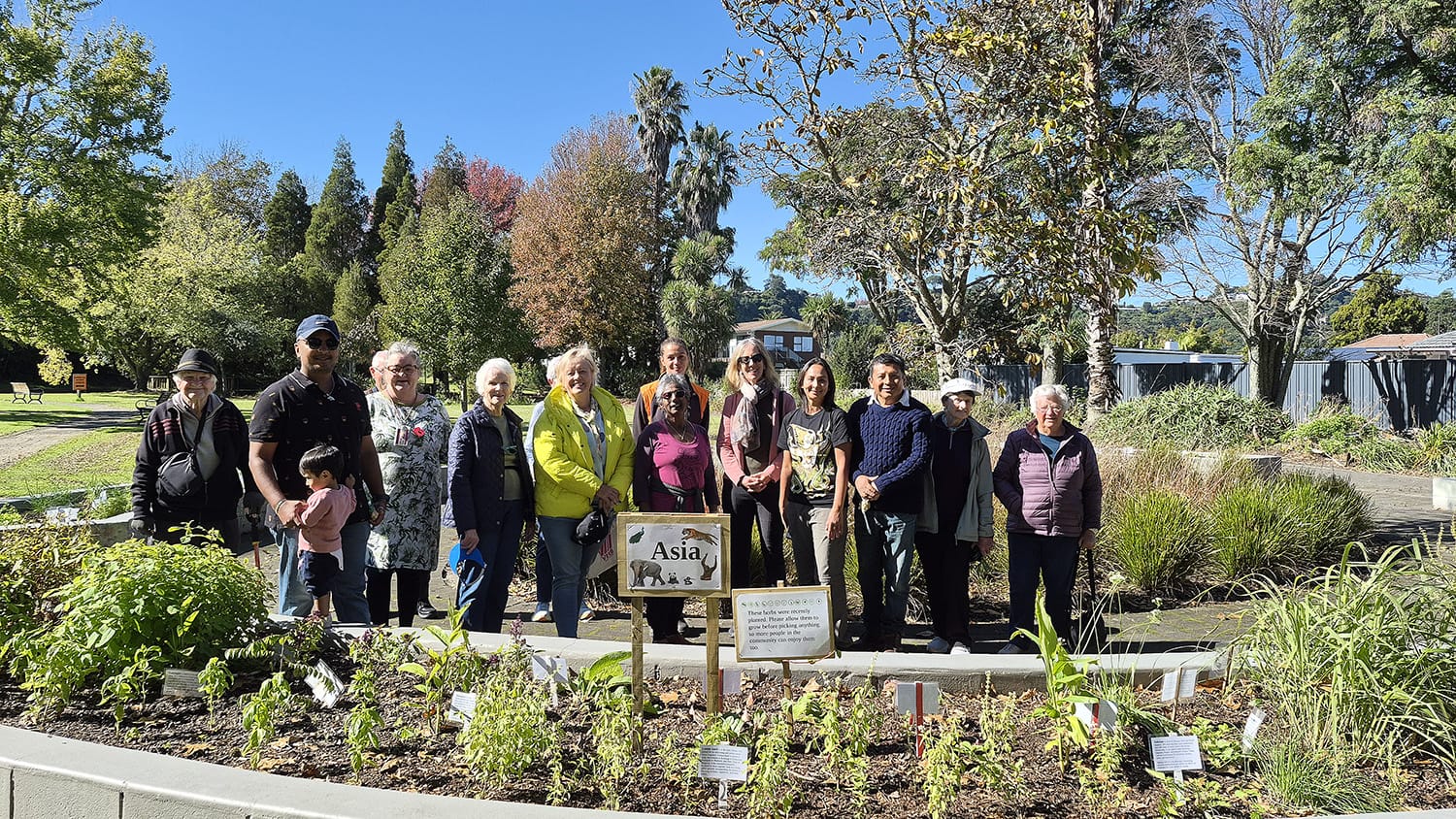
ALTOGETHER: The hard-working team of volunteers and supporters behind the international herb garden. Photos Aston Palmer E5959-01
Aston Palmer
Whakatāne’s international herb garden held its first “thank-you” tour for volunteers and supporters last Friday.
The garden has had many helpers since its establishment earlier this year, from people making signs detailing which herb is which and providing descriptions for the plants, to people attending working bees to get plants in the ground. Some have weeded, some have watered and some have simply used the garden.
The garden has four beds: an American garden with plants from South and North America; an Asian garden with plants from Japan, China and South Korea; a European and Australian garden with plants that most New Zealanders will be familiar with; and an African garden with a small selection of plants from across that continent.
The garden was started by Poppy Jansakul who wanted to share the herbs in her garden and saw the unused raised flower beds at the Whakatāne Rose Gardens on McGarvey Road as an opportunity. With the approval of the Whakatāne District Council, the community herb garden was soon up and running.
It now contains all sorts of herbs including white sage, which is used to make smudge sticks and in healing cooking. There is also yacon, a ground apple, and a stevia plant, which has very sweet leaves that can be used as a sugar substitute.
With it heading into winter and the less hardy plants dying out, Ms Jansakul hopes the garden and its community will survive the colder months ready to bloom in spring.
Tour attendees included Sarah Fitzpatrick from the Whakatāne Mitre 10 garden centre; Julie Magee, the organiser of Crop Swap with Heart Space; Carolyn Hamill, Whakatāne District councillor; and the community helpers.
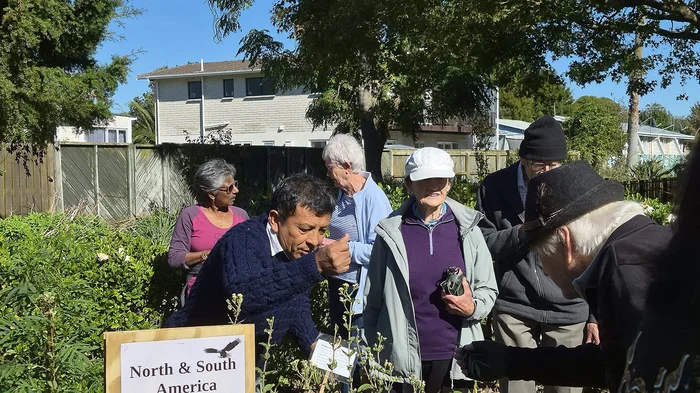
Mario Abraham led the tour of the American garden, Vinoop Xaviour led the tour of the Asian gardens, Kaye McLeod, the Europe and Australia garden, and Vicky Clark, the African garden, outlining the contents of each garden and highlighting special plants.
Ms Hamill said the garden was a brilliant way to bring the community together.
“This garden is a small but important way to acknowledge and involve the many cultures that make up our community.”
The garden is situated in the raised beds beside the Japanese-inspired section of the rose gardens. Anyone is welcome to take pieces of the plants for home use – and contribute their own herb plants.