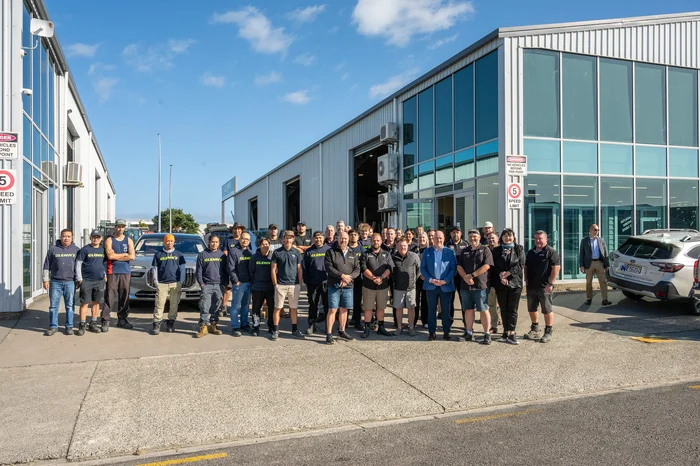
Prime Minister visits Whakatāne businesses
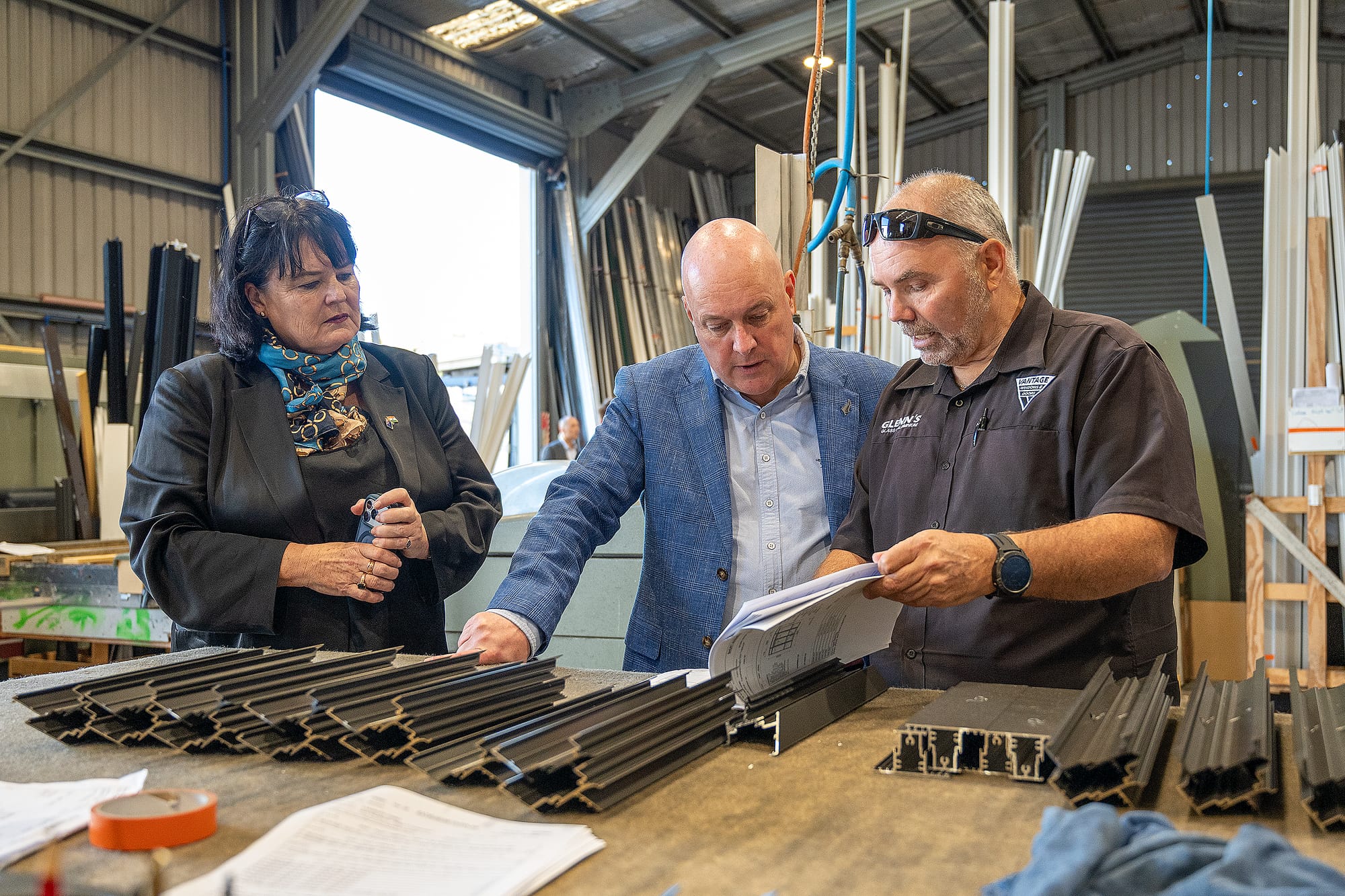
PROJECT OVERVIEW: Glenn’s Glass owner Glenn van Asselt, right, explains business operations to Prime Minister Christopher Luxon and East Coast MP Dana Kirkpatrick during a factory tour yesterday. Photos Troy Baker E5960-232
Tamara Herdman
Tamara Herdman
Staff Reporter
Prime Minister Christopher Luxon was in Whakatāne yesterday, visiting local businesses and catching up with the region’s mayors over lunch.
One of his stops was Glenn’s Glass at Gateway Drive where he was given a tour of the workshop by owner Glenn Van Asselt and chatted with employees.
“Hearing the story of 22 years in the business and how it’s changed since you started and how it’s growing … the quality of the product you’re producing is world class, which is absolutely fantastic,” Mr Luxon said.
“This is a country that needs a lot more building and construction getting done.”
Mr Luxon spoke about Investment Boost, designed to encourage businesses to invest in productive assets such as machinery and equipment, and other ways the Government is trying to increase economic growth.
“For businesses like this that want to invest in new equipment to do more cutting of aluminium and moving the glass, they can write that off in their first year, up to 20 percent of the value of that investment.
“That just means they become more productive; they can do more work, they can hire more workers, often pay higher incomes. So, we’re doing practical things like that on the ground.
“We’re trying to make it easier to get things done and built through our restructuring of the Resource Management Act, which should mean that there’s less time on consents and less money wasted and slowdown in projects.
The recently signed New Zealand-India Free Trade Agreement would also have benefits in the Eastern Bay.
“I just left a meeting where two kiwifruit growers came up to me, and they are very excited about the fact that they can sell more and therefore bring that money back to Whakatāne,” Mr Luxon said.
“And that means that they could then maybe do a project on their building at their farm and actually employ someone like Glenn to provide the glass and the aluminium.
“That’s sort of how it all works; the circular nature of it all.”
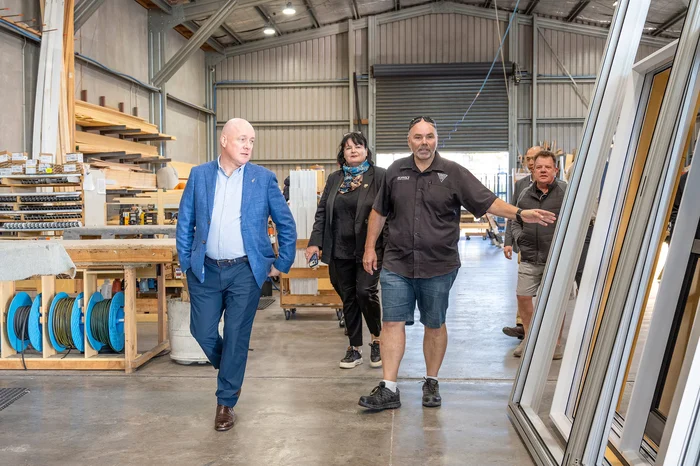
Mr Luxon acknowledged the impact of freight costs and supply delays on businesses.
“It’s really challenging at the moment, particularly with the fuel crisis, because it’s not just the fuels of aviation and petrol and diesel, it’s also that a lot of oil products go into, say, the rubber or the polymers that are used in a business like this.
“They’re experiencing an increase in their costs, and often it takes longer to get deliveries. As a consequence of that disruption to the global supply chain, it ends up affecting the local supply chain.
“We’ve also got a lot of work to do to improve and upgrade the roads and build more resilient roads. In this part of the country in particular, Waioweka Gorge is another case in point, but it is very difficult geotechnically.
“When we do the work, we want to be able to do it once, do it right, and make sure that it’s enduring and sustainable.
“We’ve got to continue the investment in infrastructure and roading.”
East Coast MP Dana Kirkpatrick said the visit was a chance to showcase the region.
“It’s just great having the Prime Minister here to show him how regional New Zealand operates, and for our Ministers and Prime Minister to get out of Wellington and come and see how the hard-working New Zealanders are fronting up every day for our economy is awesome. We’re really excited to have him here.”