
Major slip repairs completed at Tōrere
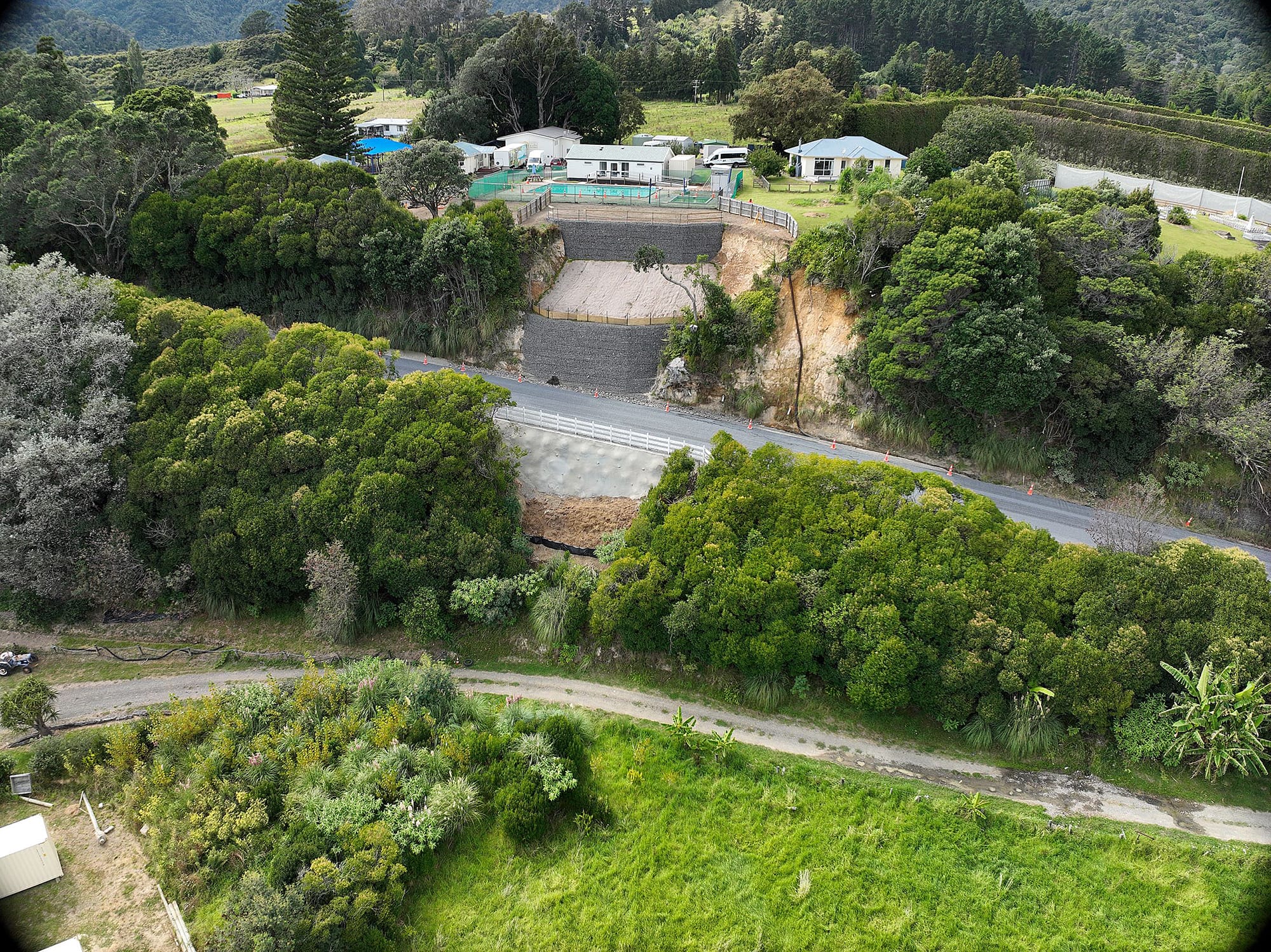
AFTER: Tōrere after repairs in 2026.
.
Two large slips on State Highway 35 at Tōrere have been repaired, restoring a damaged hillside beside the kura.
Transport Rebuild East Coast (TREC) and crews from Waiotahi Contractors completed the repairs recently and the highway has reopened to two lanes.
TREC project manager Richard Bayley said the slips, one above the highway and one below, occurred by Te Kura o Tōrere and near an urupa, so crews needed to be extra careful.
“The team has done a good job, working in a tight space. Because of the sensitive location, space constraints, and the type of terrain, some of the repair work, such as placing large rocks, needed to be done by hand. Seeing the results now that work is finished, it’s clear this has paid off.
“We also want to acknowledge the efforts of Apanui Traffic Management, whose team went above and beyond to keep our tamariki safe. They were always willing to adapt and support the kura and our on-site activities. At times, innovative traffic management approaches were implemented, ensuring that tamariki, the kura, the wider community, and all road users remained safe throughout project.”
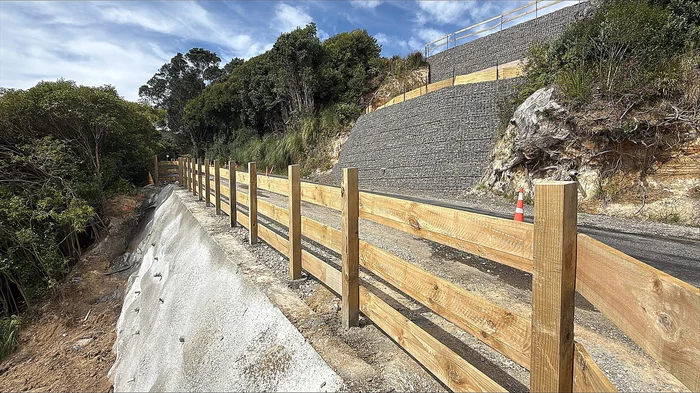
The underslip (below the highway) was repaired using an anchored shotcrete wall. Long steel rods (anchors) were drilled beneath the road to stabilise the land, before the slope was sprayed with a liquid concrete that hardens into a protective wall.
The overslip (above the highway) near the kura was repaired with reinforced walls built up layer by layer. Large rocks were placed by hand to avoid damaging the layers beneath, and new drainage was installed to move water away from the slope and reduce erosion.
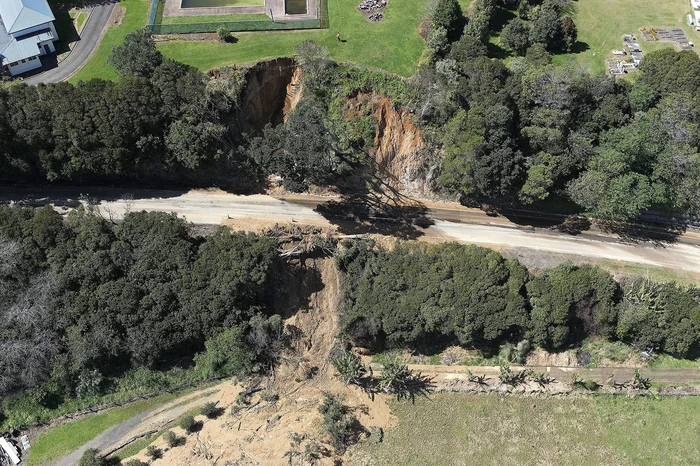
The project began in April 2025 and was originally expected to take around six months, but crews remained on site longer after additional slips occurred due to ongoing weather events.
TREC, Ngāitai Iwi Authority, and Te Kura o Tōrere tumuaki (principal) and board of trustees partnered closely on the project, including working with pou turuki (cultural monitors) to look after the whenua (land) and environment during construction.
Kiri Maxwell of Ngāitai Iwi Authority said the repairs went far beyond restoring a damaged site; they had helped return whenua of deep cultural and ancestral significance to the people.
“Our urupā and our kura sit alongside that highway. When the slips came down, it wasn’t just earth that moved, it was our whenua. A part of us was taken.
“To see that land stabilised and returned means a great deal. It restores a sense of connection and balance for our people.
“We’ve been involved from the beginning, including the design stage, and our kaitiaki have been on site throughout. Their role has been to ensure the work respected the whenua and the kōrero it holds. This isn’t just a worksite; it’s our home, our history, and our responsibility.”
Lucy Steel, trustee of Te Kura o Tōrere, said a community planting day was planned later this year to grass the area and reintroduce native species.
“That’s the final step for us. The whenua has been restored, and now we can focus on healing it, returning it to a natural state and caring for it for generations to come.”
TREC also acknowledged the support of Te Kura o Tōrere, who allowed the construction crew to set up on their grounds and provided a kura building as a site office.
“We want to thank the kura for welcoming us onto their doorstep for such a long period,” Mr Bayley said. “They’ve been patient, supportive and understanding while we worked right beside their tamariki every day.”