
Community unites for Waiōtahe biodiversity
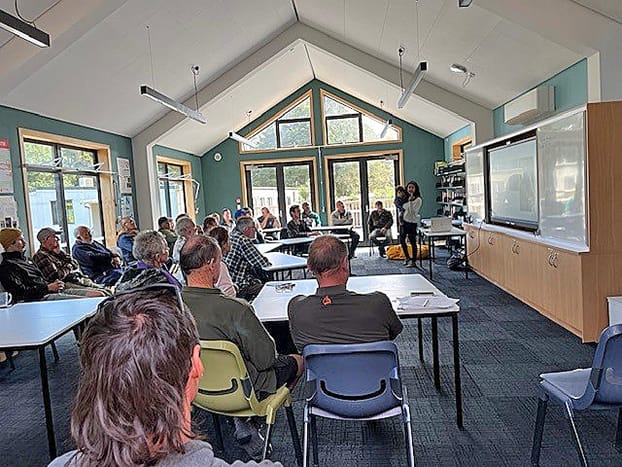
challenges and opportunities: Biodiversity specialist Mithuna Sothieson presents a draft biodiversity plan developed through local input and engagement.
.
A biodiversity day held at Kahunui last week brought together more than 30 landowners, iwi, community members and experts to focus on the future of the Waiōtahe catchment.
The event, hosted by the Waiōtahe Water Care Group, highlighted both the challenges and opportunities facing the area.
The Waiōtahe catchment is particularly significant, with over 50 percent still in native forest. This provides a strong foundation for biodiversity and offers important opportunities to strengthen and connect habitats across the landscape.
Biodiversity specialist Mithuna Sothieson presented a draft biodiversity plan developed through local input and engagement.
The plan brings together community perspectives, outlining key issues as well as a shared direction for the catchment.
Among the challenges discussed were invasive plant species, which outcompete native vegetation and slow natural regeneration.
Pest animals, including possums, rats, stoats and feral cats, also continue to impact biodiversity. High possum numbers can significantly reduce native forest regeneration and seed production.
However, speakers emphasised that co-ordinated pest control across properties could have a strong and immediate impact.
The draft plan sets a shared vision for a thriving, connected catchment. Key priorities include restoring and connecting native habitats, improving water quality, coordinating pest and weed control, and supporting landowners with practical advice and resources. The plan is intended to be a living document, continuing to evolve with community input.
The day also acknowledged the significant work already being carried out across the catchment.
Many landowners are actively involved in planting, wetland restoration, erosion control and pest management.
Much of this mahi often goes unrecognised, and the event highlighted the importance of celebrating and sharing these efforts.
A practical trapping demonstration added a hands-on element to the day. Led by Andrew Glaser, alongside conservation staff Barlow Onekawa and Laurie Mathews, the session showcased a range of trapping options for pest control.
Landowners were able to learn what tools and methods might work best for their own properties, with advice tailored to various property types and scales.
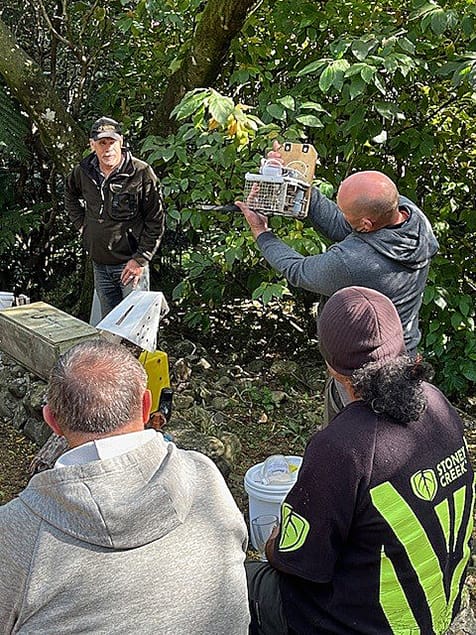
The demonstration reinforced how effective trapping can reduce pest numbers and support native species, with attendees encouraged to take simple, practical steps to get started.
Waiōtahe Watercare Group coordinator Mel Brown was pleased with the direction of the event.
“Overall, the day highlighted the power of working together. By bringing together iwi, landowners and the wider community, and building on existing efforts, the Waiōtahe catchment is well placed to strengthen biodiversity outcomes for generations to come” she said.