‘Comparing blueberries with melons’ – Tanczos on report
Diane McCarthy
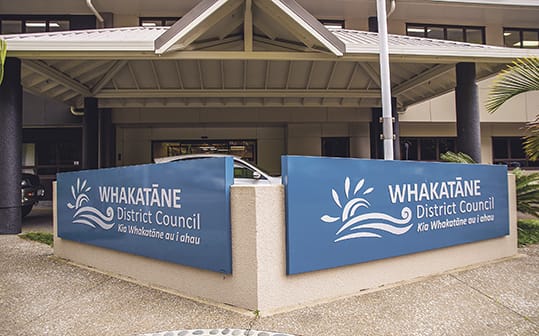
Whakatāne has fallen from New Zealand’s third most expensive ratings district to seventh place in a report that Mayor Nandor Tanczos has described as ‘shonky’.
Lobby group for lower government spending and taxation, the Taxpayer’s Union, which has campaigned for rates capping for councils, has released its latest Ratepayer’s Report providing league tables for how local and regional councils stack up across a range of statistics.
These include average residential rates, which show Whakatāne District Council as being seventh highest, at $4508 a year.
It is the third highest of the Provincial councils (councils serving populations between 20,000 and 90,000), behind Porirua City Council, which was also the highest in New Zealand ($5591) and Queenstown Lakes Council ($4848).
The local council with the lowest average residential rates was Otorahanga district at $2554.
This is the first time the Whakatāne council has had this figure included in the report since it was listed as third highest in New Zealand in 2021. Since then, the Whakatāne council has not provided the organisation with the figures required to provide this comparison until now.
The report is looked upon unfavorably by many councils, which consider the information lacking in context about varying needs of different districts and services provided.
Mr Tanczos said the report was “a classic example of comparing blueberries with melons”.
“They’re both fruit but what you get from eating one is very different. The way councils charge for services varies a lot – some have very high fees to help lower the rates, some don’t provide certain services like rubbish collection, some use a lot of targeted rates, and some hit certain ratepayers harder than others, which ‘average rates’ don’t reflect. I get what they’re trying to do but the shonky methodology makes this a ‘not achieved’. There’s no participation prize in politics.”
He said if people were really interested in the council’s services and costs they could view its Annual Report, which was available on its website.
Kawerau district, while being among the dozen local councils with lowest residential rates, at $3130, had the second highest average non-residential rates in the country at $46,352.
Kawerau District Council chief executive Morgan Godfery said this was due to the large capital values of industrial properties in the district.
“Kawerau’s non-residential properties comprise a number of large industrial properties which have significant capital values and therefore higher rates, which consequently impacts the average rates for the non-residential properties. If the median valued non-residential property was used for this calculation the rates would be $10,230.”
Kawerau District Council has been critisised by the Taxpayer’s Union which felt the council’s staff cost statistics raised serious concerns around efficiency.
“With staffing costs reaching $2567 per household, 28 full-time staff per 1000 households, and nearly a third of staff in management or communications roles, ratepayers are right to question whether they’re getting value for money,” a media release said.
Mr Morgan said while the figures gave readers an indication of the average figures for the individual councils, they didn’t compare the services.
“In Kawerau we provide a high level of council services to all properties, which includes water, wastewater, rubbish and recycling collection, mowing of berms, provision of dog services 24/7, facilities and venues, roading and footpaths, infrastructure investment and the many other services and activities.”
Ōpōtiki district’s average residential rates were $3163, comparable with Kawerau district’s $3130, and 13th lowest of the local councils.
It’s non residential rates were the fourth lowest in the country among local councils, at $3606.
This year, six of New Zealand’s 77 councils either did not respond or refused or were not able to provide figures for the report.