
Bay of Plenty well known for its silica-rich sands
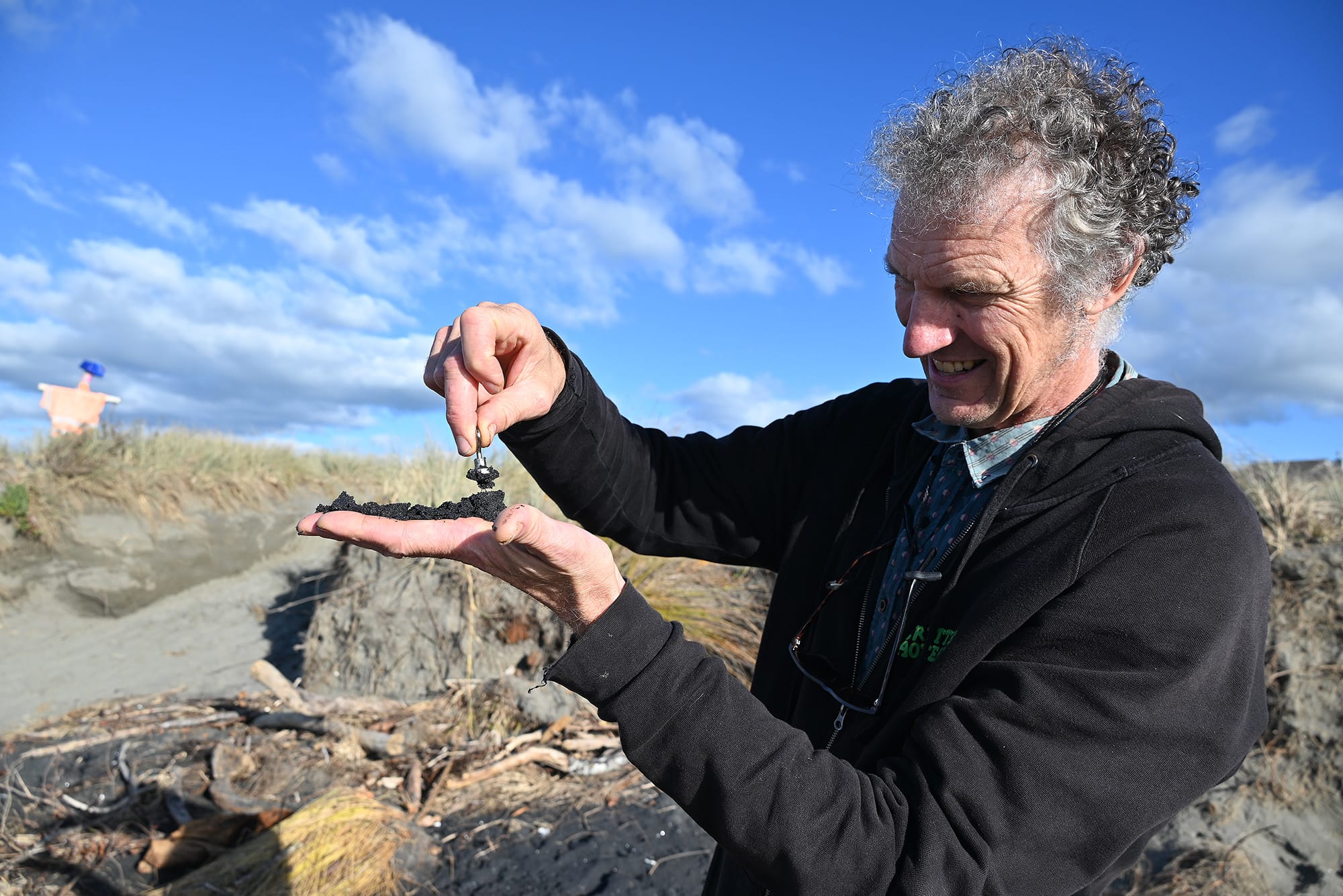
MAGNETIC: Science educator Ilmar Gravis demonstrates how the sand can be picked up with a magnet. Photo supplied
.
According to Ōpōtiki earth science expert Ilmars Gravis, the Bay of Plenty from Waihi to Torere is well known for its sparkling pale silica-rich sands, mainly composed of eroded quartz, pumice, and other pale volcanic minerals from the Taupō volcanic zone eruptions.
He was quite happy to answer questions from a curious and observant local spotting what appeared to be an extensive band of ironsand standing out against the region’s usually pale beaches.
“While our North Island West Coast beaches, extending from Whanganui to the north of Auckland are best known for some of the largest concentrations in the world, ironsand can be seen in occasional and ephemeral deposits on our Eastern Bay beaches; something I have been observing since living here over the last decade.
“New Zealand ironsands originate from volcanic material, and because the ironsand is heavier than our more silica-rich sands, it is soon separated from other materials by the action of longshore currents and waves.
“Because of their relative scarcity on the East Coast, compared to the West Coast where dunes of ironsand 90 metres high have been recorded, it is only when the ironsand source, currents, wave actions, and coastal conditions align perfectly we can see distinctive deposits such as the one observed at Waiotahe recently.
“Testing with a magnet soon confirmed it is in fact ironsand, scientifically known as titanomagnetite due to high titanium content and its magnetic nature.
“Compared to deposits on the West Coast, the amounts seen on our shores would have no economic value, however, that doesn’t lessen their value as a geological demonstration of the dynamic relationship between sediment source, ocean action, and coastal environment playing out every day in the Eastern Bay.”