
Opinion: Long live the unseen backbones of our community
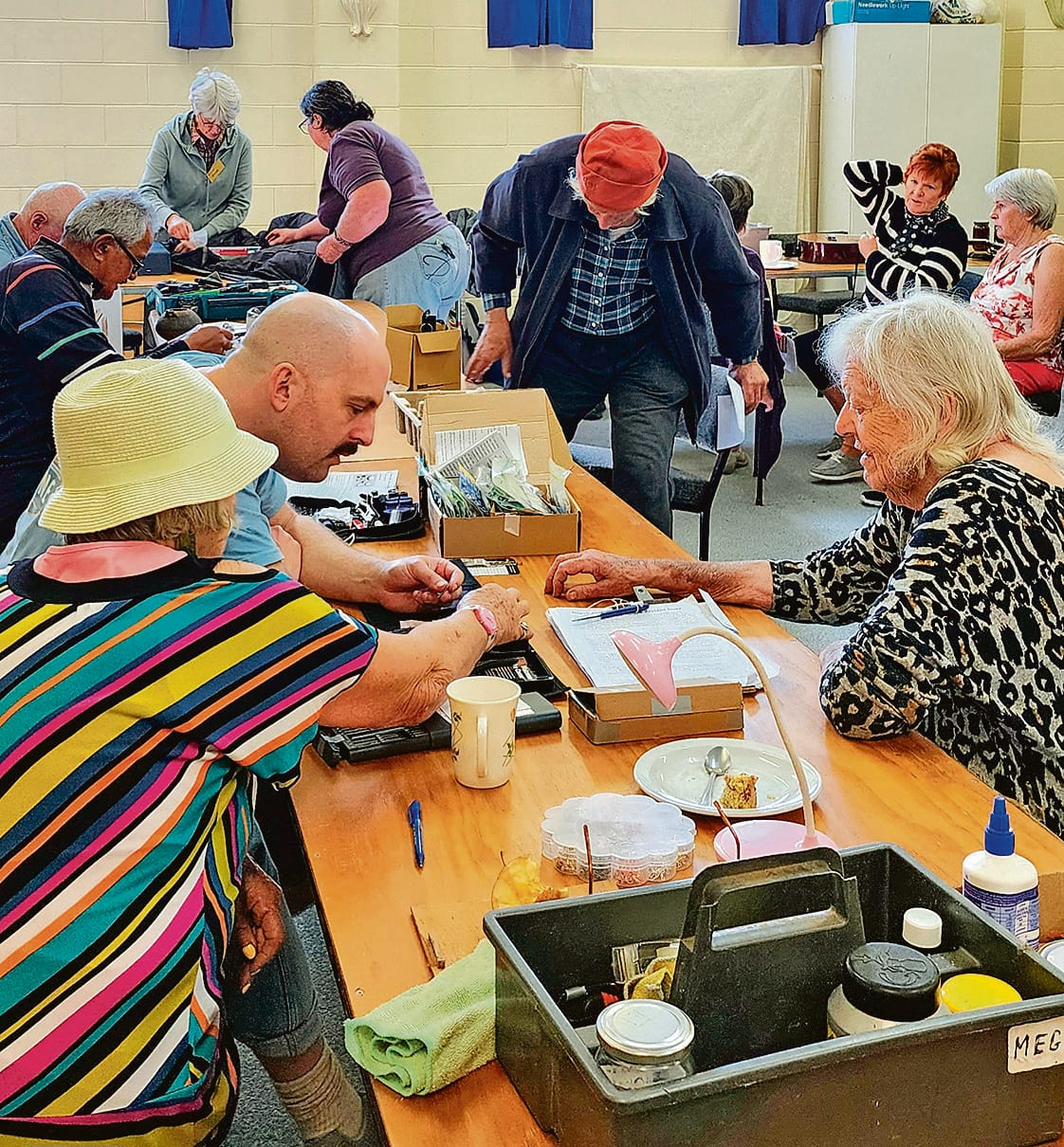
FIX ANYTHING: Working in the Ōpōtiki Repair Café has given the writer a real appreciation for the skills and ingenuity of older people in our community. File photo
.
■ Katherine Langford reflects on the wisdom, resilience and community spirit older generations quietly contribute every day
In a world that does everything it can to devalue and “disappear” older people from Western culture, their true value remains hidden beneath the surface and unadvertised, making unsung and unrecognised contributions to the lives of others.
Working in the Ōpōtiki Repair Café over the past three years has given me a real appreciation, not just for the skills, but the ingenuity of older people in our community.
What I truly admire is not just the self-confidence, creativity, and the problem-solving capacity of these people, but also their willingness to work together to help others and build community – in other words, their humanity.
These men and women can fix almost anything, without a manual.
They can mend a rip in a workman’s favourite jacket by adding a new pocket for his iPhone, repair an antique fan that commercial technicians said couldn’t be fixed, give a new lease of life to broken clocks and musical instruments, fix vacuum cleaners, chairs, walking frames, bikes, and more – on the spot.
They restore not just stuff, but people’s treasured memories, and in some cases their dignity.
Don’t get me wrong.
For many people over 70, they have these skills because they needed them.They grew up before the culture of cheap, mass-produced goods, made possible by cheap overseas labour. Before surplus and waste, that time when, if something breaks, you couldn’t just throw it out and buy another one.
You grew your own food, made your own butter (imagine) and made, and mended, your children’s clothes, or had a tractor or car for 30 years because you could fix them yourself.
Even I remember hearing my mother the night before my sixth birthday (when I was supposed to be asleep) on her sewing machine for hours, and the next day being gifted a whole wardrobe of tiny princess dresses for my dolls, made from the recycled fabric of old clothing.
Life in the 21st century may bring us comfort and ease, if we are lucky enough, but it is also removing independence, creative problem-solving, and a sense of being part of something organic and larger than ourselves – and without that, community struggles.
We live in a system now that steals our attention through social media and devices, our privacy (through social media and devices), our money (where do I start) and our time. In such a world it is vital that we take time to disconnect from the machine, and connect with reality. We may be heading towards a “new normal” of disruption, uncertainty and periods of scarcity.
With a changing climate, wars, supply chain disruptions and disengaged governments, what our older folks can teach us about self-sufficiency and problem-solving, and about community, will come into its own.
In many ways, when our older folk who repair and create, run art societies and craft groups, knit blankets and children’s toys to donate to those less fortunate, teach kids how to design and build their own rat traps or garden beds, or to garden – when these people are no longer here, our communities will be diminished.
And we, and our tamariki and rangatahi, may well be in great need of such skills, values, and connections, sooner than we think.