
Preserving stories for future generations
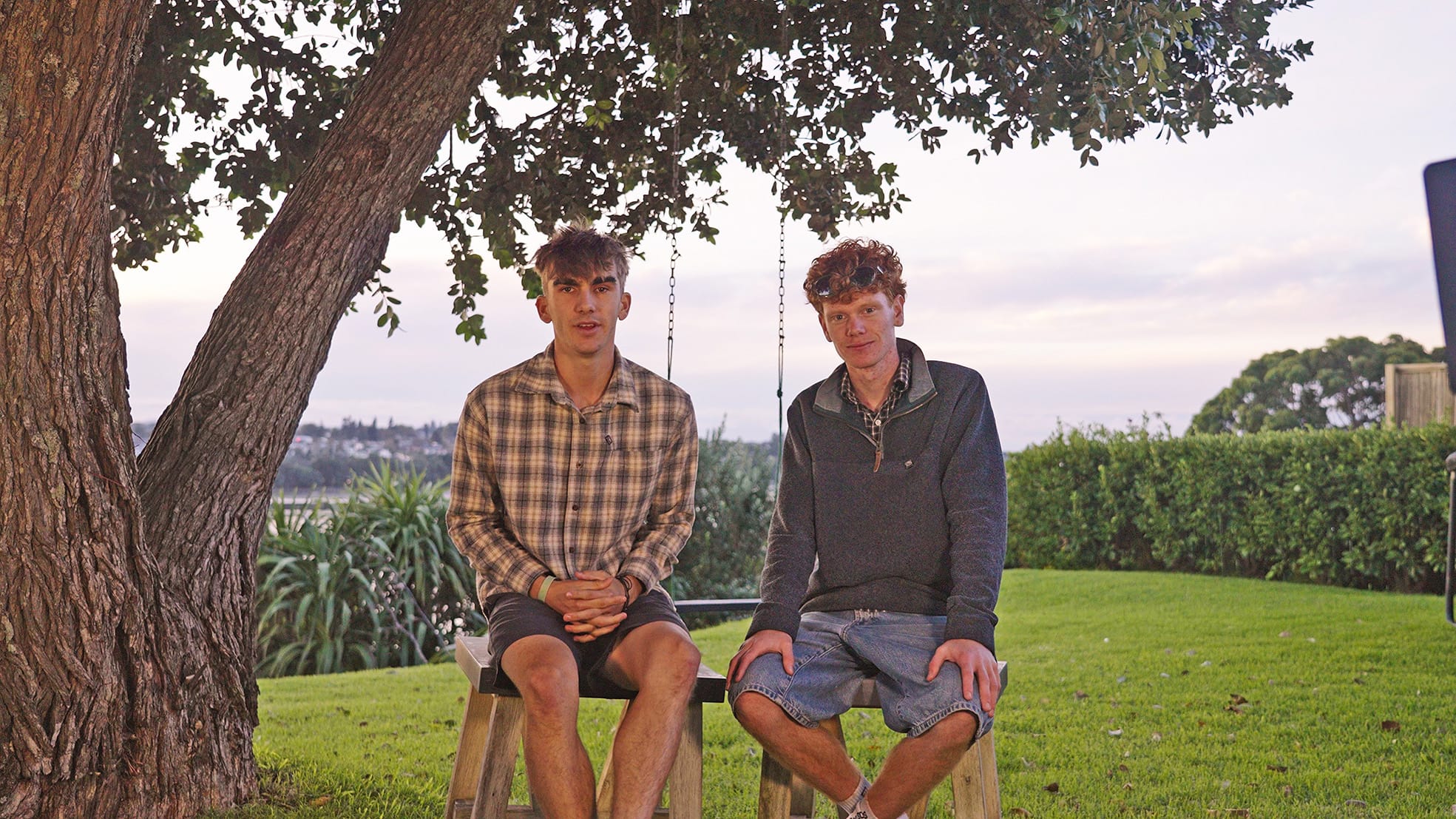
Living proof: The 18-year-old cofounders of Living Proof Benji Smith and Harrison Smith are ready to tell your story. Photo supplied
Aston Palmer
Two teenage videographers are helping families preserve the stories of loved ones through a new documentary-style business, capturing personal histories before they are lost to time.
Living Proof was founded by Benji Smith and Harrison Smith, who turned their passion for videography into a full-time career after leaving high school.
Operating out of Tauranga, the pair travel across New Zealand filming long-form videos telling people’s life stories, allowing families to preserve memories, life experiences and family history for future generations.
Since launching recently, the pair have been overwhelmed by community support and already have several bookings.
They describe themselves as simply “two local 18-year-old boys who are trying to do something good”.
Harrison said they had been doing photography and videography for just over two years, initially beginning at school and filming events and cars before moving into commercial work for businesses.
“This is our passion, this is our job, you know, this is what we love,” Harrison said.
“We’ve taken our hobby, and we turned our kind of thing we do on the weekends into something that can support us.”
Rather than pursuing university study, they prefer learning through hands-on experience and running their own businesses.
“You learn from doing, not necessarily from sitting down and listening,” he said.
“We wanted to come together to create something that’s meaningful, and not only can we operate as a business, but it also operates as something that gives back to the community.”
The idea came after the friends reflected on the family members they had lost and their stories – the stories they never had the chance to hear.
“I don’t even know who my great grandma is.”
Living Proof has been created to give other families what they wish they could have had.
It focuses on recording interviews with elderly people, usually those aged 75 and older, documenting their lives and stories, but Harrison said they would also tell younger people’s stories.
The process begins with a phone call before an in-person meeting is arranged with the family.
“We’ll have a face-to-face meeting where we’ll just talk with them and get to know their story,” he said.
Filming sessions usually last around two hours, with the conversations later edited into documentaries ranging from 45 to 90 minutes.
“If it takes more, if you’ve got such an amazing story, then not a problem at all,” he said.
The finished product is typically delivered within one to two weeks after filming.