
Praise of the earthworm – garden’s best friend
.
Duncan Smith
When I was four years old, growing up in England, I developed what can only be described as a deep and abiding fascination with earthworms.
While other children collected stamps or football cards, I collected worms. I would dig them up with enormous concentration and store them carefully in my trouser pockets.
This seemed, at the time like perfectly sensible behaviour. My long-suffering mother may have held a different view.
Naturally, curiosity got the better of me. I wanted to know how they worked.
Occasionally, it involved taking one apart. I soon discovered that worms, rather like small alarm clocks, do not function nearly so well after dismantling.
The defining moment occurred when my mother, unaware that my trousers were heavily loaded with livestock, fed them through the rollers of our old laundry mangle.
For those unfamiliar with this historic appliance, it squeezes water out of washed laundry. Firmly.
The consequences were dramatic and, I suspect, without precedent in the history of domestic laundry.
But amidst all that childhood enthusiasm, the foundations of something more enduring were beginning to form. Even then, I sensed these creatures held significance.
Charles Darwin, who studied earthworms for 40 years of his life instead of orchids or butterflies, concluded:
“It may be doubted whether there are many other animals which have played so important a part in the history of the world as these lowly organised creatures.”
Quite the tribute for something that resembles damp shoelace!
And yet, he was absolutely right.
There are around 6000 species worldwide. In New Zealand, roughly 178 are native and 23 were introduced by early European settlers, along with sheep, blackbirds and various other enthusiastic colonists.
Our native worms tend to prefer forests and undisturbed soils. The introduced European species, the lumbricids, are the tidy fellows responsible for those neat little coils of casts on your lawn. If you’ve ever stepped on one barefoot early in the morning, you’ll know exactly what I mean.
In some New Zealand forests, the combined weight of earthworms has been calculated to exceed that of all other animals living there. It’s a sobering thought. Beneath your boots lies a workforce that would put most governments to shame
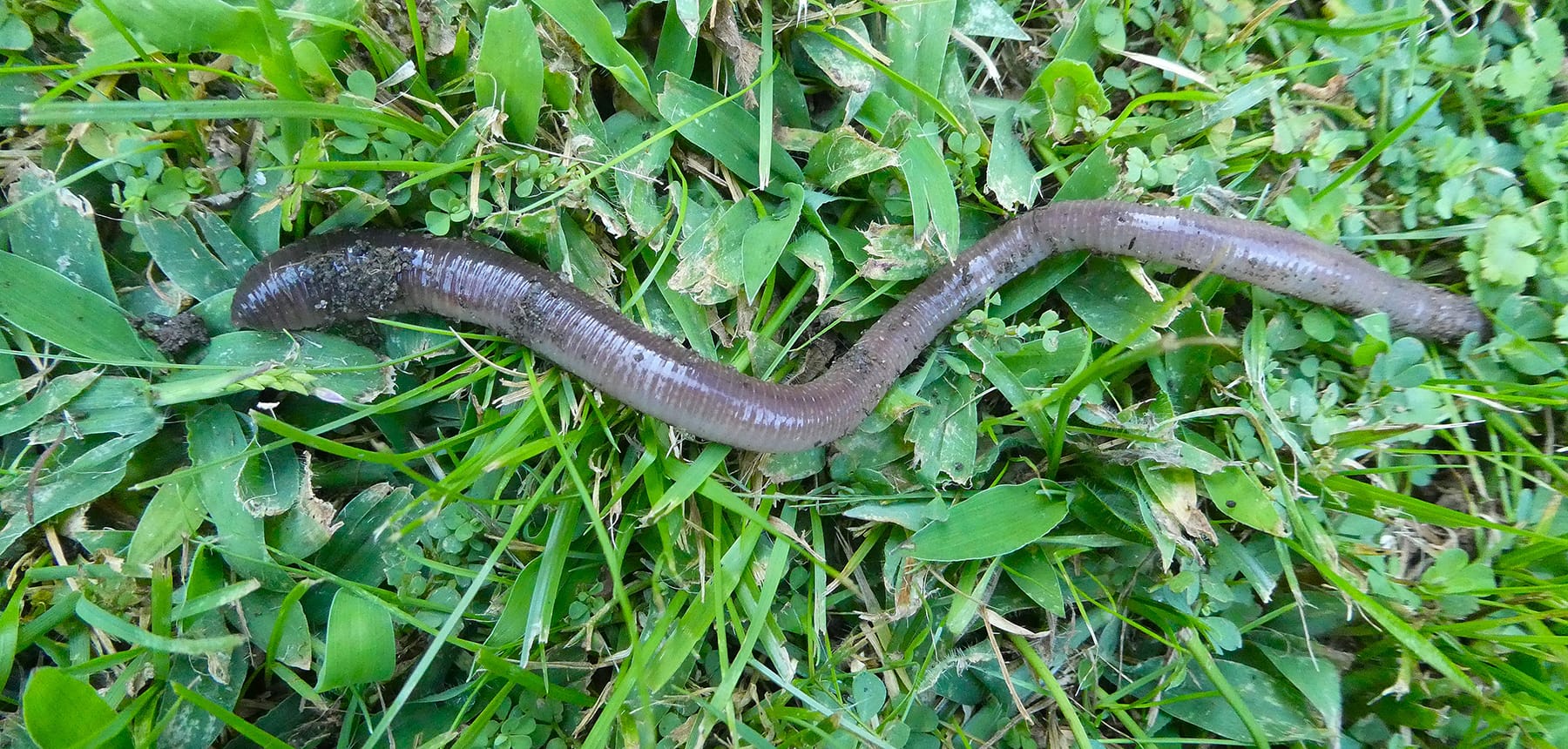
To the untrained eye, a worm is simply a worm, long, soft and faintly indignant at being unearthed. In reality, they occupy distinct roles within the soil community.

Compost worms (tiger worms) are the rapid recyclers. Red and striped, they thrive in compost bins where they convert kitchen scraps into black, crumbly treasure.
Surface dwellers live in leaf litter and mulch. They break down plant material before it enters the soil proper.
Soil burrowers work horizontally through the soil itself, improving structure as they go. These are the pale ones you discover while digging, usually accompanied by a blackbird watching closely.
Deep diggers create permanent vertical tunnels and drag leaves underground. Think of them as tiny agricultural contractors working night shifts.
Between them all, they plough, fertilise, aerate and drain your garden, all without asking for tea breaks and overtime.
Earthworms may not look sophisticated, but they are beautifully adapted for their work.
They have no bones, no lungs and no eyes. Instead, they breathe directly through their moist skin, which explains their strong objection to droughts.
Their segmented bodies are ringed with powerful muscles that allow them to extend, contract, thicken or narrow as needed. Tiny bristles called chaetae grip the soil like microscopic crampons. Blackbirds, heads cocked attentively on the lawn, can hear worms moving underground; once located, they strike with surgical precision.
Worms possess simple brains and several hearts, usually two to five pairs, depending on the species, which is more than most of us manage.
Worms are hermaphrodites, though still in need of a partner. Romance occurs at night when conditions are suitably damp, which seems entirely reasonable.
Here’s the part that makes gardeners sit up straighter.
When feeding, worms swallow organic matter along with soil. In a muscular gizzard, grit grinds the mixture fine before digestion transforms it. What emerges are worm casts, small, crumbly deposits that are horticultural gold.
A healthy hectare of soil can contain up to 10 million worms. Together, they may produce as much as 1200 tonnes of casts each year, an astonishing quantity of fertiliser manufactured quietly beneath our feet.
These casts are far richer in plant-available nitrogen and phosphorus than surrounding soil. New Zealand research has shown they can release several times more soluble phosphorus than ordinary earth. Better still, worms deposit these nutrient parcels directly in the root zone, already dissolved into forms plants can absorb immediately. Rather like having dinner served up instead of rummaging in the pantry with a tin opener
As worms burrow, they also improve soil structure and feed beneficial fungi and bacteria that continue the nutrient cycle. Without worms, many nutrients would remain locked away.
Earthworms don’t merely shift soil. They upgrade it, quietly and without ever sending an invoice or asking for overtime.
Worm burrows act as natural drainage pipes, allowing water to penetrate the soil more easily. Studies suggest drainage can improve dramatically in worm-rich soils.
Their tunnels also improve aeration and reduce compaction. Over time, worm activity enhances soil structure and can even increase the depth of topsoil.
If your soil is dark, crumbly and smells pleasantly earthy rather than vaguely industrial, chances are worms are hard at work.
Worms are not just good for gardeners. Kiwi diets may consist of up to half earthworms. Thrushes, blackbirds and robins rely on them, as do hedgehogs and other wildlife.
In short, healthy worms support healthy ecosystems.
If you would like more worms, and frankly, why wouldn’t you, provide the conditions they enjoy.
■ Keep soil slightly acidic to neutral
■ Maintain moisture without waterlogging
■ Add compost regularly
■ Improve sandy soils with organic matter
■ Loosen heavy clay soils with compost and gypsum
■ Reduce the use of synthetic fertilisers and avoid harsh pesticides
In essence, treat your soil as a living community rather than an inert substance that merely holds plants upright.
Earthworms do not bloom spectacularly. They do not attract admiring visitors. They do not feature on gardening television programmes.
They simply work.
Day after day. Night after night. Grain by grain.
When you next encounter one while digging, pause before recoiling. You are holding one of the most effective soil engineers on Earth.
And if you happen to be near a laundry mangle, keep your pockets empty.
■ Duncan Smith is a retired plant pathologist, organic grower, and author of the recently released The Tiny Vineyard That Defied the Odds, a humorous and heartfelt memoir about family, farming, organic growing, and the small New Zealand vineyard he and his wife, Judy, established against the odds. For more information go to https://www.youtube.com/watch?v=FiZ_gY7J9pE or read his book at https://www.amazon.com/dp/B0GP6MRY5C