
Oil, supply chains and modern life

.
■ Modern supply chains may be efficient and keep economists and bean counters happy, but they are extremely fragile. Oil is a critical component in many of the supply chains that make modern life possible, writes Dr Victor Luca.
I have been hoping for decades that the world could gradually wean itself off its addiction to fossil fuels and transition progressively to clean energy.
For decades the science has been clear that world fossil fuel (coal, gas and oil) burning and the resultant Green House Gas (GHG) emissions are causing climate change that threatens organised human life on our planet.
The consensus among the science, and especially among the climate science community, is absolute. By now, anyone who is not brain-dead knows it, and even big oil companies have admitted it.
Regrettably, we have been unable to achieve the needed transition, or at best, it is occurring too slowly. We need a brisk and orderly transition, not an abrupt and catastrophic one.
As a materials chemist who has worked in many areas over my career, I have an idea about how the things without which our modern world would simply not function are made. Our comfortable modern life is no longer as simple as it was several hundred years ago. We depend intimately on the stuff we make.
Most readers will understand the war that Israel and the United States are waging on Iran is set to cause significant economic disruption the likes of which the world has never seen.
I am not so sure that all that many people have realised how far-reaching the impacts on our energy system are and fully absorbed the consequences on extremely complex oil markets and supply chains in which oil is a necessary ingredient.
An abrupt significant reduction in oil supply due to instability in the Middle East and other regions of the globe could plunge the world into chaos. The full consequences are difficult to determine at this stage because there is no end sight to the madness in the Middle East.
The effects of the current oil shock have yet to be fully felt.
Meanwhile, the world is still waiting for a coherent explanation for this war to be articulated by either of the two belligerents. We are experiencing a serious and classic case of unintended consequences that could be catastrophic.
Whatever America’s objectives, and I have propounded theories in my writings, it has a lot to answer for in taking the actions it has, including the destruction of oil production infrastructure in an oil-dependent world.
The first thing that comes to mind for most people when oil is discussed is the fuel that, unfortunately, most of the world still uses for transportation and a modern life. The transport of goods in most countries, especially New Zealand, is almost exclusively dependent on diesel trucks.
Imagine what would happen When trucks stop running. That is the title of a short, but brilliant 2016 book by Alice J. Friedmann who pointed out the consequences of not being able to provide diesel for trucking.
Friedmann undertook the thought experiment on what would happen if trucks (and trains and planes) stopped running and it is truly terrifying.
Imagine going to the supermarket and finding the shelves empty because of a transportation failure, or empty shelves in other stores. The main protagonist in this war, America, is the largest producer and consumer of oil in the world.
The US consumes 20.25 million barrels/day followed by China at 16.74 million barrels/day (as at 2024).
For now, America is virtually self-sufficient in oil and therefore will feel the pinch much less than most countries despite having started the war. Because America is a large consumer, producer, importer, exporter and refiner of oil and oil products, it will not escape the impacts of a shortfall in supply. Through the eyes of a chemist oil is much more than just transportation fuel.
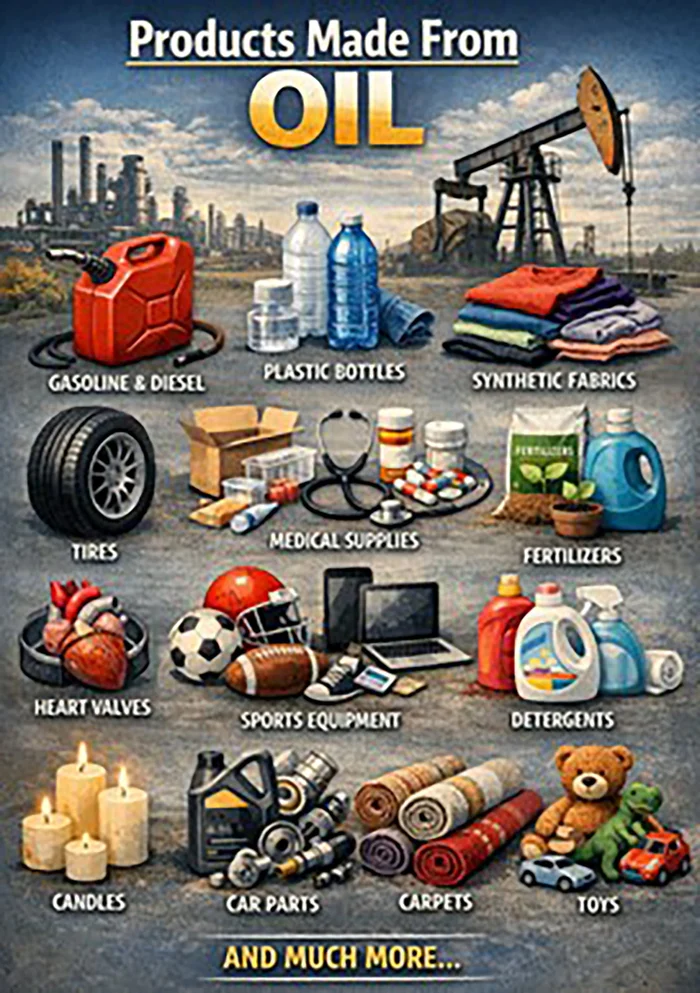
Oil is a critical component in almost everything we touch and everything we use. Oil is the precursor for a bewildering array of the stuff we use every day. It would not be difficult to fill a book on what oil is used for.
To my way of thinking, burning fuel in an Internal Combustion Engine (ICE) vehicle is a waste of a precious resource when we now have perfectly acceptable, and even superior, alternatives.
A serious country, with intelligent leaders, like say China, has already invested significant effort in moving away from oil and toward renewable electricity.
Only 20 percent of China’s energy requirements come from oil. The Chinese are putting solar panels and windmills everywhere and they are building close to 40 commercial nuclear reactors, including some innovative designs.
Nevertheless, so far, only 12 percent of the Chinese light vehicle fleet is electric, although EVs account for 50 percent of new car sales. In New Zealand we have barely reached 3 percent conversion of our passenger vehicle fleet despite having one of the cleanest electricity grids in the world.
Shameful! China is also scaling up innovative processes for the capture and conversion of CO2 from the atmosphere to produce liquid fuels. This could be a game changer if they pull it off at scale.
There is good reason to believe that China’s oil consumption has peaked and is decreasing. Not so for countries like the United States which has always been, and continues to be, the biggest consumer of oil on the planet (see graph). And we are no saints either on a per capita basis.
When it comes to oil, however, transportation fuels are far from the total picture.
For instance, 12-14 percent of world oil is used to make polymers and plastics, which in turn are required to make many other important products. Think about where the health system would be without plastics.
Modern health systems and hospitals would virtually grind to a halt without plastic consumables.
Precursor chemicals and fine chemicals are required to make pharmaceuticals and so on. Industrial agriculture is heavily dependent on oil to power farm equipment.
Globally, agriculture accounts for only about 2 percent of oil demand, but it is an important 2 percent.
Oil is used to produce urea (a nitrogen-containing fertiliser), which is a vitally important component in the industrial production of food. It is also required to make agrichemicals like herbicides and pesticides. New Zealand’s economy is heavily dependent on agriculture and the absence of two major inputs (diesel and urea) is a serious problem.
Unfortunately, New Zealand produces only about 30 percent of the urea required to maintain current production levels, the remainder must be imported.
Some economists have argued that if the wars in the Middle East don’t end, and the oil supply restored very soon, millions of people could starve. As strategic reserves are drawn down, even if the supply is restored tomorrow, it will take months or years for things to normalise.
Alternative “cleaner” methods to produce urea are available, such as through the electrolysis of water to produce hydrogen followed by reaction with nitrogen (Bosch-Haber process) to produce ammonia and then onto urea.
Unfortunately, this has not progressed sufficiently, or to anywhere near a large enough scale, to fill the gap left by shrinking urea production from oil.
In 2025, I was approached by an Australian crowd who were seeking 100ha of land to establish a solar hydrogen production facility in our district. That hydrogen would have been used to produce ammonia for export and urea production. What a shame the land wasn’t available as that would have been a wonderful project for our district.
Let’s consider a few more examples of how critical oil is. Consider the inert gas helium, which at one time I used to use a lot of. The main source of helium is the oil and gas industry, and it is vitally necessary to produce semiconductors.
One final example is worth considering. Sulphuric acid is an important input in the mining of metals, many of which are now considered critical for modern life.
One of those metals, copper, is present all around you. You can’t live without it, and we are heading into a supply crunch.
Without copper there is no clean energy transition, no information technology, no robotics and no AI revolution. Not that any of that would necessarily be a good thing.
About 80 percent of sulphuric acid production comes from the oil industry and the rest comes from sulphate rocks. It is cheaper to extract it from oil (heavy sour crude contains lots of sulphur) and therefore that is the usual practice.
For mining metals, rocks are crushed, leached using sulphuric acid and then the individual metals extracted in complex separation processes that cannot function without continuous sulfuric acid availability.
During the leaching phase, sulfuric acid dissolves copper oxides directly from crushed ore material, creating a copper-rich solution known as pregnant leach solution. This initial stage typically requires 1.5 to 2 tonnes of sulphuric acid per tonne of copper produced. See Figure 1, below, for a simplified depiction of the copper supply chain.
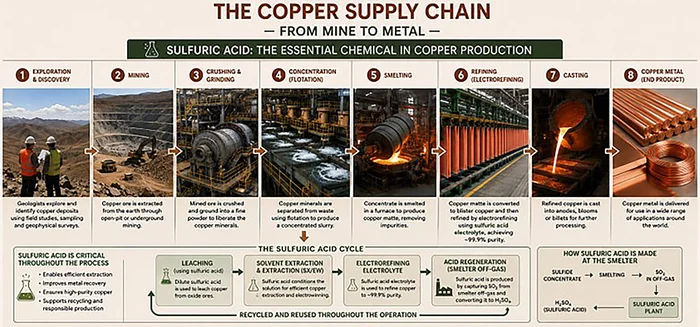
Figure 2 shows that while oil demand for the transport sector is dominant (58 percent), the sum total of the other sectors is significant (42 percent).

The petrochemicals sector alone is responsible for 15.4 percent of total demand and it is not a sector for which there are ready substitutes, such as is the case of transportation.
Without petrochemical precursor chemicals you can’t make pharmaceuticals or agricultural chemicals for farming, or makeup or many things.
There is therefore good reason why we should conserve valuable oil resources instead of just burning oil like there’s no tomorrow in internal combustion engines and damaging the climate.
Taken to its logical conclusion, continued burning of oil and other fossil fuels will rob future generations of their tomorrow in many ways.
Yet, almost every country on the planet has dragged its feet in making the transition away from fossil fuels in the interests of maintaining a viable atmosphere and climate. If any good can possibly come from the current debacle, America has initiated, then it might be that humanity realises that we can’t continue the current track. The war that America is illegally and irresponsibly waging on Iran, for reasons that remain difficult to untangle, is likely to cause all of us to make serious adjustments to our lives.
The evidence suggests that Iran was no real threat to anyone.
The real threat is America with its war mongering, its quest for world domination and the “drill baby drill” mentality.
Trump should simply turn their backs on Iran, walk away from the Middle East and take their war toys with them and focus on Fixing America First. It’s not like it will be the first time they have made a mess that they have been forced to abandon. It has been the rule rather than the exception. Vietnam, Korea, Iraq and Afghanistan are relatively recent examples.
■ An electronic version of this article with additional material is available on my Substack: http://vittorioluca.substack.com