
New World apprentices show power of opportunity
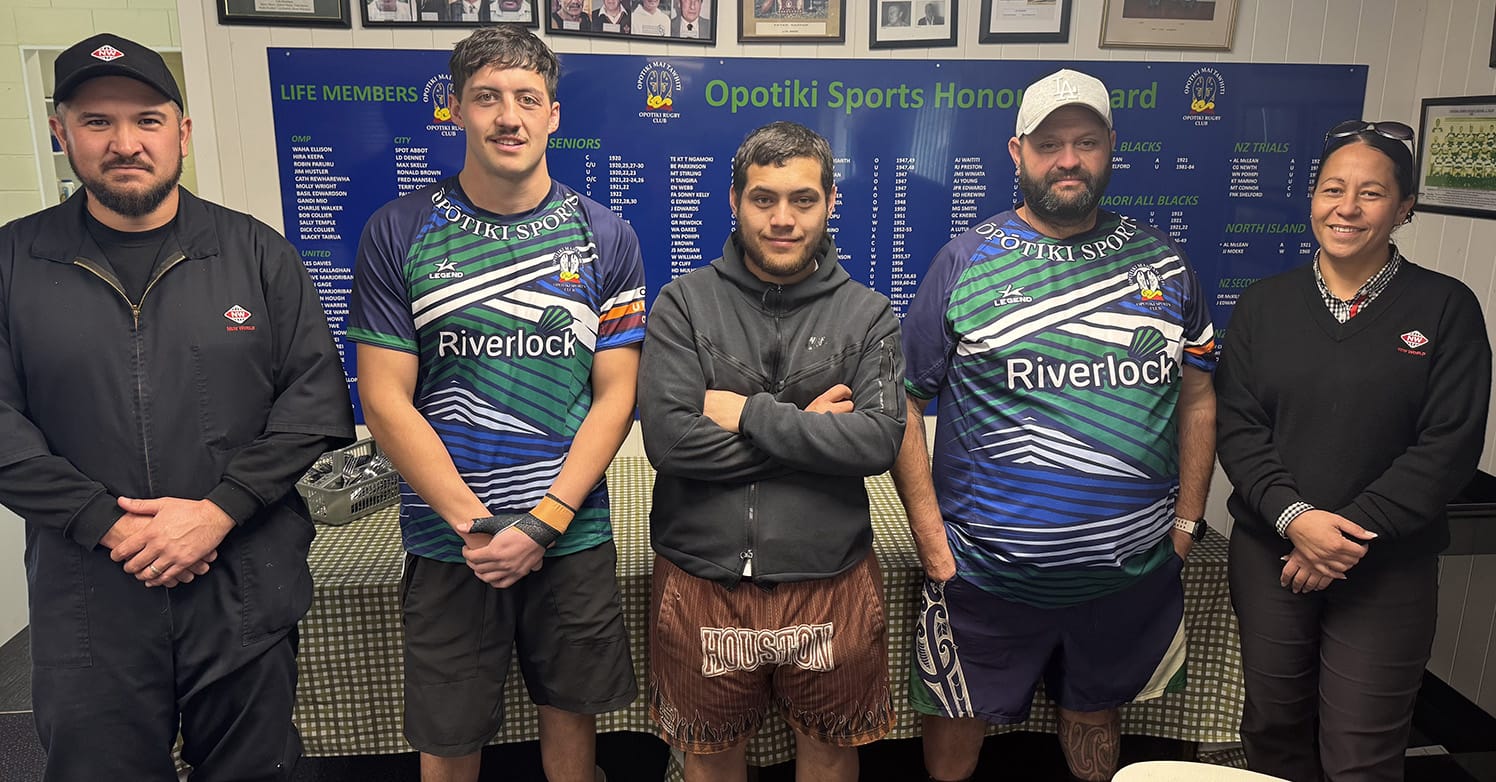
Next step in careers: Graduating Butchers Te Awaitaia Rolls, second from left, and Jaime Howard, third left, are looking forward to getting their qualifications next week and are supported by butchery department manager Brandon Tauroa, left, former graduate James McGough and store manager Stacey Andrew. Photo supplied
Rufus Dempsey
A quarter-century apprenticeship drought is finally coming to an end at New World Ōpōtiki, with two butchery apprentices having completed a nationally recognised trade qualifications this year and ready to begin the next chapter of their careers.
For the store, it is more than just a milestone. It is proof that when people are given the opportunity to earn, learn and grow close to home, remarkable things can happen.
The last butcher apprentice to graduate from the store was James McGough, who started with the business in 1995 and completed his apprenticeship in 1999. Since then, plenty of capable apprentices have started the journey, but for one reason or another none made it across the finish line.
That long-running streak eventually became known jokingly among staff as “the curse”.
It was McGough himself who challenged Store Owners Dan and Annie Rolls to change that when they took over the ownership of the store in 2020.
“Someone needs to break the curse,” he told them.
Today, it appears that challenge has been answered.
Twobutcher apprentices, Te Awaitaia Rolls and former Ōpōtiki College Head of House Jaime Howard, completed their qualifications this year and will receive their certificates at a Foodstuffs North Island graduation ceremony this Saturday.
Te Awaitaia Rolls has also been recognised as a finalist for Butchery Apprentice of the Year, which will be announced at an awards dinner that evening.
At the same time, two bakery apprentices are also nearing completion of their three-year programmes, and join two others who graduated last year, meaning four apprentices across the store will have graduated in the bakery since 2020.
There is also one butchery apprentice who is in his third year, with one year left to go.
For Annie Rolls, the achievement represents much more than filling vacancies within the business.
“Our team aim not to fill jobs but to open doors for people in our town,” she said.
“The apprentices offer a great opportunity for local school leavers to stay in town while still earning and learning valuable skills.
“A lot of apprentices end up working their way into management roles and even store ownership. They can also go on to train the new apprentices themselves.”
Located in a community often described by statistics as high deprivation, the store believes the conversation should focus less on what people lack and more on what they already possess.
“We have talented young people here. We have resilience, practical intelligence, strong whānau connections and people who are willing to work hard when given the opportunity.”
The apprenticeship programme reflects that philosophy. Rather than requiring young people to leave town to pursue further education, it allows them to remain connected to their whānau and community while building a career.
For apprentices such as Howard and Rolls, that means continuing to play sport, support family commitments and remain active members of the community while gaining a nationally recognised qualification.
The programme, operated through Foodstuffs and Skills for Work, is now one of the few remaining supermarket apprenticeship pathways in New Zealand. Apprentices work a full 40-hour week in store while completing practical assessments, coursework and on-the-job training towards their NZQA qualification. The programme typically takes around three to four years to complete.
For many young people, the opportunity to earn a wage while training is just as important as the qualification itself.
One of the biggest barriers facing people in rural and high-deprivation communities is financial pressure. Apprenticeships provide an immediate income, a clear career pathway and the chance to build independence without accumulating student debt.
Te Awaitaia Rolls believes trades such as butchery are about much more than learning technical skills.
“Butchery isn’t just cutting meat. It’s the mana of learning a skill with your hands. It’s the mana of feeding your community. It’s about discipline, responsibility and pride.” he said.
Successful apprenticeships also depend on a culture of mentoring, skill-sharing and people believing in people, something the store has worked hard to foster in recent years.
The four graduates to date represent the result of that commitment.
For New World Ōpōtiki, breaking the curse is certainly worth celebrating. More importantly, it shows that opportunity should not depend on a postcode.
Sometimes all it takes is a pathway, a mentor and somebody willing to say, “Come as you are. We will teach you.”
And with another apprentice already waiting in the wings, it appears the next generation is ready to continue the tradition.