
Council adopts plan to tackle climate change
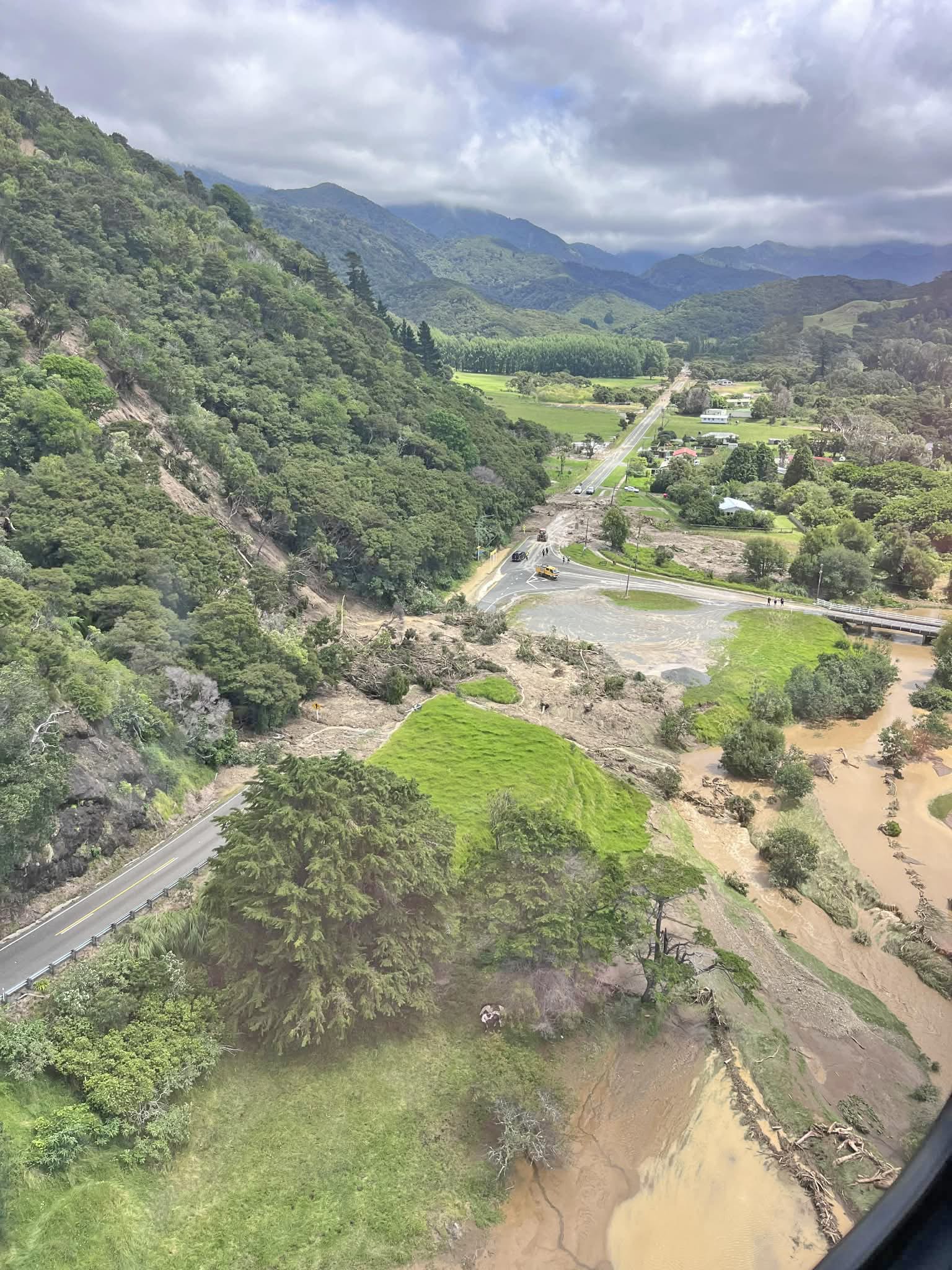
SH35 pain: A slip on State Highway 35 between Pōtaka and Hicks Bay during a storm in January. Photo file
Diane McCarthy
Ōpōtiki District Council has officially adopted a new Climate Strategy and Action Plan, marking a major step forward to build resilience for the future.
Severe storms, coastal erosion and impacts on roading are among the effects of climate change already felt in Ōpōtiki district.
Mayor David Moore noted that since the council had declared a climate change emergency in 2021 there had been three declarations of emergency in the district.
The plan aims to help the district prepare, adapt, and recover from these challenges, while also reducing emissions and protecting the environment for future generations.
The plan was developed as part of the council’s 2024-2034 Long Term Plan, with public consultation running from December last year through to February.
In spite of receiving only eight responses, building and planning manager Peter Edwards said the feedback added great value to the strategy helping shape the final plan.
“A lot of it was good, a lot of it not so good. But even in the not so good there were some hidden gems,” he said.
Suggestions led to new actions such as investigating electric vehicle charging infrastructure and a stronger focus on nature-based solutions and community education.
Partnering with iwi and hapū to weave mātauranga Māori (Māori knowledge) into climate planning and supporting iwi-led climate initiatives is included in the plan, with a cross-council Māori advisory group to be considered.
A strong focus is on making sure roads, bridges, water and other core services can withstand future climate impacts. This includes working with New Zealand Transport Agency and Bay of Plenty Regional Council to assess risks for key bridges, in particular the Waioweka and Otara bridges.
Community forums and school programmes are among the ways the council plans to educate and share information to help residents understand climate risks and how to adapt.
The plan supports low-emissions transport and advocating for better public transport for the district.
It encourages partnerships with businesses, iwi, and community groups to test new ideas for adaptation and emergency preparedness.
Council staff will now begin detailed work to put the plan into action, including setting priorities, timelines, and measures for success. It will be reviewed regularly to ensure it stays relevant as new challenges and opportunities arise.
Edwards said adopting the strategy was just about opening the door for future work
“Then we start the mahi,” he said.
Part of this will include making the full Climate Strategy and Action Plan available on the council’s website.