
Bird of the month:
.
Lesley Swindells
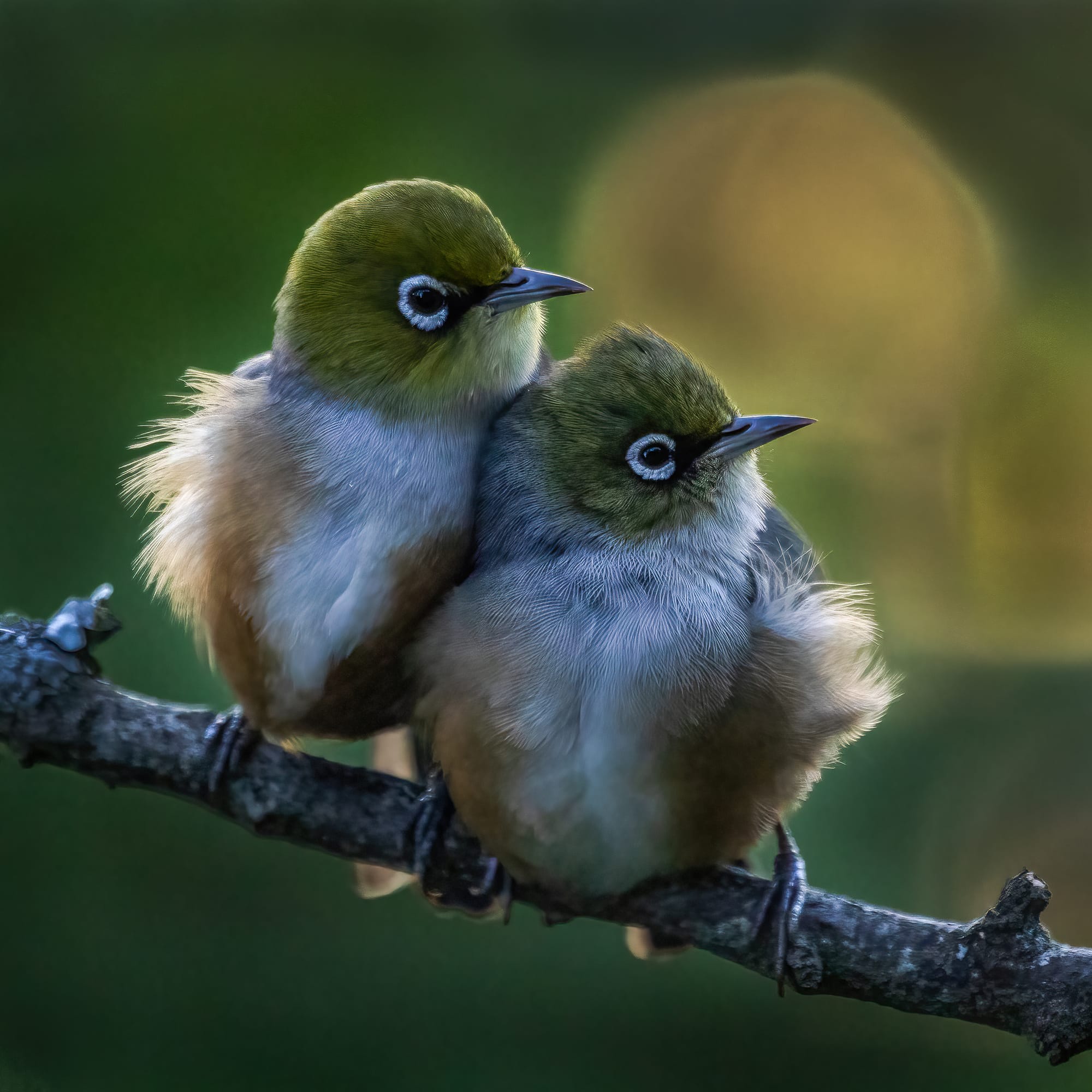
■ Silvereye/Waxeye//Tauhou
Scientific name Zosterops lateralis
This lovely little bird is well-known and widely distributed throughout the main and offshore islands of New Zealand.
It is a friendly bird, smaller than a sparrow, found in our bush and towns and is one of the most common birds in our gardens. It is self-introduced and now classed as a native but is not a threatened species. The silvereye’s song is a melodious mix of warbles, trills, and slurs, the main contact call is a plaintive cree.
It is a small, olive-green bird with a silver-grey neck and upper back, a dark olive-green tail, cream on the throat and a grey belly with dark brown legs. The predominant feature is the ring of silvery white feathers around the eye, which gives it its common name. The bill is small, tapered, dark brown and brush-tipped (like the bellbird) for gathering nectar.
They eat mainly insects such as aphids, caterpillars, flies and spiders, grubs, and soft fruits and berries. They love nectar from the flowers of the kowhai, fuchsia and bottlebrush.
Silvereyes rear two or sometimes three broods a year, usually from August to February. The nest is beautiful – a dainty, finely woven cup consisting of fine grasses and twigs, often containing moss and cobwebs. It will usually contain three pale blue eggs.
Both parents incubate the eggs for between 12-14 days. The chicks are fed on insects and berries and about a fortnight later they will leave the nest. They will remain as a family group for some days.
In winter they are often seen in large flocks as they move feeding through vegetation, and they love to visit bird feeders during this time. Fat, lard and fruit, especially orange and grapefruit halved so they can get at the juice, can easily encourage them to visit.