
Pukaahu Whānau Trust focus on reconnection and safety
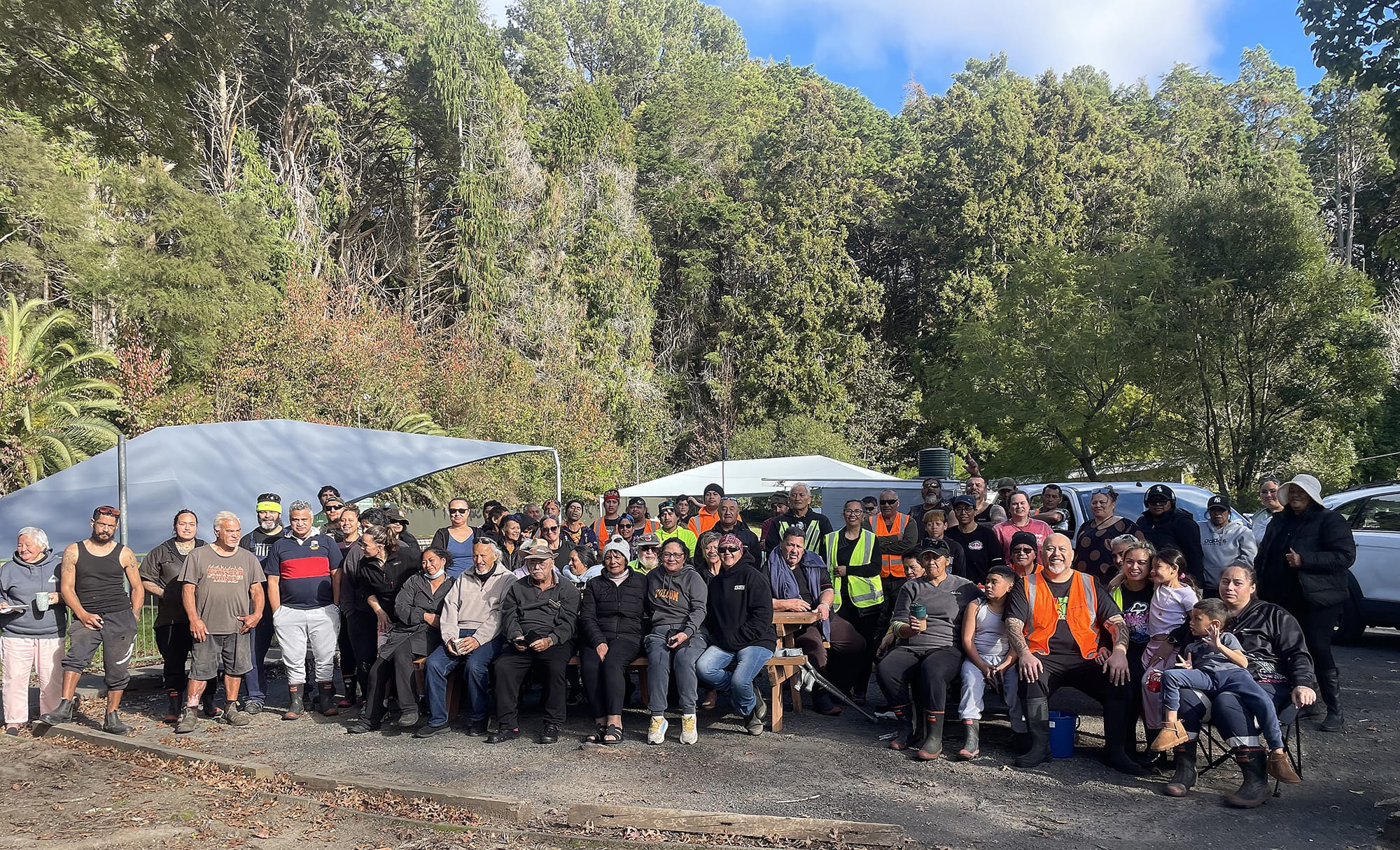
HISTORIC MOMENT: Beneficiaries attend a karakia at Awakeri Hot Springs after the Pukaahu Whānau Trust regains control of the site. Photo supplied
Tamara Herdman
Pukaahu Whānau Trust is focused on reconnecting whānau with ancestral land and ensuring the former Awakeri Hot Springs site is safe and secure before making any decisions about its future.
Trustees Ray Morrison, Shonelle Wana, Enid Ratahi-Pryor, Waitangi Black and Stephen Soutar regained ownership of the site on June 11 after purchasing the perpetual lease and residual assets from the liquidators.
The following weekend, the trust held whakawātea and karakia at the site, a pop-up wānanga and a working bee.
Ratahi-Pryor said the response from whānau highlighted the significance of the occasion.
“All the beneficiaries were invited here on the Saturday for the whakawātea, the karakia.
“They were here as the tangata whenua and to support our karakia, and then on Sunday we had the working bee.
“Just doing basic things like that is part of the process of reconnection back to the whenua.
“That’s what’s important for us at the moment; to reintroduce our whānau back to something that they’ve never been able to walk on before as theirs. That’s probably the key.”
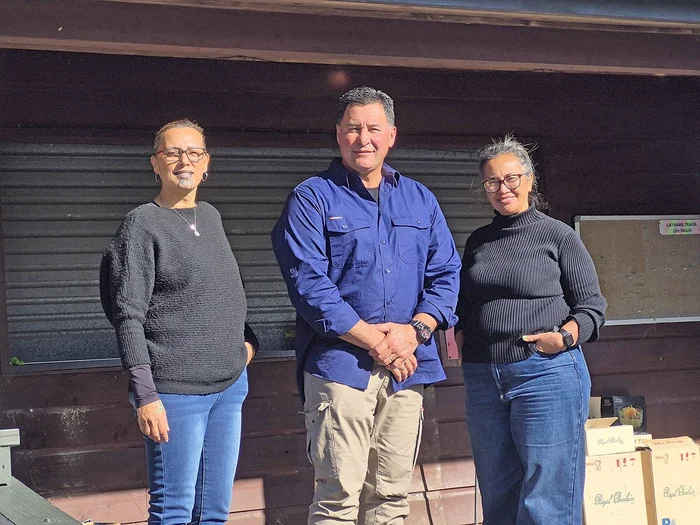
Speaking during a visit to the property, trustees said they were still processing the significance of being able to return to the whenua.
“Our immediate intentions are to make sure that the place is safe, secure it off so that people don’t have access and get hurt, address any issues that may need doing as suggested by regional and district council, and then regroup as a family and trust to see what our visions are,” Wana said.
“We haven’t homed in on anything yet. At the moment, we’re just focusing on what’s here right now – just phase one – and giving our whānau the opportunity to come back and reconnect. It’s been such a long journey. We’d rather do that first and foremost and then discuss where to from there.”
Trustees said the property required significant work.
“There’s a huge amount of repairs and maintenance to do,” Ratahi-Pryor said.
“There’s a lot of prioritisation about what we can afford to do.”
“Everything’s a priority,” Morrison said. “The whole brainstorming and filtering down options.”
Asked whether the hot pools could reopen one day, trustees said all options remained on the table.
“Possibly, potentially,” Morrison said.
Wana said it was too early to narrow the focus.
“There’s hope for a lot of things at the moment. It’s what’s best and what’s more viable going forward for everybody.
“We’re not narrowing it down to one thing.
“There’s a lot to do here. Today is our first day back to being able to walk on it as ours. So, we’re just quite overwhelmed by what needs to be done.
“We’re making sure health and safety are prioritised first and foremost.”
Ratahi-Pryor said the trust would need time to assess what options were sustainable.
“You just need to look across the country and have a look at what the viability looks like.
“If you have a look around, is that actually commercially viable for the long term; something that’s going to return? Well, the answer is probably no, it’s not a good investment.
“But how can you satisfy the need for public access while also satisfying the need to be a sustainable resource? It’s all got to be balanced.
“At the moment we’re still trying to understand what the future opportunities are.”
Morrison said the future of the campground would also require careful consideration.
“The campground question is an interesting one, because if you look across New Zealand, are they proliferating or are they shrinking? The answer would be they’re shrinking.
“Campgrounds in the traditional sense might be, while the more corporatised ones – I’m talking about the Top 10-type ones – they’re doing really well.
“So, it depends on the model.”
Trustees have confirmed that all buildings and assets on the site are now owned by the trust.
Ratahi-Pryor said they had not determined yet whether cabins or other structures would remain.
“But at the moment our trust owns everything you see now. That’s why it’s going to take us a bit of time to determine what our strategy is moving forward because there are so many options.”
She also clarified in a Facebook comment that the trust had not purchased the former business or inherited its debts.
“To be a bit clearer, we never bought the land, or the debt, or the business.
“We bought the perpetual lease and residual assets off the liquidators.
“We already won the land back via a Waitangi Tribunal land claim in 2005 but couldn’t set foot on the whenua because it was leased in perpetuity to whoever owned the Awakeri Hot Springs business back when the land was taken under the Public Works Act.”
Ratahi-Pryor said the springs had a long history of use by local Māori families.
“The pools were used frequently by whānau who lived nearby. We’d use them for soaking and we’d use them for healing purposes.
“As the population grew, the pools became more popular over time and were often shared with the wider community.
“Taiwhakaea was the original hapu over all of these lands during the raupatu.
“Our Mihaka whānau were living here and our Tehura whānau; they were brothers.
“One of them had a little milking shed operation and cows here.
“They owned it since the end of the late 1800s through till the 1950s. The pools were used frequently by whānau who lived nearby,” she said.
“As the population grew in terms of non-Māori, the pools became more popular over time, so what you had was the typical sharing of a place where many people would come and bathe.
“Over time, they became more and more popular … that’s when the space attracted the attention of the county council at the time.
“Then came a range of processes that ended up with the Public Works Act being invoked.
“It’s like most things, you know. Back in the day, Māori would often share access to the whenua.
“Over time people start to want things in a different way. They want it packaged in a way where they’ve got a nice concrete pool or they’ve got something a little bit more permanent, commercially viable, and here we are today.”
She said the trust wanted to maintain the long-standing relationship between the site and the wider Eastern Bay community.
“The Awakeri Springs has been a part of this community for generations, so we don’t want to stop or inhibit that relationship moving forward; we want to encourage it.
“At this point, we just don’t know the how, and we don’t know the what either.”
For now, Morrison said the focus was safety.
“We’re securing the place, locking it down, making sure it’s safe, and then go from there.”