
From Tuesday night practice to Te Papa stage
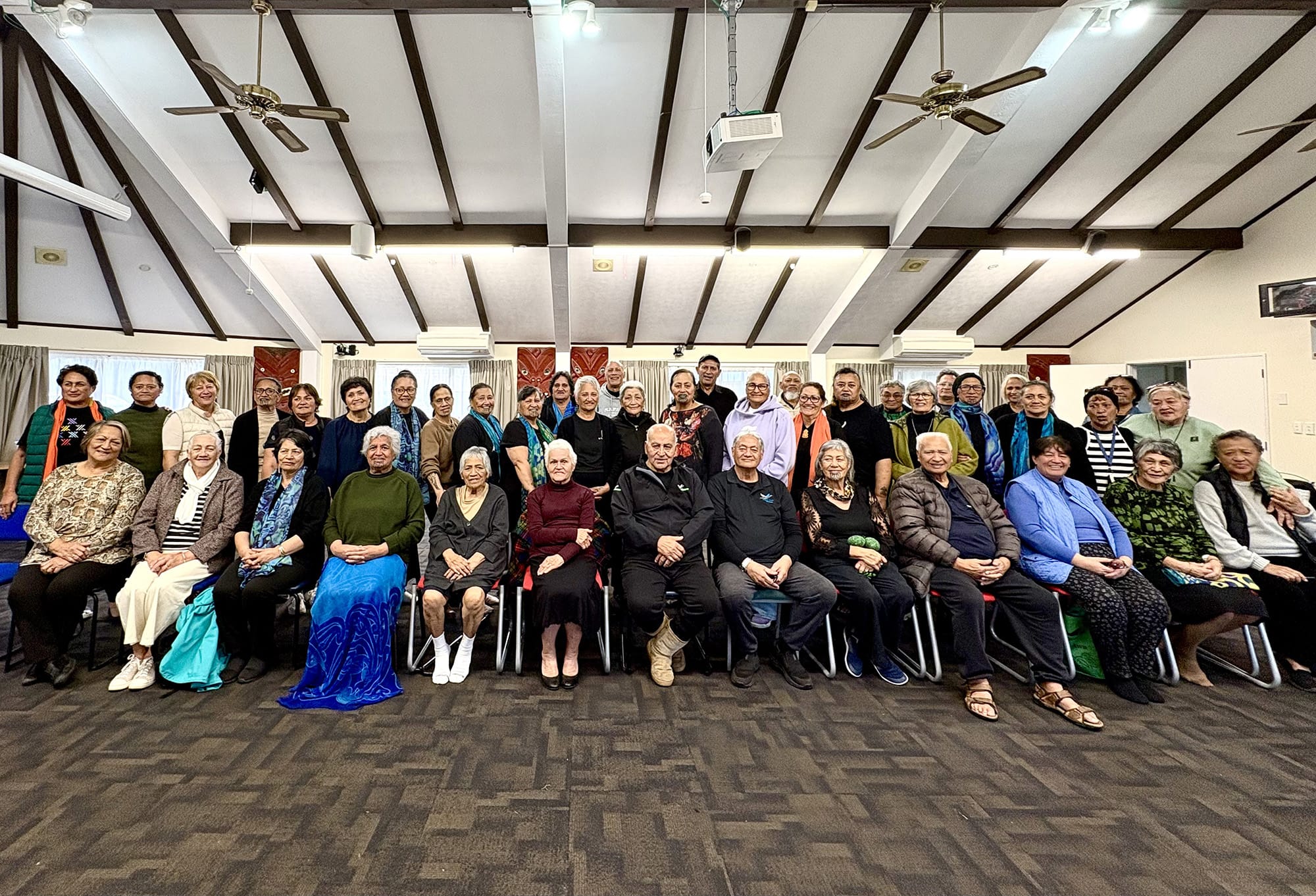
PRACTICE PAYS OFF: Ngati Awa Taikura prepares to travel to Wellington today to perform at the 20th annual Taikura Kapa Haka Festival. Photo Lani Hepi
Ngaire Tai
By the time Ngāti Awa Taikura takes the stage at Te Papa this weekend, they will have spent four months preparing.
Every Tuesday evening, a classroom at Te Whare Wānanga o Awanuiārangi becomes a practice space. Cars come from all over the Eastern Bay. A van arrives from Te Teko. Others travel from Rotorua and Tauranga.
Handbags fit snugly under chairs. Water bottles are lined up against the wall. Lyric sheets come out of folders that have softened from years of use.
There is time for a quick catch-up before the room quiets down.
A karakia starts the evening. Then someone hits the first note alongside the strum of the guitar.
For the next two hours, the 55-strong group works through waiata again and again until each harmony lands just right. Poi rise and fall together.
By tomorrow, those same voices will sing on stage at Te Papa for the 20th annual Taikura Kapa Haka Festival.
More than 600 kaumātua and kuia from across Aotearoa will gather during Matariki to celebrate kapa haka, whakapapa, and te reo Māori.
Unlike other festivals, Taikura isn’t about winning or trophies. It was created to honour those who have devoted their lives to their culture and to ensure those voices are still heard.
For Ngāti Awa, this journey almost didn’t start.
Co-ordinator Verbena Harawira recounts the phone call that began it all.
“We came together by chance,” she said.
“One of our whānau was working with the founder of He Kura Tangata, the late Whaea Putiputi Mackey.
“They needed another iwi at the festival and they called Te Arani to ask if Ngāti Awa could form a rōpū.” Her response was straightforward.
“I can do that.”
Ngāti Awa Taikura was formed in 2016. Ten years later, many of those original members continue to stand.
The oldest performer is 83 and the youngest is just shy of 60. Some have hardly missed a practice.
As the night winds down, Harawira gathers everyone.
“Just be yourselves,” she tells them.
“What happens will happen.” Then she shares some practical reminders.
“There will be chairs on stage, so sit down if you need to.”
From the back of the room, another voice chimes in. “And don’t forget to take your pills.”
The room bursts into laughter. No one seems embarrassed. Getting older is simply part of their story.
Practices rarely end when the singing stops. Some stop at Woolworths on their way home and begin another line of conversation in the bread aisle – reviewing the practice performance had, while others, head to Classic Oriental Food on Boon Street, where dinner extends the evening a bit longer.
Conversations flow from mokopuna to doctor’s appointments and who needs a ride to the next practice.
Those Tuesday nights have evolved into more than just preparing for Wellington.
Getting to the capital is no easy task. Support from local Māori land trusts and hauora organisations has helped cover travel and accommodation, allowing the group to represent Ngāti Awa again.
By Saturday’s performance, four months of hard work will turn into half an hour on stage. The audience will hear the waiata, watch the poi, and applaud the performance.
But they won’t see the Tuesday nights at Te Whare Wānanga o Awanuiārangi, the long drives from Rotorua, Tauranga and across Ngati Awa, the quiet encouragement after a missed line, the reminders to take medication, or the takeaway dinners afterwards.
Those moments never reach the stage. But without them, there would be no performance.
Ngati Awa Taikura will perform at Te Papa tomorrow at 11.45am and on Sunday at 3.55pm.