
Bird of the month - NZ mutton bird (oi or grey-faced petrel)
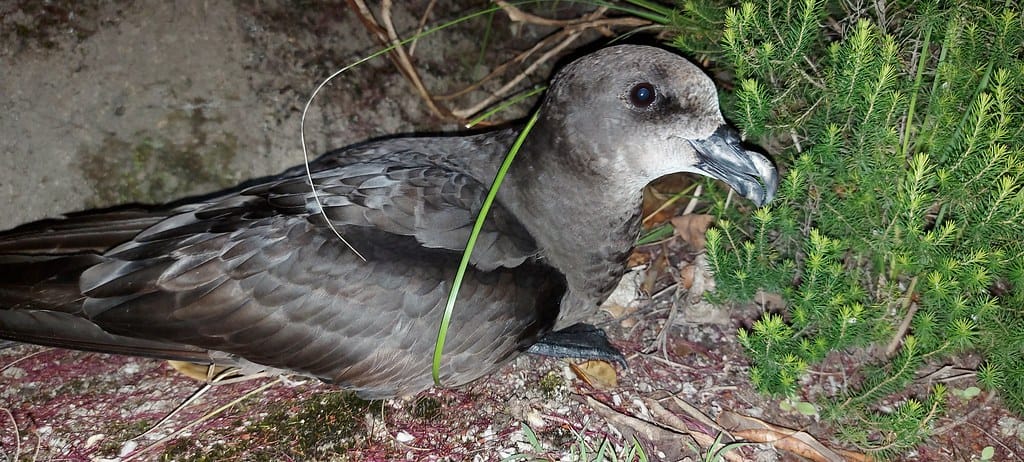
.
A series for Forest and Bird in the Eastern Bay highlights the native birds we share our region with. This week, Arthur Sandom takes a look at the mutton bird.
This Bird of the Month has a farming connection, with its call likened by some to a goat. Its common name is also a farm animal.
It was during my stay in Mt Heale Hut near the summit of Great Barrier Island that I was introduced to petrels.
Not just a few making their calls as they return to land at late dusk but hundreds crash-landing in their clumsy, noisy, yet cheerful way.
This bird is intertwined in the story of our cultural relationships.
The sooty shearwater is known to tangata whenua as titi and is found in cooler waters of the Pacific Ocean. Numbering 21 million, These “mutton birds” are from islands near Stewart Island, with 400,000 harvested annually and selling for around $350 for a bucket of 13 birds.
The grey-faced petrel is known to Ngāti Awa as kuia, and are found in warmer waters of the Pacific Ocean. Numbering 1 million, these mutton birds are from the upper North Island.
The chicks of both species are harvested for their oily, salty, fishy, duck-like flavour. I ate thin slices of titi as part of an eggs benedict at a cafe in Invercargill. Those rich omega 3 oils power muscles and fuel the internal furnace on a cold day. There is an essence of the powerful nature of the Southern Ocean in these birds that expresses itself when eaten.
Treaty rights to harvest wild food were included in Ngāti Awa’s Treaty Settlement:
“A big part of the harvest is the importance of kaitiakitanga, tikanga, and kawa that sit around the gathering of the manu. The process is deeply grounded in cultural practice and responsibility to ensure the sustainability and protection of the species and the mātauranga that surrounds it.
“The {200} manu are distributed to uri of Ngāti Awa when requested, where people must explain what the manu are needed for and how they will be prepared/cooked. This helps ensure the tikanga and intent behind the harvest continues to be upheld respectfully.”
Like all ocean-going birds, breeding occurs mostly on islands, including Moutohorā, a pest-free sanctuary for an abundant population, with estimates of at least 50,000 breeding pairs said to be a third of the world population. In the cliffs of mainland Bay of Plenty (and a few other places), they nest in low numbers.
They breed in winter (June-July) after spending time from March preparing their burrows and courting. Only one egg is laid and incubated for 50-60 days, hatching in August-September. They can be heard, and sometimes seen, flying at night as the parents bring food to the chicks about every four days. Chicks depart from December-January. Most return to where they are born and start to breed after about seven years.
On the mainland they are threatened by the usual pests, and possibly the occasional illegal recreational harvester.
There are also the excessive bright LED urban lights to confuse these birds flying inland instead of out to sea. In a world where petrels are sacred, lights near the coast must be focused down and a maximum of 3000 Kelvin (lower blue light). Sometimes you’ll see them flying in circles by the Hub, or on the road or carpark, either run over, or dying from exhaustion.
They feed at sea by night, either alone or in small flocks, risking being caught as by catch in our insatiable appetite to harvest the oceans of much that lives. Around 2500 petrels are killed this way annually. Long may these birds continue to hunt the Pacific Ocean, and remind us of a time before KFC.