
Opinion: The village that raises our kids
.
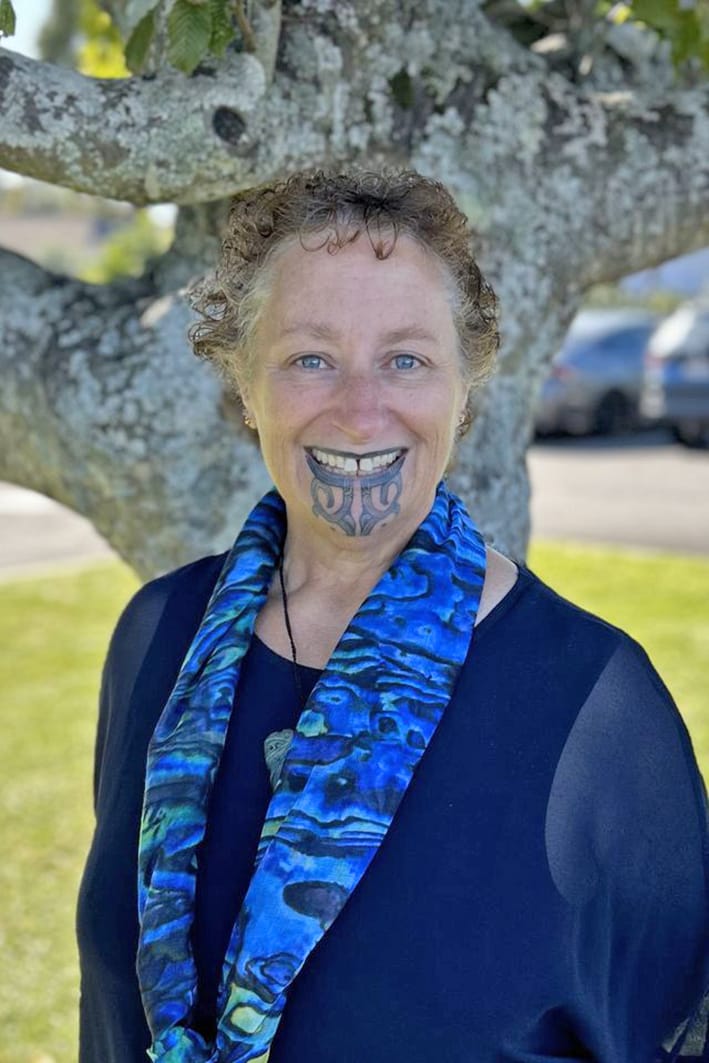
■ I was pondering what to write about this month, for my regular spot in the Beacon. Given it is two weeks until my youngest child, Jack, leaves home, it made sense to write about kids. Better to sit and write, than to sit and be sad, writes Dr Mawera Karetai
We have a rule in our house – “say yes to everything, except drugs”. While that is said with humour, and yes, there are plenty of other things we don’t want our kids saying yes to, in our home that means if there is an opportunity to do or try something that isn’t illegal, or fundamentally stupid, put your hand up and say “yes”.
My kids have learned that it is far easier to put your hand down if you change your mind, than it is to put your hand up after the moment has passed. That thinking has served all my children (and myself) well.
Sometimes it is not that easy to stand back and observe the decisions our kids make and the things they say yes to.
There is a moment most parents know. Your child climbs to the top of a rocky cliff face, ready to jump into the river, or at the base of a tall pōhutukawa with branches that look just a little too inviting, or tells you they are riding their bike to Wellington – and they turn to look at you.
In that look is a question: Can I?
What we say next matters more than we think.
Too often, and with the best of intentions, we say “be careful”.
It slips out before we have even assessed the situation. Researchers who study children's play have a name for the alternative: risky play.
And the evidence is remarkably consistent. Children who are allowed to climb high, move fast, use real tools and test their limits grow into more confident, more resilient and, safer adults.
They learn to judge risk because they have practised judging it.
A child who has never been allowed to fall from a low height has no idea what a dangerous height looks like.
Did you ever take your kids 10-pin bowling? When our kids are little, and learning to bowl, we set them up for success.
We raise the gutter rails, and use the bowling ramp, to help them direct their ball. Eventually they don’t want the ramp anymore because they learned to bowl the ball.
Then, in time, the gutter rails come down, and they are bowling free. That is not to say the ball won’t still end up in the gutter sometimes.
But for a kid raised to know that sometimes the best intentions don’t work how we want them to, they know the gutter is not the end of the game – they grab a new ball and have another go.
When I think about what it is to be a parent raising a confident, resilient kid, my mind goes back to 10 pin.
My job in the lives of my kids has been to act as the gutter rails, keeping them in play, and giving them something to bounce off when they got too close to the edge, until they don’t need that any more. Then I just pay the fees.
This is definitely not an argument for recklessness – there is a difference between a risk and a hazard.
A hazard is a rotten branch or a rip at the beach, something a child cannot see or assess for themselves.
A risk is a challenge a child can see, weigh up and choose.
Our job is to let them choose it, and to be nearby when they do. Then as they grow, we find ourselves standing further and further back, until we are just that reminder in the back of their minds that we trust them to make good decisions.
Here is the part we talk about less – the village that raises our kids.
Confidence is not something a child builds alone, and it is not something parents can build alone either.
It takes a village, and for the most part, in Whakatāne we still have one.
There is still a sense of being proud of the kids our community produces, and a sense of social responsibility for looking out for the kids around us. But these things are disappearing and that is very sad.
Think about who taught you to say yes. For most of us it was not only our parents.
It was the coach who put you on for the last 10 minutes when you were sure you were not ready.
The teacher who encouraged you to stand up and speak.
The neighbour who let you help fix the fence with real tools.
Your nan who sent you to the shop on your own for the first time and watched from the gate.
Every one of those adults was making a small deposit into a child's account of self belief.
These days, that account is running low for many of our young people.
We know rangatahi today are more anxious than any generation we have measured.
There are many causes, and screens get most of the blame, but I suspect its more complicated than that.
We have narrowed the circle of adults in a child's life, and we have narrowed the range of things those adults will let a child try.
Fewer voices saying yes, and more voices saying be careful. Even worse, no voices at all.
So, here is my challenge to our community, and to myself. If you are a coach, pick the kid who is not sure they can do it.
If you are a neighbour, let the local kids help with something real. If you are a grandparent, tell the stories of the times you tried and failed and tried again, because children need to know that falling is part of it.
And if you are just someone at the river or the beach or the skate park watching somebody else's child attempt something bold, resist the urge to intervene unless there is a genuine hazard.
Instead, be one more adult in the village whose face says: go on. I am watching.
You have got this.
Our tamariki will inherit a world that needs people who can weigh a risk and take it anyway. That courage is built in childhood, one yes at a time, by all of us.