Survey feedback differs for marrying councils
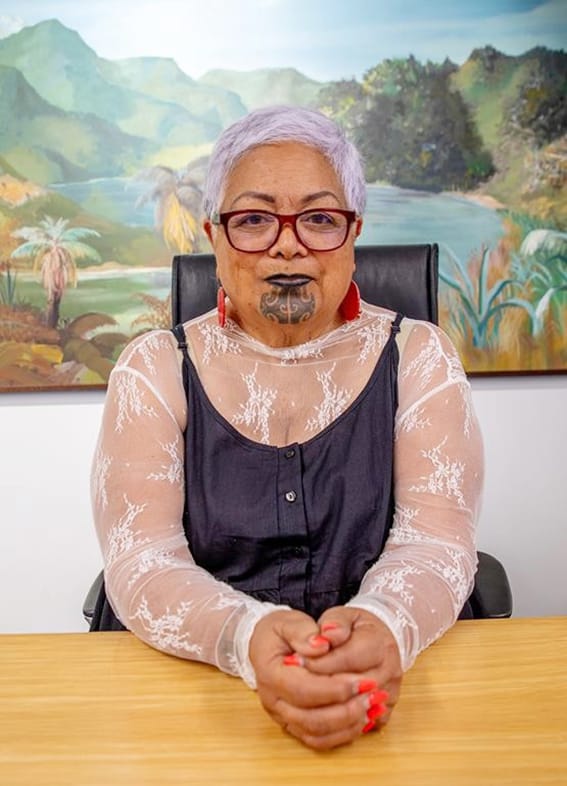
Matemoana McDonald
Diane McCarthy
Responses to a survey by Bay of Plenty Regional Council has showed support for a single Bay of Plenty-wide unitary council to replace the regional council and six territorial authorities.
This differs markedly from feedback received by Eastern Bay district councils, which favours an Eastern Bay-only subregional entity.
The regional council online survey about local government reform was held between June 29 and July 12.
An interim report released by the regional council showed a single unitary authority was favoured by 59 percent of the 267 participants.
Of those, 47 (17 percent) were from the Eastern Bay, which is a reasonably accurate representation of the Eastern Bay portion of the Bay of Plenty population.
Protecting the environment and maintaining joint regional services were the key priorities for respondents in future council arrangements.
Two other models dividing the Bay of Plenty into three subregions – Eastern Bay, Western Bay (including Tauranga city) and Rotorua, with or without the support of a regional delivery entity – received negative responses by 68 percent and 64 percent of respondents respectively.
Regional council chairwoman Matemoana McDonald said the survey results showed strong support for outcomes that delivered benefits across the wider Bay of Plenty region.
“Our communities have told us that protecting and improving the environment must remain the top priority, regardless of what changes may occur to local government structures,” McDonald said.
“People also want services delivered at the most effective level and expect good value for money. These findings highlight the importance of ensuring any future reform continues to support strong environmental outcomes and efficient service delivery.”
Feedback received by Whakatāne, Ōpōtiki and Kawerau district councils contradicts these results.
The clearest “no” to a Bay of Plenty-wide unitary council has so far been heard from Kawerau, New Zealand’s smallest district by area, at 24 square kilometres.
Kawerau District Council, with its population of 7000, had 325 items of feedback, between June 6 and mid-July, including 235 survey responses, 21 emails and 69 social media responses.
While 80 percent of responses urged the council to fight any form of amalgamation, the absence of the possibility of remaining with the status quo saw the same percentage opt for joining with Whakatāne and Ōpōtiki to form an Eastern Bay subregional entity.
Kawerau council and staff have gone to great pains to explain to the community that staying with the status quo was not a choice central Government was offering.
At a public presentation on July 21, Mayor Faylene Tunui likened Kawerau to a “reluctant bride”.
The first message the council had been given from the Kawerau community after the Government introduced the reform options on May 5 had been – “to ‘fight, fight, fight’. ‘No to amalgamation’,” Tunui said.
Some of the feedback had been from former Auckland residents who had experienced that region’s transition to a large unitary council and did not want to see the Bay of Plenty go the same way.
“In fact, that’s why we moved to Kawerau, away from Auckland’,” she quoted them as saying.
Only 2 percent of feedback was in favour of a Bay of Plenty model and another 2 percent was for joining Western Bay, while 12 percent supported joining Rotorua Lakes.
Becoming dwarfed by the larger populations in Tauranga, the large debt levels of other councils and cost were reasons given to opposition.
Debt levels per household for the six Bay of Plenty councils were highlighted at the public presentation.

This showed Kawerau council’s debt per household was the lowest in the Bay, at around $1300. Ōpōtiki district’s was next with $2000, Western Bay had $6400, Whakatāne $9800, Rotorua Lakes $14,500 and Tauranga City $21,100.
Tunui said she had been told that it would be possible to “ringfence” finances between councils, “like a prenup marriage”.
Having a strong local voice, decision-making and accountability and fair representation rated above cost savings and efficiencies, service levels and response times and improved planning and consenting, in the Kawerau survey.
Full results of Whakatāne District Council’s feedback has not yet been seen, but a briefing on July 17 reported 100 pieces of feedback so far, mostly in opposition to a full Bay of Plenty unitary model.
Respondents’ concerns were loss of voice, visibility and influence within a Tauranga-dominated structure.
Ōpōtiki District Council has not released any figures yet on its submissions, but Mayor David Moore has said verbal feedback to elected members has been strongly in favour of an Eastern Bay subregional amalgamation.
All councils have remarked that the short timeline to get a proposal submitted to the Department of Internal Affairs by August 9, just three months after the pathway was announced, has made it impossible to properly consult with communities as they would wish to.
The regional council report states that as participation was voluntary and self-selecting, the survey should be considered indicative of community views rather than statistically representative of the regional population.