
Letter: Phoenix granted stay of execution

.
Peter and Robyn Askey
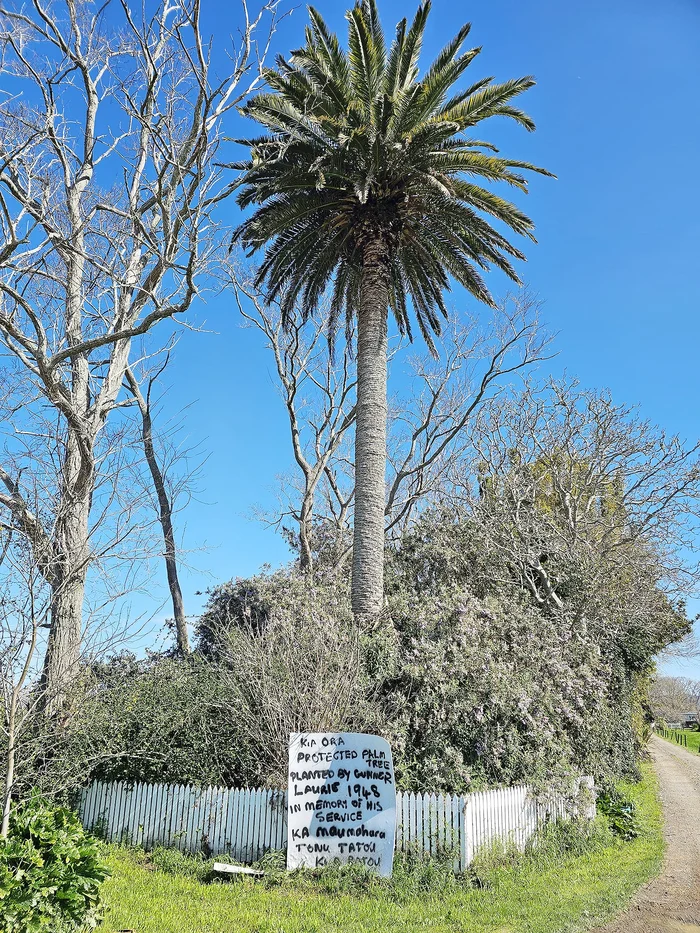
We would like to make a correction to the article last week about the Genesis 33kV lines project and the destruction of residents’ trees along Putiki Road. Laurie’s Phoenix has not been “spared”. Rather it has been granted a stay of execution.
Following representations by ourselves supported by Waikato/Bay of Plenty branch of the RSA, for which we are very grateful, Genesis granted a “dispensation” under the Electricity Regulations for it to remain once they place the lines underneath it.
Sounds great but not so much.
Under the regulations the dispensation can only last five years and then the tree must be assessed again. Ad infinitum.
At any time, the dispensation can be revoked if someone changes their mind about the original assessment.
Probably they granted the dispensation to defuse what was becoming a very ugly situation for them. They will be back for another go.
If Genesis were genuine in its intent to protect Laurie’s memory, it would simply shift two poles to the east of the road and cross Putiki Road south of the palm keeping its lines well clear of it.
We have put this to Genesis and Horizon repeatedly, but it has provided no valid engineering response why it will not do it.
The best answer it can come up with is that there is a shallow private drain against the fence on the eastern side. As long ago as December last year at the council meeting, I provided examples of how that situation is routinely managed across the Horizon network.
Shifting the two poles to the east has positives for Genesis. It avoids services on the west side.
Most likely it would avoid the need for expensive guardrailing that Whakatāne District Council are requiring. It also addresses health and safety concerns that we have raised.
We use the road verge on the west for our farm bikes etc to keep off the sealed traffic lane.
We will not be able to do this with two large guardrailed poles occupying the road verge.
This matter has been raised with both Genesis and the council and they have not responded. Health and safety is important to Genesis, I am sure. Just not ours.
I have repeatedly asked since January at least for Genesis to provide a visual of what the completed line will look like at 151. It has refused. Make what you will of that.
Meanwhile, the covering with glass of 200 hectares of high-producing land on the Brady and Rowlands properties continues. A modern 54-bail rotary cowshed demolished. Two farmhouses smashed with a digger and sent to landfill. Every tree on the properties felled.
Yes, Nandor we need solar power. But covering up elite high producing soils with solar panels is economic vandalism.
Put solar panels on buildings and poor-quality land. Feed people not data centres.
■ Genesis responds:
Genesis understands the significance of the Phoenix Palm to the Askey family and to the memory attached to it.
That is why the tree was assessed carefully and why Genesis granted a dispensation under the Electricity (Hazards from Trees) Regulations 2003.
The five-year term is not a countdown to removal. It reflects the maximum dispensation period available under the Regulations.
At the end of that period, the tree will need to be reassessed to ensure it continues to be compatible with the nearby power line and does not create an unacceptable risk to residents, road users, the public or those required to work on the network.
Regarding the route of the power poles connecting the Tihori solar farm to the national grid at the Transpower substation in Edgecumbe, we took time to carefully work through alternatives because we understood the impact this line would have on the people who live along Putiki Road.
Weighing the options against each other, the road-reserve alignment was the only option that could be delivered.
More detail is outlined in the Beacon’s article of September 11. We continue to engage directly with Putiki Road landowners to keep them informed and achieve the best outcomes possible.
Tihori Solar Farm is expected to provide employment for around 100 people during construction and several ongoing operational roles once commissioned.
It is scheduled to begin generating in 2027, delivering around 230 Wh of renewable electricity a year, enough to power approximately 30,000 New Zealand homes.