
Opinion: The Pacific wants 1.5°C to stay alive: Aotearoa is walking the other way

.
■ Last week I sat in at the Friendship Hall in Honiara and listened to the Prime Minister of Solomon Islands talk about his home. Matthew Wale reflected on the impacts of climate change on his home island of Langalanga in Malaita Province, and told the room that people’s lived reality, not the comfort of the sceptic, must anchor climate policy in the Pacific and in global forums. He did not ask for pity – he asked for action. He said that for the Pacific, 1.5°C is a survival threshold and must remain a political red line, writes Bay of Plenty Regional Council Kōhi Māori ward councillor, Dr Mawera Karetai
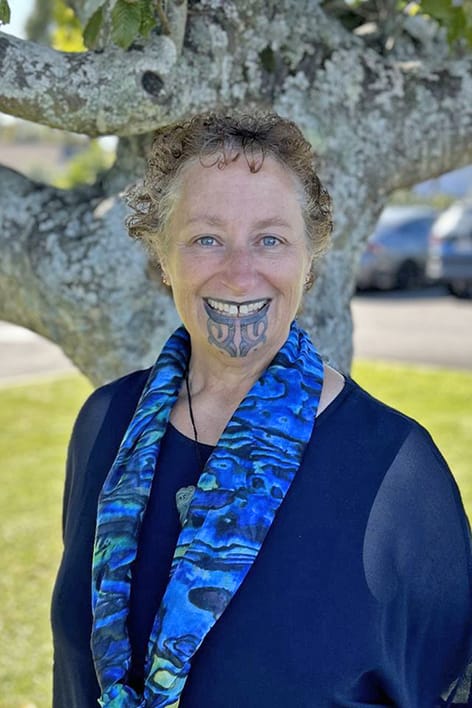
I was in Honiara representing Our Changing Coast, and Coastal People: Southern Skies for the fifth Pacific Ocean Pacific Climate Change Conference. It was the first time Solomon Islands has hosted this Pacific-owned, Pacific-led gathering, under the theme “Amplifying One Pacific Voice for Action on 1.5°C to Stay Alive.”
Scientists, ministers, church leaders, young people and knowledge holders shared the same room for a week.
The closing summary described the mood exactly: serious, but not fatalistic.
The science presented was sobering. We are already committed to further ice sheet and glacier loss, and the sea will keep rising even if we stopped warming the planet today.
Keeping 1.5°C within reach means cutting global emissions 45 percent below 2010 levels by 2030 and reaching net zero carbon dioxide around 2050.
Current policies have the world heading for somewhere between 2.6 and 2.9°C by 2100. Every fraction of a degree matters for sea level, for what adaptation can still achieve, and for who pays for the choices we make about this today.
Yet, the Pacific did not come to Honiara asking to be rescued.
The message was that Pacific leadership, law, science and community practice already exist, and that agency only becomes meaningful when it carries real decision-making authority.
People should be able to see how their knowledge changed a decision.
Climate finance, as New Zealand’s Acting High Commissioner to the Solomons Darren Paki put it, “is defined by what remains after the funding cycle ends.”
Prime Minister Wale challenged policymakers to create pathways through which evidence changes laws, budgets and public investment.
Then I looked outside of Honiara to see what the world did this week to support this aspiration.
While I was in Honiara, the United States Environmental Protection Agency announced it will no longer regulate planet-warming pollution from coal and gas power plants.
One former EPA adviser estimates the rollback could add as much as 5.8 billion tonnes of carbon dioxide by 2050. That is a blow to every island nation in our moana, and our own Government’s direction is little better.
In August, the new years 0 to 10 science and social sciences curriculums were published with every mention of climate change removed, even though the topic had been in the earlier drafts, meaning students will not study it in any depth until senior secondary school.
After a public outcry, the education minister said the content was always there, but asked the ministry to signpost climate change in the social sciences curriculum. That it had to be fought for at all tells us something.
Our tamariki will inherit this crisis, and the Crown does not want them to learn about it.
At the same time, the Government is dismantling regional councils, the bodies that run flood schemes, civil defence and much of the practical work of adaptation.
Its proposal to replace elected regional councillors with boards of mayors means the end of Māori constituencies at the regional level, and the minister confirmed there would be no mandatory role for iwi on the new boards.
It has also moved to strip voting rights from non-elected representatives on council committees, adding the change to a bill that had already been reported back from select committee, so the public had no chance to submit on it.
Then comes the bill the Climate Change Response Amendment Bill. Under this councils will have to plan at least 30 years ahead for high-risk communities (disproportionally Māori in the Bay of Plenty) and spell out the likely cost, but the Government still has not said who should pay for adaptation.
Meanwhile, it has announced that rates increases will be capped within a target range of 2 to 4 percent, taking full effect from July 2029.
Councils are told to plan for affordability as well as risk.
Put simply, communities are being handed the job, denied the money, and stripped of the representatives who would have done the work alongside them.
In the Eastern Bay, we know what that means. We remember Matatā in 2005 and Edgecumbe in 2017.
We know the stopbanks, the river mouths and the coastal marae from Ōhiwa to the East Cape that are already making hard decisions about where the sea will be in fifty years.
Those decisions need local knowledge, local authority and long-term funding. The Pacific said so in plain words.
Our government is doing the opposite on all three counts.
I do not say this lightly. When a government removes the people you elected, decides by ministerial decision whether your children may learn about the defining issue of their lifetime, takes iwi voices out of decision-making without letting the public be heard, and passes the cost of a national problem down to communities while capping how they can pay for it, that is not simplification.
It is power being pulled to the centre and away from the people. I believe New Zealand is drifting towards autocratic government, and these decisions are the evidence.
The Pacific does not have the luxury of drift. Neither do we.
On the final day of the conference, Dr Vaeno Wayne Vigulu asked of everyone a question that I ask myself all the time: What legacy we are going to leave for the generations that will come after us? That question belongs here too.
So, I ask three simple things of the people of our rohe.
Submit on the adaptation bill when the select committee calls for submissions.
Talk to your children’s schools about how climate change will be taught. And ask every politician who wants your vote, me included, what they will do to keep 1.5°C alive and to keep decisions in the hands of the communities who will live with them.