
Opinion: Rethinking health

.
■ Susanne Whale and Belinda Whitworth provide a recap on the recent return visit of Hikoi 4 Health for those unable to attend the meeting
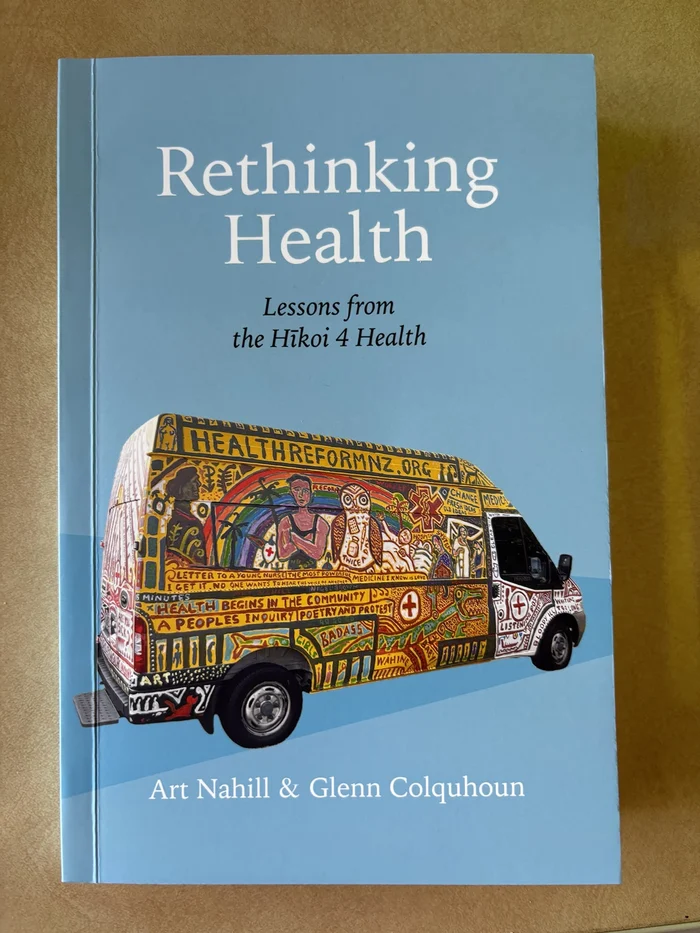
In 2025, doctors, poets and writers Art Nahill and Glenn Colquhoun travelled the North Island in a Nigel Brown-painted ambulance to investigate our ailing health system by talking to people and researching what is working and what is not working.
Their Hikoi 4 Health included a visit to Whakatāne.
On September 23, they revisited to provide the public with an overview of their findings. Nahill and Colquhoun have written and published a book Rethinking Health – Lessons from the Hikoi 4 Health, in which they outline a pathway to healing our health system.
They encouraged those who attended the meeting, to take a step back from the concerningly familiar “not enough doctors, not enough nurses and not enough funding”, to look at the problems in a more holistic way.
Here are some of their key messages:
■ Health should not be seen as an isolated portfolio, but is closely linked to justice, housing, food security and education. Health cannot improve unless this is recognised.
■ The funding for primary health has been eroded over many years as the need for hospital-based secondary and acute care takes more and more of the health budget. To future proof a healthy population, the funding allocation needs to focus on public health, prevention and screening to reduce the need for hospital care.
■ A lot more money is spent on extending the life of terminally ill people for a few days or weeks and comparatively less on babies or young children.
■ There is an urgent need to introduce a universal health information system for the management of individual patient records that can be accessed from anywhere, so that all health services have access wherever patients are and so that patients can be in charge of their own health records.
■ There will never be enough money for our current health system. To achieve better health outcomes for all, a lot of structural changes need to be made.
■ Many health conditions do not require the skills and services of a doctor who has undertaken 15 years of training. There needs to be diversification of the health service where general health staff can be trained to deliver repetitive procedures in a limited field.
■ The current training of doctors is undertaken in the public health system and can cost up to $1 million. Once trained, New Zealand doctors are free to move from the public to the private system or leave the country with no remuneration for the public system provided. This needs to change.
■ There are examples of different healthcare models that provide better health outcomes for less costs, like the Nuka health services in Alaska, others in Costa Rica and some Māori health providers in New Zealand.
■ Increasing privatisation of our health services is problematic and costly. Private health insurance and private hospitals, in most cases, do not provide accident and emergency or acute care for conditions such as heart attacks, vehicle accidents, emergency alcohol-related harm or mental health services. The private hospital system is largely for planned care such as elective surgery.
■ These issues need to be taken out of the political point-scoring arena and require bipartisan support to allow experts to develop and implement a better health system for New Zealand.
There are several advocacy groups that are working towards these goals. For more information, including where to purchase the book, go to: https://healthreformnz.org/
The evening began and ended with a beautiful waiata by well-known singer Whirimako Black.