
Electrician’s rail vision earns art award finalist spot

Thought-provoking: Michael Geddes’ entry, If Only, pictured below, aims to get people talking about what could be. Photos supplied
Kathy Forsyth
A Whakatāne electrician who does not consider himself an artist is among three Eastern Bay people selected as finalists in the 2026 Molly Morpeth Canaday Award.
A record 638 artworks were submitted for the award’s 40th year, including entries from New Zealand, the UK, Australia and New York.
Eighty-seven finalists were selected through a blind judging process.
Michael Geddes, who moved to Whakatāne in 2006, submitted a work to the MMCA for the first time.
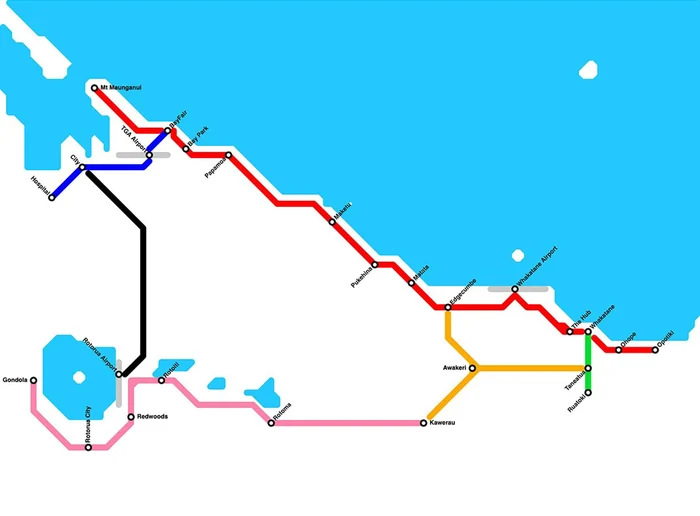
His entry, If Only, pictured below, is a digitally drawn map imagining a rail network connecting Eastern Bay towns with Tauranga and Rotorua.
Geddes said he was unaware of the scale and prestige of the award when he entered.
“I’m learning that it’s quite a big deal, so I’m quite honoured and quite chuffed about it actually,” he said.
The idea came from Geddes’ love of trains and his experiences travelling overseas, particularly in London and the UK, where extensive rail networks connect communities.
“Everywhere is a 20-minute walk from a train station.
“You can get a train everywhere – the airport, cities, everything like that.”
Originally from the South Island, Geddes remembers travelling by train during his childhood.
“From Oamaru to Dunedin, and I’d take the train to Gore or Christchurch in the holidays.”
Environmentally, it also made sense to go by train rather than road, he said.
He said he had watched railway tracks disappear throughout his lifetime and noticed remnants of the former network around Whakatāne, including an old rail bridge near Shaw Road and tracks around Te Rahu Road.
“Awakeri used to be a train station. I thought it would be cool to imagine a network like that in the Bay of Plenty.”
Geddes spent time considering how to illustrate his idea before finding a way to digitally draw the map.
The resulting network creates a loop linking Ōpōtiki, Whakatāne, Kawerau, Tauranga and Rotorua, with connections to airports and other key destinations, such as hospitals and shopping precincts.
After posting the drawing on Facebook, Geddes said it generated considerable interest, with people sharing memories of travelling by train from the Eastern Bay.
The title If Only reflects Geddes’ interest in imagining what the region might have looked like if its railway network had been retained and developed.
“It’s imagining if only 100 years ago we had the foresight to do this,” he said. “The irony is it probably wouldn’t be that hard to actually make it work.
“A good chunk of the tracks is still there and Government still owns the land.”
He said the work was intended to make people stop, think and imagine what might be possible.
“I think it is a piece of art. I’ve framed it and I think it’s quite cool. It makes you really stop, think, and imagine, wouldn’t it be amazing if we actually had that?”
Geddes, who also does commercial photography, said he had never considered himself an artist.
But his rail map, he said, provoked deep thought from people.
“That is why I thought I would enter it.”
The Molly Morpeth Canaday Award is presented by Arts Whakatāne and is Aotearoa New Zealand’s longest-running national art award.
Winners will be selected at an awards night on November 14, followed by an exhibition of the finalists’ work until the end of February.
MMCA finalist brings light
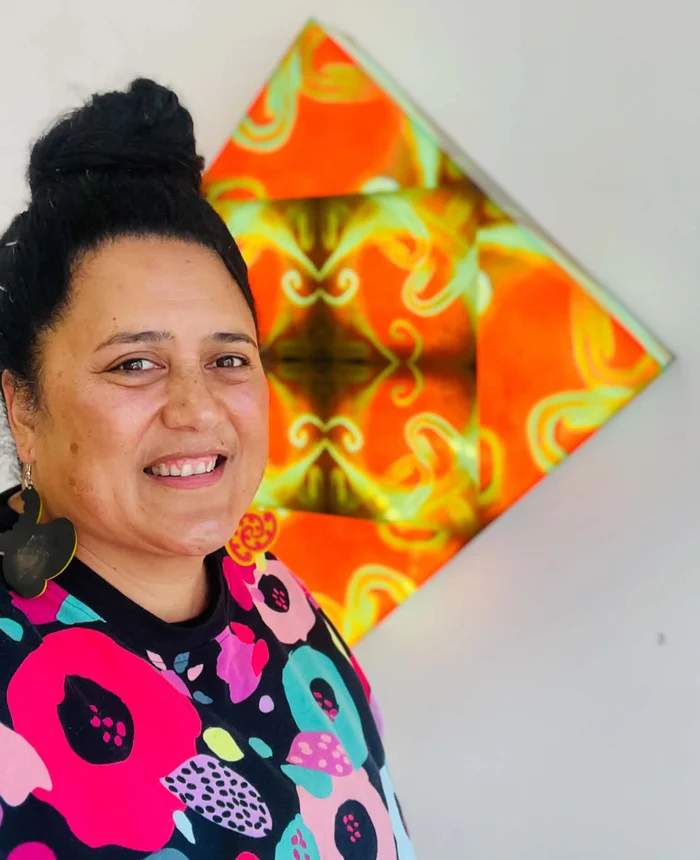
Multi-media artist Tania Lewis-Rickard is a finalist in the 2026 Molly Morpeth Canaday Art Award with Te Whai Ao – Into the Light, a work exploring knowledge, revelation and māramatanga.
Lewis-Rickard said she was “blown away” to be named among the finalists, with her work selected from more than 630 entries.
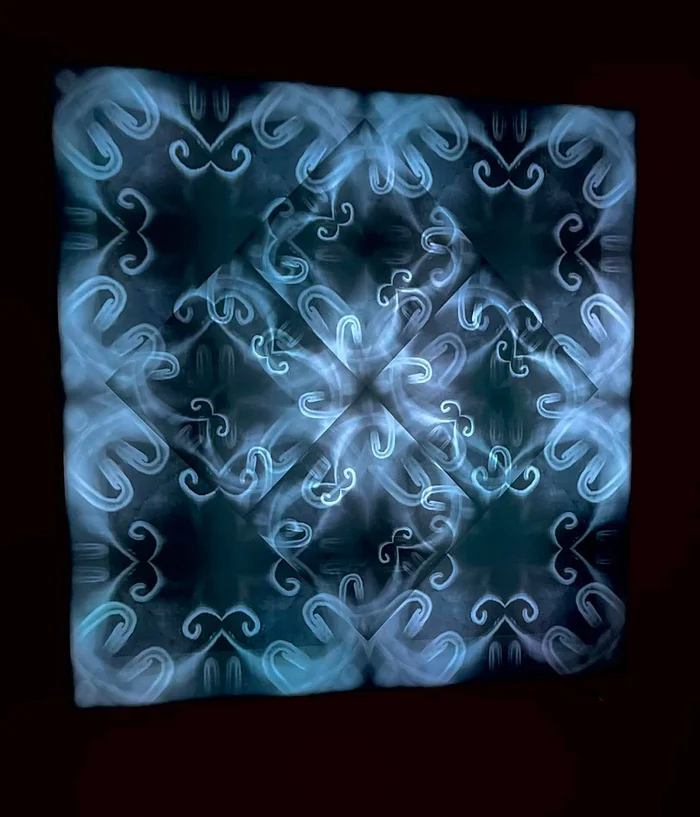
Her custom-made acrylic lightbox combines painting, photography and digital processes to explore, through a te ao Māori lens, the transition from the unknown towards te ao mārama – a place of light and understanding.
“Light is part of the meaning of the work. It pulses, and for me that represents the hā, the breath or heartbeat that gives life to the artwork,” she said.
The lightbox is designed to illuminate the space around it while also standing as an object of beauty when unlit.
Lewis-Rickard said in her practice she explores the threshold – the space between something being hidden and beginning to reveal itself.
Her creative process involves using water and other raw materials to create movement, reflections and subtle ripples, which she photographs and incorporates into layers of imagery, often geometric patterns.
“I layer, I organise and recontextualise that imagery,” she said.
A high school art teacher, she is now completing a master’s degree in Māori Visual Arts and runs a volunteer-led charity that provides food. She recently opened an op shop.
Now living in Papamoa, she whakapapa to Whakatāne and Tūhoe, and recalls going to school at Apanui Primary.
Seeing her name among the 87 finalists was a moment she will remember.
“I was completely and utterly stoked. I couldn’t believe it.”
Williams returns as MMCA finalist
Llyr Williams, recipient of the 2025 Molly Morpeth Canaday Mayor’s Award, is a finalist again this year.
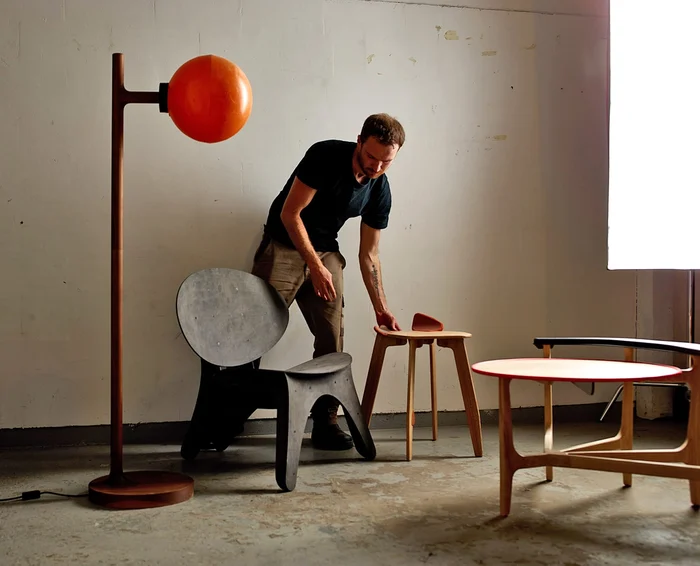
The Wellington-based artist, who hails from the Eastern Bay, said his entry, Ponga Cadair, pictured below, a chair carved from oak, holds traces of the two places he has called home.
“The chair borrows its form from the ponga, a tree that has become part of my experience of belonging in Aotearoa, yet, it is carved entirely from oak, a timber that carries my connection to Cymru – Wales.”
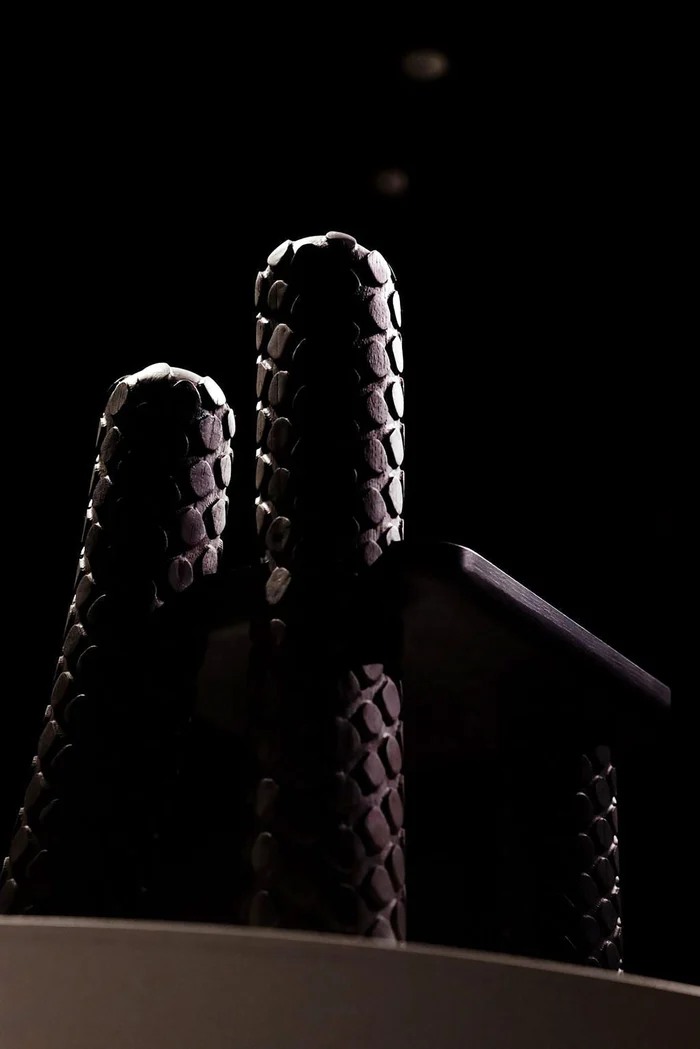
Blackened to resemble ponga, the oak’s grain remains visible through the darkened surface, holding both connections within a single form, he said.
“As a domestic object, the chair becomes a place where these histories meet, reflecting the experience of making a home from the places we carry with us.”
Williams received the Mayor’s Award in 2025 for The Belisha Beacon, a lamp created from debris he found washed up on his local beach.
Born in Wales and raised in Whakatāne, where he attended Whakatāne High School, Williams has a professional background spanning product and graphic design, furniture making, architectural model making and stonemasonry.
His furniture works are predominantly created from found objects. He adapts and responds to the materials available to him, using their limitations to inform each new piece.
His two-dimensional works take a softer approach, exploring his relationship with natural environments and materials, and the effect of plant life, stones and significant natural sites on his wairua.
See his work online: www.llyrwstudio.com