Whakatāne resident stands for Women’s Rights Party

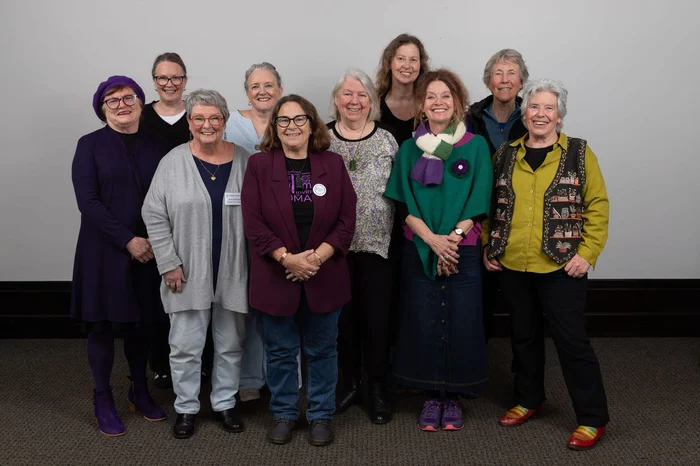
Local candidate: Whakatāne’s Sue Carnegie-Harding is standing as a list candidate for the Women’s Rights Party.
Aston Palmer
Whakatāne educationalist Sue Carnegie-Harding is standing as a list candidate for the Women’s Rights Party, saying she joined the party because she felt women were being sidelined and their voices not being heard.
Carnegie-Harding, pictured, may be best known for her time at Trident High School and Whakatāne High School, where she worked as a learning support co-ordinator before becoming a resource teacher of Learning and Behaviour.
She has lived in the area for more than 10 years after moving from Auckland to look after her elderly mother.
Carnegie-Harding said she had been involved in politics before, but had never previously stood as a candidate.
She became interested in standing for the Women’s Rights Party after leaving teaching, where she felt she could not openly discuss some of the issues that mattered most to her.
“I felt that women were being sidelined and our voices weren’t being heard,” she said.
She said there were issues she cared about that she would not have felt comfortable raising in her workplaces, with teachers or students.
A major issue for Carnegie-Harding and the Women’s Rights Party is the debate around women’s rights and transgender rights.
Party co-leader Jill Ovens said the party was not anti-transgender, describing its position as focusing on women’s rights.
“We’re not anti-trans. We’re pro-women’s rights,” Ovens said.
However, she said the party believed some rights sought by transgender people could conflict with women’s rights.
The party wants women to retain access to female-only spaces, including toilets, changing rooms and women’s prisons, as well as the ability to choose female healthcare providers for intimate care.
Carnegie-Harding said women needed spaces where they could have privacy and feel safe.
She spoke about her own experience after being involved in a car accident and spending time in a mixed hospital ward, saying she found the lack of privacy stressful.
The party also has concerns about transgender participation in women’s sport and the placement of transgender prisoners in women’s prisons.
Ovens said the party believed transgender people should have basic rights such as employment and housing but those rights should not come at the expense of women’s rights.
The party’s concerns extend to children and young people identifying as transgender.
Ovens questions whether some young people, particularly those with autism or ADHD, could be turning to a transgender identity while trying to understand themselves and their place in the world.
She said the party was concerned about young people being encouraged towards gender transition and making decisions that could have long-term consequences.
Ovens described what she saw as a wider “trans cult” and said social media, particularly TikTok, had played a role in exposing young people to transgender content.
She said children should be able to be gender non-conforming without necessarily being encouraged towards medical transition.
“We think that kids should be able to be non-conforming and find their own path,” she said.
Carnegie-Harding said she was concerned about young people making decisions that could have long-term or irreversible consequences.
Ovens also criticised what the party viewed as a one-sided approach to gender identity in education and said children should have a more “well-rounded” discussion.
Carnegie-Harding’s background in education has shaped many of her views on children and young people.
At Kawerau she taught a Year 8 class before moving into learning support. She later worked as a learning support coordinator and Resource Teacher of Learning and Behaviour, working with teachers to help meet students’ needs.
She said her experience in education had made her particularly concerned about issues affecting children, while also giving her a strong desire to advocate for people who she felt were not being heard.
The Women’s Rights Party also campaigns on issues including pay equity, women’s retirement savings, KiwiSaver, the cost of living, climate change, artificial intelligence and data centres.
Ovens said the party was slightly left of centre economically, based on a poll of its members, while being more socially conservative on some issues.
Carnegie-Harding said joining the party had given her the opportunity to speak about issues she had previously felt unable to discuss.
The Women’s Rights Party was founded in 2023 and is contesting its second election.
It is standing list candidates rather than electorate candidates.
For Carnegie-Harding, this election is her first time standing as a candidate and an opportunity to bring her experience from education and her own life into politics.