
Peace Street sponge reserve a winner

Proud moment: Whakatāne District Council Three Waters team members Neal Yeates, Jessica Sinclair, Viv Hynds and Emma Tombleson, pictured with Water New Zealand chief executive Gillian Blythe and award sponsor Morphum Environmental’s Dana Gardner, receive the Environmental Sustainability Project Award. Photo supplied
Diane McCarthy
Transforming underground stormwater pipes into a thriving, open wetland in the centre of town has won Whakatāne District Council a national water industry award.
The Apanui Sponge Reserve Project on largely unused reserve land on either side of Peace Street has captured the attention of judges at the Water New Zealand Excellence Awards.
The awards are run by Water New Zealand, a national not-for-profit organisation promoting sustainable Three Waters management and development.
Winners were announced at the organisation’s annual conference in September.
The Whakatāne council had entered its project, completed in 2024, into the Environmental Sustainability Project category of the awards.
This award recognises outstanding sustainability initiatives in the water industry through the delivery of a project that prioritises sustainable resource use and the needs of the wider environment
It was one of three finalists along with two much larger projects – Auckland’s $1.6 billion Central Interceptor Project, the largest wastewater infrastructure project in New Zealand history, and a $30 million Raglan-Whāingaroa Wastewater Treatment Plant Upgrade.
Whakatāne Three Waters transition director Nic Johansson said the award was in recognition of a project that challenged traditional approaches to stormwater management.
“Instead of simply building bigger pipes, we looked at how we could work with nature to solve a long-standing flooding issue while delivering wider benefits for the community and environment.”
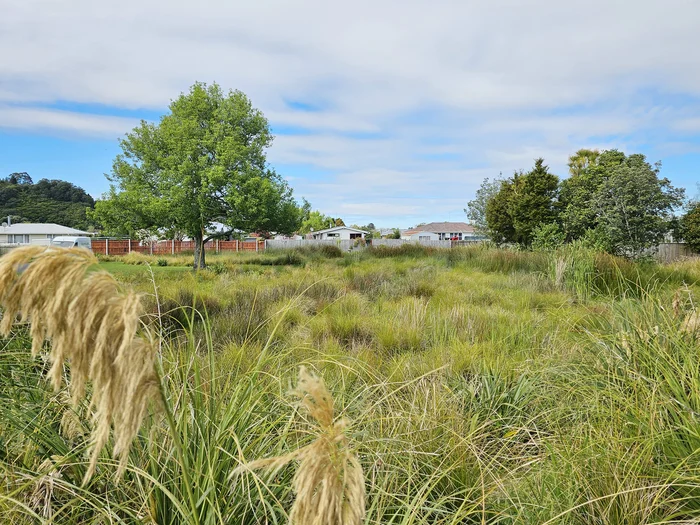
The project had been unpopular with neighbouring residents at the time it was being created, with concerns it would become a haven for mosquitoes, rats, mice and pollution. A petition caused a planned walkway alongside the wetland to be scrapped after fears it would make neighbouring properties the target of antisocial behaviour.
A lack of consultation with residents before earthworks began was also an issue at the time.
However, two years on, Johansson said the native planting had flourished, birds had returned, and people could see and experience the waterways in a way they couldn’t before.
“When you walk through the reserve today, it’s hard to imagine it was created to solve a flooding problem. It feels like a place that’s always been there, and that’s one of the things that makes this project so special.
“It’s a great example of how infrastructure can protect homes, support te taiao and leave something lasting for the whole community.”
The low-lying Apanui catchment had historically experienced flooding during heavy rainfall events.
The completed reserve can temporarily store around 4000 cubic metres of stormwater during heavy rain, roughly the equivalent of two Olympic-sized swimming pools of water, helping protect nearby homes and public spaces while reducing pressure on the wider stormwater network.
The award recognised the collective work of local iwi and hapū, residents, the wider community, project partners and council staff who helped bring the vision for the Apanui Sponge Reserve to life.
Judges said it was an “exemplary nature-based approach integrating flood management and ecology, with strong potential to be replicated as a model for other councils.
“As rainfall events become more frequent and intense, the project shows how communities can work with natural systems to reduce flooding, restore historic streams and wetlands, and redesign residential streets to create healthier spaces for people and nature,” the award citation said.