
A question of water – should council form a CCO?

Diane McCarthy
With one week left for people to have their say on the future of Whakatāne district’s water services, we asked Mayor Nandor Tanczos some of the questions foremost in people's minds.
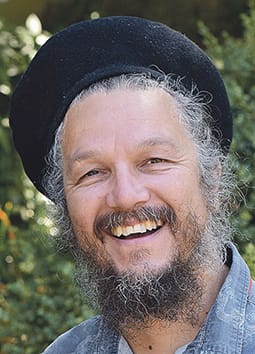
Whakatāne District Council is asking people whether they would prefer drinking water, waste-water and stormwater services to be delivered through a Whakatāne District Council-owned Council-Controlled Organisation (WDC-CCO), a Multi-Council-Controlled Organisation (Multi-CCO) or an Internal Business Unit (IBU).
The council’s preferred option was originally to join with Rotorua Lakes, Kawerau and Ōpōtiki district councils to form a Multi-CCO, as that would create the greatest long-term savings for ratepayers. However, none of the other councils have indicated they wish to join it at this stage.
The Whakatāne council’s preferred option is now to form a WDC-CCO.
Some of the following questions were put to the mayor by Local Democracy Reporting, while others are selected from questions asked at the council's engagement sessions.

Diane McCarthy
Local democracy reporter
Q. What is the benefit of forming a CCO for one district?
Mayor Tanczos: A Whakatāne District Council-owned CCO would give us a dedicated organisation focused entirely on water services, with specialist governance and management, greater financial flexibility and borrowing capacity, while retaining 100 percent local ownership.
What it doesn’t give us on its own are all the benefits that come from greater scale. Our analysis showed that a Multi-Council Controlled Organisation with Rotorua, Ōpōtiki and Kawerau would deliver the best bang for buck for all four councils, but the other three councils are not in a position to join up to that for now.
Q. Wouldn’t setting up a CCO for one district cost more than it would save?
Mayor Tanczos: There are costs involved in establishing and running a separate organisation, and we’ve taken those into account. Our analysis shows that the benefits outweigh those additional costs by a small margin, even if it operates for Whakatāne district alone.
But this isn’t just about cost. Greater scale could provide further benefits and help minimise costs in the future, which is why we will keep exploring opportunities to partner with other councils.
Q. So is this a “build it and they will come” approach?
Mayor Tanczos: I wouldn’t describe it quite like that, because we can’t make this decision on the assumption that another council will join us.
The Whakatāne District Council-owned CCO has to work for Whakatāne district in its own right, and our assessment shows that it does.
But we do believe there are greater benefits from getting bigger scale. Establishing our own CCO gives us a pathway forward for now, while creating something that could support greater collaboration with other councils in the future. That could be structural, through a shared CCO, or it might be with shared procurement and other services.
I see it as a stepping stone.
Q. Are you relying on central government eventually forcing councils together?
Mayor Tanczos: No. We’re not making this decision on the assumption that central government will force councils together, and a CCO isn’t something we’re being forced into. What's driving this is the need to grapple with chronic problems such as catching up with deferred maintenance over many previous councils, new government standards, especially around wastewater (sewerage, etc), and pressure on the stormwater and wastewater systems from bigger weather events.
We’ve got to make the best decision we can for the Whakatāne district based on the information we have now.
Q. Water is free, so what are we actually paying for?
Mayor Tanczos: That’s absolutely right. The rain that falls and the water in our rivers isn’t something the council creates.
What people are paying for is the infrastructure and services needed to collect that water, treat it so it’s safe to drink, store it and pipe it to homes and businesses. They’re also paying for wastewater to be taken away and treated safely, and for stormwater networks that help protect homes and communities from flooding.
Ultimately, those services and the projects needed to maintain and improve them are paid for by the communities that use them, through their water charges. So every project we do has an impact on what people pay.
Our job is to find that balance. We know there’s important work that needs to be done, but we also don’t want water bills increasing to a point where people can’t afford them. We need to prioritise the most important work so people continue to have services at a cost they can afford.
Q. Could our water services be privatised?
Mayor Tanczos: This isn’t privatisation. Under a single-council CCO, water assets and associated debt would be transferred to the CCO. The CCO would manage water services on behalf of the council, and the council would be the sole shareholder.
The CCO would be governed and operated independently to council, with its own chief executive and board of directors, but the council would continue to provide oversight and set expectations for how water services are delivered.
The organisation would remain publicly owned and accountable to the council and the communities it serves.
Importantly,the Local Government (Water Services) Act 2025 requires water assets to remain in public ownership, meaning they cannot be privatised, so establishing a CCO does not mean those assets can simply be sold off to a private company.
Q. What does this mean for staff, could people lose their jobs?
Mayor Tanczos: No, we’ve got a significant programme of water infrastructure work ahead of us over the next 30 years and beyond, so we need the water services people we have.
If we move to a WDC-CCO, there would be a transition process and employment agreements would need to change because it would be a separate organisation.
Q. Could this change again through central government’s wider local government reforms.
Mayor Tanczos: They’re separate processes. We have important decisions and investment ahead of us for water services now, so we can’t simply put those decisions on hold while we wait to see what wider reforms might happen.
We don’t expect everyone to agree with the preferred option.
We want people to challenge it, ask questions and tell us what matters to them, because elected members need to hear those different perspectives before making the final decision.