
Opinion: The questions the Eastern Bay keeps avoiding

.
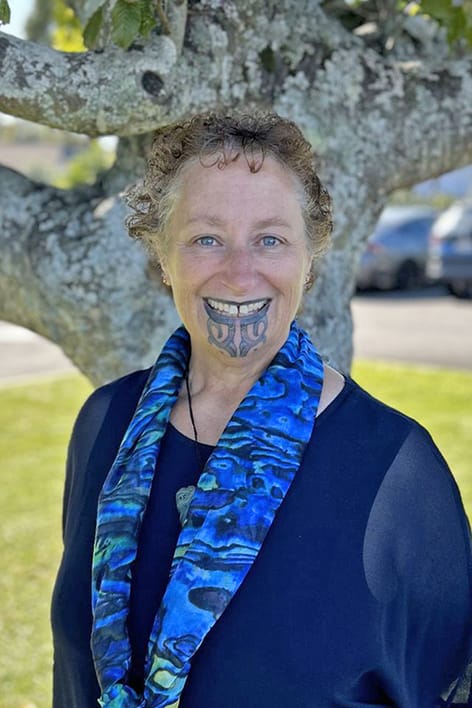
Dr Mawera Karetai
Every long-term plan I read for the Eastern Bay of Plenty starts from the same place: More houses, more export volume, more growth, over and over again, ad nauseum.
The assumptions underneath those plans are rarely spoken aloud, and I think it is past time we had real conversations in our community about them.
This year, Heinz Wattie’s announced it would close three factories, putting over 300 jobs at risk, and McCain will shut its Hastings plant by January 2027.
These were the places that turned growers’ crops into the tins and frozen packets at the back of our pantries and freezers.
Vegetables New Zealand warned the closures would harm the country’s ability to feed its own people.
In the same breath, primary sector exports reached a record $60.4 billion in the year to June 2025.
We are feeding the world very successfully, but I fear we are becoming less able to feed ourselves.
As I write this, my mind goes back to the end of Covid, and the empty supermarket shelves.
The situation would be considerably worse should the same thing happen today.
I want our elected members, at every level, at local and central government, to sit in the discomfort of that contradiction, rather than continuing to talk past it at hui after hui about growth.
Let’s start the conversation with housing.
We are planning for population growth as though jobs will follow people the way they used to.
But, the next wave of extraction-based industry, in forestry, orchards, packhouses and processing, is being designed so that fewer humans do the work.
Machines are already picking, sorting and packing fruit in Aotearoa.
It is only a matter of time until this is happening with kiwifruit, too, following the development of autonomous kiwifruit pickers designed by the University of Auckland.
AI will not require humans to schedule, monitor, and make decisions on orchard work.
It will manage an automated system that works 24/7, and does not have sick days, or holidays.
The value of the work will leave the region, but increasingly there won’t be the wages for workers to keep the local community thriving.
So, I want to ask a question that is usually treated as heresay by some in our community:
Why are we building more housing when we cannot say where the jobs will come from?
If you are going to tell me there will be jobs, explain to me why they won’t be done by an AI-based autonomous machine.
Then there is the climate.
What does 1.7 degrees of warming mean for what we can grow here, for pests and disease, for water, for the timing of harvests, for the soils our food needs to grow in?
Our food system is already being stretched in two directions, with export-oriented land use on one side and a shrinking domestic processing base on the other.
A warmer, less predictable climate will find the weak points in that system.
We have known about this for decades and we have experienced the early stages of this change, but we are not doing enough about it.
There are still people in positions of authority who deny climate change, which is unfathomable to me.
And then the question I care about most.
How are we measuring resilience? Too often the benchmark for success in the Eastern Bay is that “things did not get worse”.
Headlines like “Unemployment held steady”.
“Fewer whānau needed emergency kai this winter than last”. “The community bounced back to where it was before the latest shock”.
But in reality, where it was before was already a place of deficit.
If our baseline is hardship, then bouncing back to hardship is not resilience.
It is endurance, and our people have been enduring for long enough.
Our tūpuna understood resilience differently.
It meant the capacity of a people and a place to sustain one another across generations, through kai from the whenua and the moana, knowledge passed down and obligations to the environment and each other that actually meant something. That is not a romantic view of the past.
It is a design principle, and it points toward future alternatives we are not yet discussing seriously.
Processing at a scale that keeps value and skills in the district, land use that grows food for here as well as for there, an economy communitymenterprise and community ownership at its centre rather than its margins, and new ways of sharing in what the land produces when wages can no longer be the only way people do… that is our way forward.
None of this is easy, and I do not pretend to have every answer, only some of them.
But, I am certain we will not find answers to questions if we refuse to have real conversations.
The comfortable conversation is about growth targets and building consents.
The necessary conversation is about what kind of economy will actually keep our people fed, housed and working in a warming world where machines do more of the labour.
I am asking my colleagues around the regional council table, our district councils, our iwi partners and our ministers in Wellington to have that conversation with us, in public, and soon.
The Eastern Bay deserves a future measured against what is possible, not against how little we have learned to live with.
■ Dr Mawera Karetai is a Bay of Plenty Regional Council member for the Kōhi Māori constituency, a researcher at Te Whare Wānanga o Awanuiārangi, and a lecturer at the University of Otago.