
Cash still has its place – Whakatāne retailers

Cash still counts: WhakaMax on The Strand is among the stores continuing to accept cash. Photos Aston Palmer E6228-01
Aston Palmer
Since the Covid-19 pandemic, the way people pay for goods and services has changed, with more businesses moving away from cash as a payment options.
With a rising concern that stores may stop accepting cash in favour of electronic payments, the Beacon asked Whakatāne retailers how they felt about customers handing over notes and coins for products and services.
Most businesses said they still accepted cash, with several saying it was important to keep the option available for customers who preferred cash payments, and that they wanted to continue giving customers the choice.
Shirley Garrett from St John's Op Shop said cash was particularly important for older customers.
“I think the elderly like to actually handle money. They like to see where it's going. You know, they work on a budget, so that's a reason we still accept cash,” she said.
Garrett said the shop handled plenty of cash transactions and she believed it was important to retain the option.
“If we don't use it, we're going to lose it. And I think it will be such a shame,” she said.
She also believes using cash helped children understand its value.
With electronic payments, people could lose track of how much they were spending, she said, while physical coins and notes gave children a tangible understanding of money.
Other businesses shared concerns about losing cash as a payment option.
WhakaMax said one practical reason for continuing to accept cash was the possibility of Eftpos or internet outages.
“If the internet goes out, we can't process Eftpos transactions. So, that's all it takes for people to not be able to buy things,” an employee said.
The business also said cash gave people a convenient way to make small payments, such as giving a friend money or buying something from a market stall.
They pointed out that the fees associated with electronic payments could add up, making cash a useful alternative for businesses and customers.
NZ Uniforms said it continued to accept cash because some customers, particularly older people, preferred using it.
Although the business did not receive as many cash payments as electronic ones, it still saw customers paying with physical money.
Other businesses around Whakatāne, including cafes, Salt Air Surf, Zanzahair, Seabreeze and the Tomorrow store, also continue to accept cash.
Some said they did not want to turn away customers by restricting their payment options.
One business representative said stopping cash payments would reduce its customer base.
“We wouldn’t ditch cash. That narrows your business and narrows the clientele”.
The big three supermarkets, Wool-worths, New World and Pak’N Save, also continue to accept cash, although only some self-checkouts offer cash payments, with most card-only.
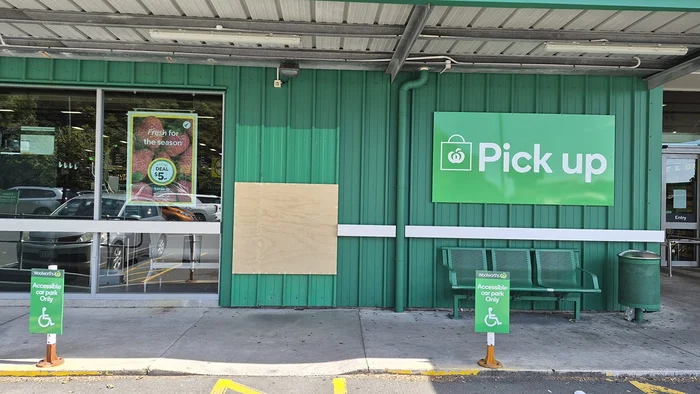
The removal of the ATM outside Woolworths was a concern raised by some customers, who questioned why it had been taken away.
Woolworths said the ATM had been removed because the lease with the provider had expired.
“The ATM space at Whakatāne Woolworths was leased to Westpac; however, Westpac has decided to remove the ATM,” a spokeperson said.
They said the supermarket was working on getting a new one installed.
Whakatāne District Council has stopped accepting cash payments for some services, including at its libraries, and the Murupara Service Centre.
However, general manager of community experience Alexandra Pickles said the council continued to accept cash payments at the Civic Centre and some other council facilities.”