
From making cups of tea to making her voice heard

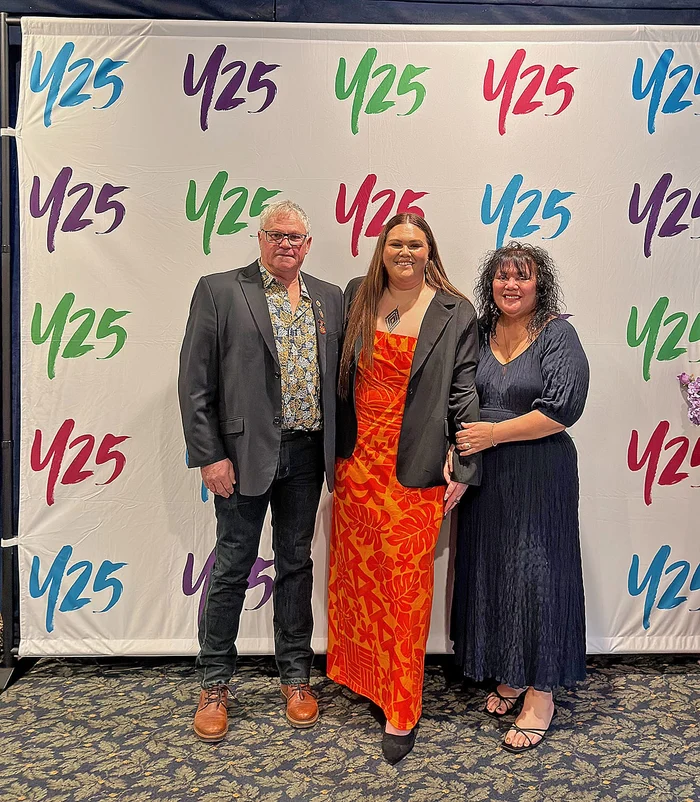
HUMBLED: Graeson Papuni-McLellan is recognised for her work in redefining indigenous youth governance and ensuring rangatahi voices are heard and valued. Photos supplied
Rufus Dempsey
Ōpōtiki’s Graeson Papuni-McLellan is ensuring rangatahi don’t have to wait for their turn to lead, with her work creating new opportunities for young Māori women recognised on the national stage.
When Graeson Papuni-McLellan received the email telling her she had been named among New Zealand’s 100 Tower Local Hero Medallists for 2027, there was one person she wanted to tell immediately.
“I was honestly shocked. When the email came through, I ran straight to tell my mum. She’s always the first person I tell, whether it’s good news or bad,” she said.
The recognition, part of the Kiwibank New Zealander of the Year Awards, acknowledges Papuni-McLellan’s work in redefining indigenous youth governance and ensuring rangatahi voices are heard and valued, including on the global stage.
But for the Ōpōtiki woman, the recognition is about much more than her own achievements.
“I couldn’t quite believe that someone had seen the mahi I do and thought enough of it to put my name forward for this recognition. I feel incredibly humbled and grateful.
“For me, this isn’t an award I hold on my own. It reflects the whānau who support me and the incredible wāhine of the Māori Women’s Welfare League who I have the privilege of standing alongside.”
Her connection with the league stretches back to before she could walk, having been born into an organisation that has played a defining role in her life and the way she views community service.
Her mum, Annette, and her kuia, Doreen Herehere McCorkindale, were the women who first showed her what it meant to give back.
Papuni-McLellan was a pēpi at her first league hui, sitting on her mother’s hip.
As she grew older, her involvement progressed to making cups of tea at branch and regional gatherings, learning the organisation’s karakia and creed, and eventually nervously standing up to lead them for her kuia.
“At the time, some of those little things probably felt a bit hōhā, but looking back, they were shaping me,” she said.
That journey has taken her a long way from the cups of tea, with Papuni-McLellan now the League’s inaugural National Youth Representative, advocating for the next generation of Māori women and creating opportunities for them to become involved in leadership.
In 2025, she established the organisation’s first youth membership, opening a pathway for women aged 18 to 30 to become members and contribute to an organisation with a long history of advocating for Māori wāhine and their whānau.
For Papuni-McLellan, the move was about addressing the gap between generations and ensuring the league’s future is shaped by the young women who will carry its work forward.
“I believe there is a responsibility not only to honour the legacy of the league, but to enhance it and make sure the direction we move in includes the voices of our rangatahi,” she said.
She sees the youth membership as a stepping stone for young women navigating some of the most formative years of their lives, whether they are finishing school, studying, building careers, becoming mothers or finding their place in the world.
“Our rangatahi aren’t just the future of the league, they are part of the league now.”
Her leadership has also taken her well beyond Ōpōtiki, representing the league at the United Nations Commission on the Status of Women in New York in 2024 and 2025, as well as presenting evidence in the Mana Wāhine claim.
“When I enter those spaces, I’m very conscious that I’m not there just representing myself. I carry with me the whakaaro, experiences and aspirations that our wāhine and rangatahi have shared with me.”
She believes representation must extend beyond simply having a seat at the table.
“If the knowledge we take into those spaces comes from our communities, then I believe whatever knowledge, opportunities or connections we gain should find their way back into our communities too.”
That philosophy also underpins her thinking about leadership at home.
Papuni-McLellan says one of the challenges facing young Māori wanting to contribute to decision-making is finding the balance between respecting the experience and wisdom of kaumātua while creating genuine opportunities for rangatahi to have their say.
She doesn’t see the two as competing voices, but believes organisations and communities need to make more room for generations to work alongside one another.
“We often call rangatahi our future leaders, but our rangatahi are already leading within their whānau, communities and spaces today,” she said.
“Succession shouldn’t begin when someone is ready to step aside. For me, it should be happening all the time through sharing knowledge, creating real opportunities, and trusting rangatahi to lead alongside our more experienced leaders now.”
Alongside her national and international work, Papuni-McLellan continues to contribute through the Māori Women’s Welfare League’s Ōpōtiki Peka, including governance, financial management and mahi supporting local whānau.
She was also named among the YWCA Y25 in 2026, another recognition of her contribution to leadership and advocacy.
But when asked what she hopes to achieve for the next generation, her ambitions are perhaps best summed up in the opportunities she wants other young people to have.
She wants rangatahi to grow up understanding there isn’t just one version of success available to them.
“Success might be at kura, on the marae, in their whānau, in their mahi, or serving their community.
“What matters to me is that they have the opportunities and support to discover what success means for themselves and the confidence to go after it.”
For someone whose own journey began sitting on her mother’s hip at a hui, the importance of making sure the next generation has somewhere to stand is never far from her thoughts.
She sums it up with the whakataukī, “Ka pū te ruha, ka hao te rangatahi” – as the old net is cast aside, the new net goes fishing.
“I don’t want our rangatahi to inherit only the responsibility of carrying the mahi forward.
“I want them to inherit the knowledge, relationships and opportunities that give them every chance to thrive while doing it.”
And if she can leave the pathway wider than she found it, with more doors open and more opportunities for rangatahi to define success for themselves, she believes that will be a legacy worth building.