Demo of century-old buildings brings back memories

EARLY DAYS: An early photo of Strand East shows the former National Bank of New Zealand to the left with a monument in the centre of the street where a roundabout is now. Historic photo supplied by Jos van de Laar
Diane McCarthy
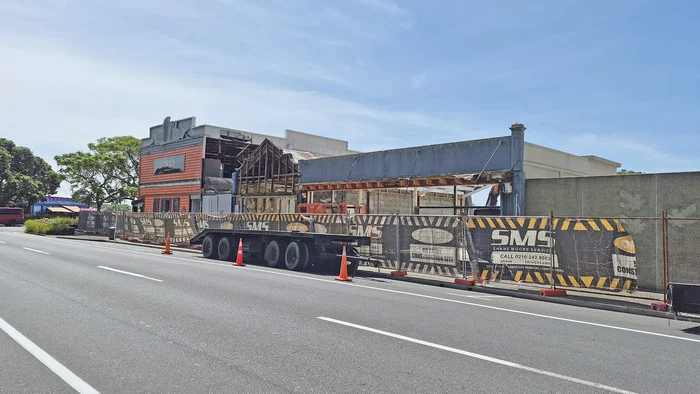
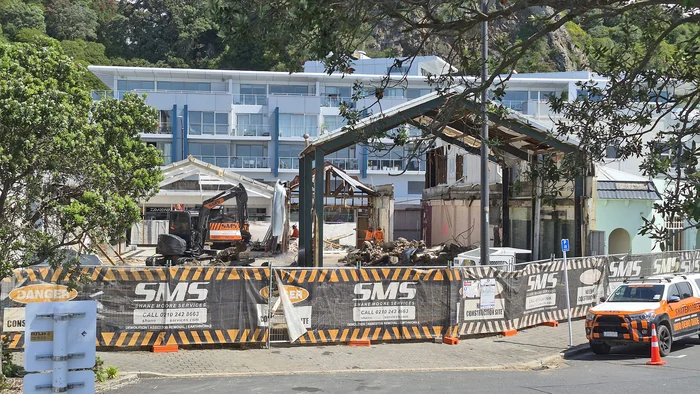
Demolition of some of Whakatāne’s century-old built heritage is well under way with buildings on The Strand East and Quay Street being cleared to make way for a temporary park.
Whakatāne District Council has identified the corner as a key development site, and over the past decade has purchased the buildings at 58, 60 and 62 The Strand and 30 and 31 Quay Street through the harbour fund, which already owned the land.
Many of the buildings were over 100 years old and in state of disrepair.
Central government has contributed $3.75 million to the works, which the council has matched, as budgeted in 2024.
The buildings on The Strand were mostly constructed shortly after the 1912 reclamation of the foreshore and have been home to a variety of businesses over the years from fine food merchants to “gentlemen’s clubs”.
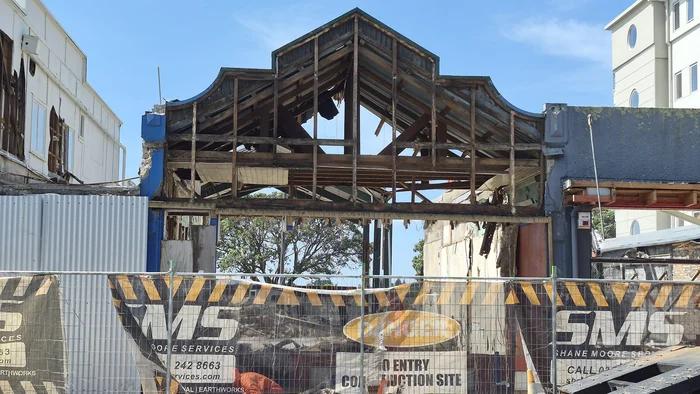
One of the more recent tenants, photographer Jos van de Laar, had his picture framing business at 58 The Strand from 1993 to 2024, having previously been across the road in the former Mann Printing building.
“There had been a spacies parlour there, and I took it over. It’s been a great spot.”
He shared it with some interesting tenants over the three decades.
“At stages I was the only tenant. At other times the whole place was full, because there were offices out the back, and upstairs even.”
An insurance assessor, dive company, iwi health service, architect and even a psychic were among his fellow tenants.
“[The psychic] would make these strange voices and you could hear it through the door as she was recording herself. It was bizarre,” he said.
“Tony Ogilvy had a surf shop at one stage in the building next to the Buccaneer; John Hohapata had a takeaway parlour.”
According to a Whakatāne Built Heritage Study carried out in 2008, the one- storey, concrete retail building was built in 1916.
“The building burned down in the 1960s,” van de Laar said. Warwick Armstrong rebuilt it and built all the offices.
It was originally Bridgers Ltd, before Bridgers moved further west along The Strand. It was then an ironmongers owned by FB Cutler.
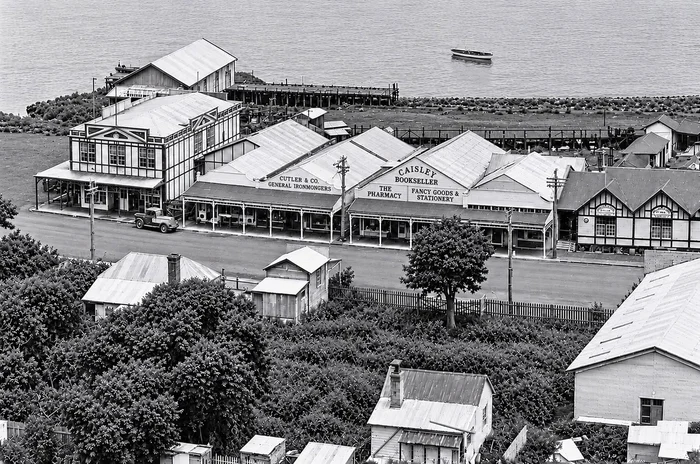
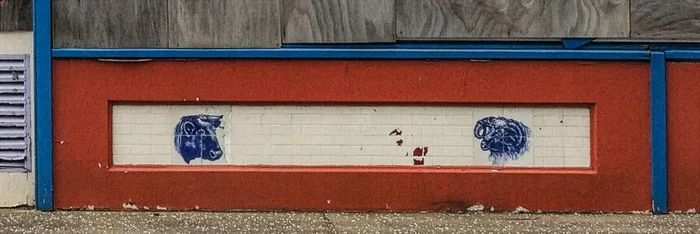
Next door, 60 The Strand was originally a butcher’s shop, Kirk and Carter’s purveyors of first-class meats. Norman Rigden took it over as a butcher’s again in the 1950s.
During van de Laar’s time, there was a mix of businesses.
“Next door there was a pizza parlour, then there was a brothel and then there was the Buccaneer.”
The two-storey timber-framed building in mock-Tudor style (similar to the Rotorua Bath House) at 62 The Strand most recently housed the 1950 Restaurant and Bar but was originally known as Barry’s Building after auctioneer and seed merchant J T Barry.
It housed multiple businesses over the years, including a dentist, taxi service, auto electrician, the National Bank of New Zealand from 1951 to 1979, the Buccaneer Restaurant from 1979 to 1988, and even a nightclub.
The building that once stood next to 58 The Strand, which has since been demolished, was home to a stationery store owned by Christopher George Caisley (1882–1960), a keen photographer.
“He used to pop out the door and take photos when it was quiet, and he had nothing to do. He took a lot of the historical photos of Whakatāne.
“That’s why I quite liked it there, I felt like it was me and him, doing our bit to keep the town’s history alive.”
Over the course of his 40-odd years as a photographer van de Laar has been collecting photos of old Whakatāne, commenting simply, “someone’s got to look after them”.
Council properties and facilities assets manager Paul Check said once a traffic management plan had been approved, the main external demolition was expected to take around four weeks to complete, with work scheduled to finish before Christmas.
“Hazardous materials, including asbestos, have been identified and managed as part of the preparation work for demolition over the past few months. Most of this work has been completed, with a small amount of Class B asbestos remaining within the building structure. This is currently being safely managed and removed as part of the ongoing demolition work.”
The council is looking to recover and recycle as much material, such as metal and concrete, as possible during the demolition, rather than sending everything to landfill.
Check said some items, such as the decorative tiles depicting a bull and a ram from the front of the former butcher shop were being carefully removed and recovered as a nod to the history of the building.
“We’re exploring options for their future use, which could include incorporating them into future design elements.”